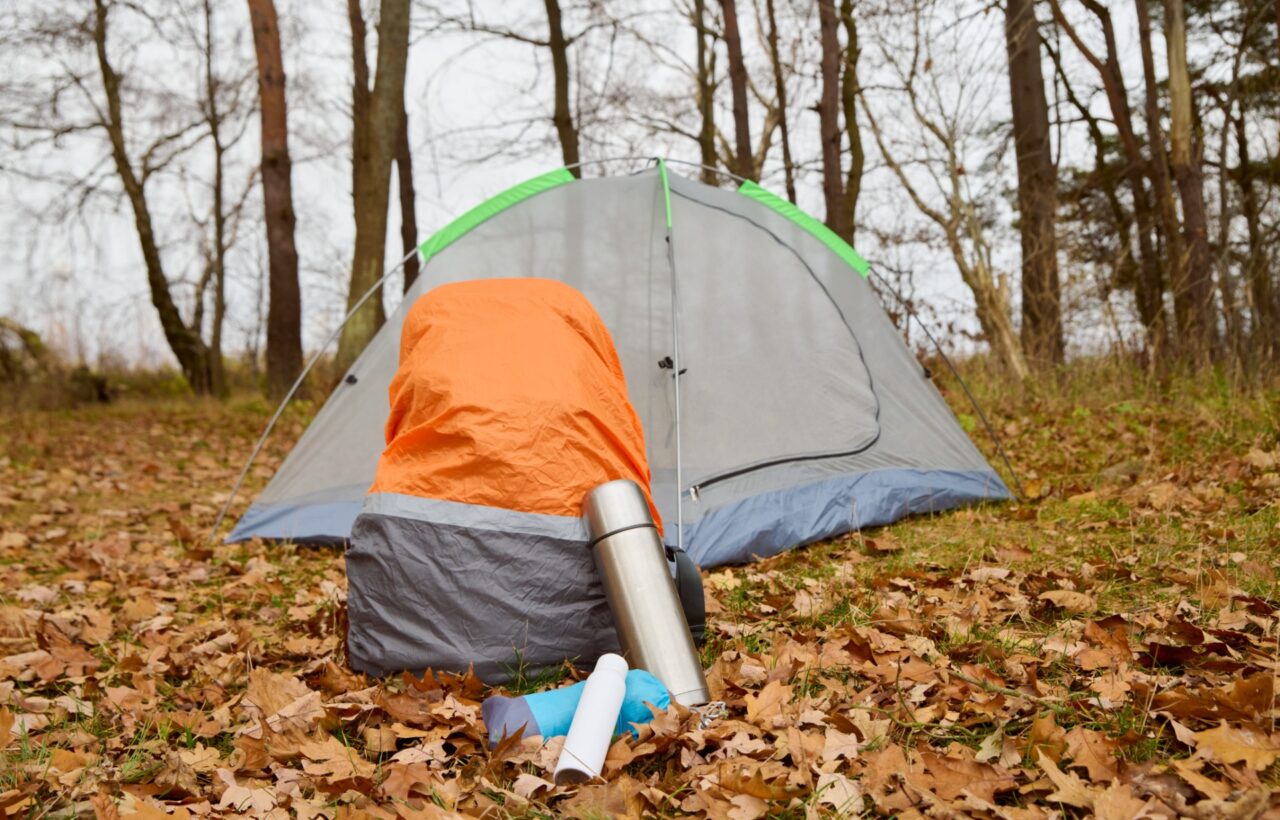

Most people size a tent by the number printed on the bag, and that number is generous. A shelter sold for two often has about 28 to 32 square feet of floor, which fits two narrow pads and little else. For small tent camping, the limits worth planning around are floor area, vestibule space and moisture.
Plan for those and a compact tent pays off. It pitches faster, stays cleaner and is often steadier in wind than a big cabin tent. Expect to sit up, keep most gear outside the sleeping area and watch condensation closely. On mild three-season trips for one or two people, the trade is usually fair.
What counts as a small tent
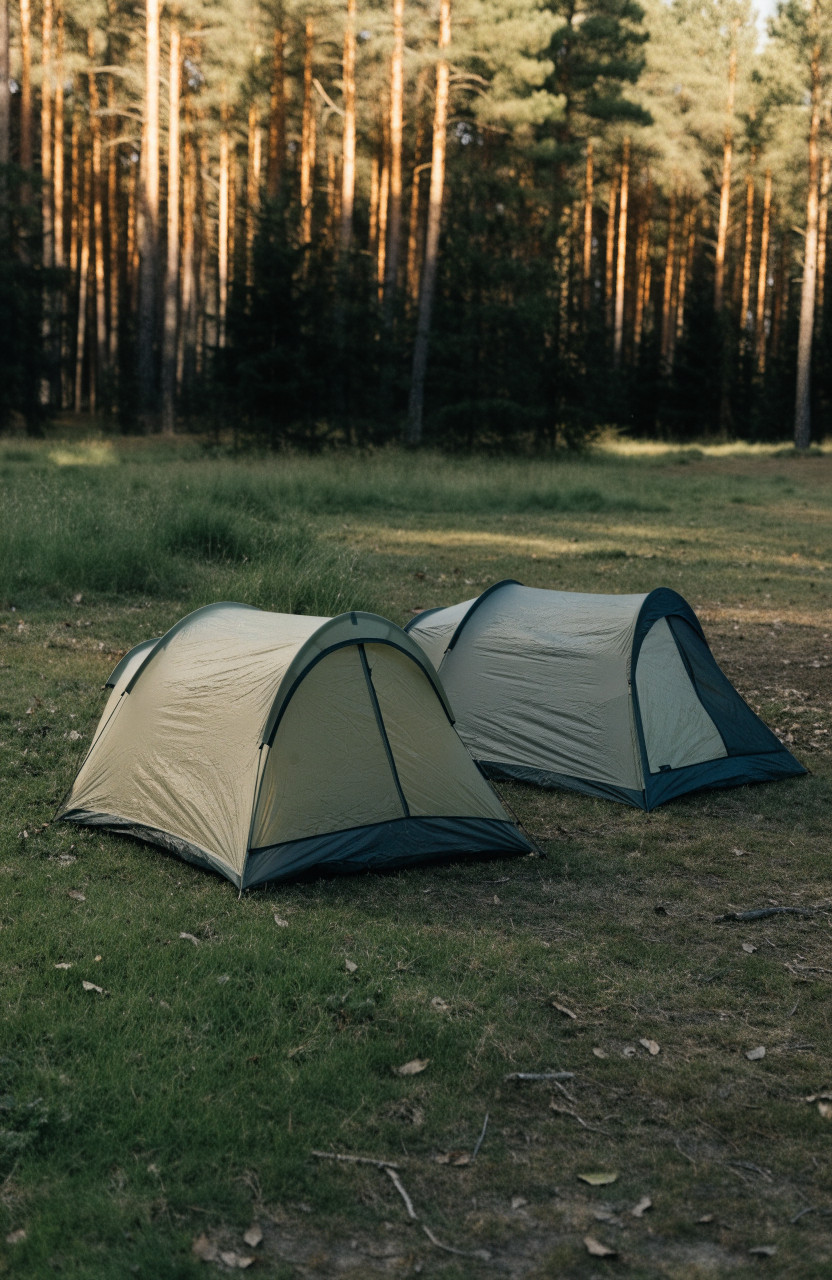
“Small” is a use category, not a brand term. In practice it covers three different shelters that get mixed together in search results.
A backpacking tent is built to be carried. A typical one-person model has roughly 18 to 22 square feet of floor and a peak height around 36 to 40 inches. A typical two-person model has about 28 to 32 square feet and a peak near 40 to 44 inches. Packed weight for a serviceable double-wall two-person tent often lands between 3 and 5 pounds. Ultralight single-wall or trekking-pole shelters can be lighter, with less interior volume and more condensation.
A compact car-camping tent is small by family-tent standards but heavy by backpacking standards. These are often labeled two- or three-person, with a bit more peak height and a larger vestibule, and they may weigh 6 to 8 pounds. They make sense when you walk the tent from the car, not when you carry it for miles.
A bivy or one-person minimalist shelter is a sleeping-bag cover with a pole or hoop at the head. It keeps rain and insects off one sleeper and leaves almost no room to change clothes or store a pack. It is a good emergency or fast-and-light option, and a poor choice for a first camping trip if you want to sit out a rainy afternoon.
Capacity labels assume people lying shoulder to shoulder with gear elsewhere. Retail and park guidance repeatedly notes the same gap: a tent rated for two usually fits two sleepers and little else. Floor area and vestibule area tell you more than the person count.
When a small tent is the right shelter
A small tent fits the trip when the group is one or two people, the weather is three-season (rain, wind, and cool nights, not sustained snow loading), and you can keep cooking and most storage outside the sleeping area.
It is a strong match for:
- Solo trips and couples who already sleep close together
- Backpacking, bike touring, and motorcycle camping, where packed size matters
- Crowded campgrounds with small pads, where a six-person tent and its guylines will not fit
- Mild-weather trips where you will spend evenings outside the tent
It is a weak match when you need standing height, a place for children to play during rain, cots, or several packs inside overnight. Wirecutter’s car-camping testing has put comfortable two-person car camping closer to a large three-person or small four-person tent, roughly 40 to 60 square feet, because gear and movement need floor that a backpacking two-person tent does not have. If you are car camping and weight does not matter, buying the next size up is usually the comfort win. If you are carrying the tent, that extra size is weight and bulk you feel all day.
Four-season tents are a separate category. A small four-season tent can handle heavier snow and stronger wind, but it ventilates less and costs more. Most beginners do not need one for summer and early-fall trips.
How to choose a small tent before you buy
Read four numbers, in this order.
Floor area. For backpacking, about 20 to 25 square feet per person is a workable target if some gear lives in the vestibule. Under about 18 square feet per person, you are in minimalist territory: fine for experienced solo campers, tight for a first night. For car camping in a “small” tent, 25 to 35 square feet per person is more realistic if you want room to dress and keep a bag inside.
Peak height. Under about 38 inches, most adults cannot sit fully upright. Around 40 to 42 inches, many people can sit and pull on a layer. Height at the ends matters too. A tent that peaks at 42 inches in the center and drops sharply can still press a sleeping bag against the wall.
Vestibule area. This is the covered porch outside the inner tent. A few square feet holds boots and a pack. Two doors and two vestibules let each person exit without climbing over the other, which matters more in a small tent than in a large one. If the tent has one door, the person on the far side is trapped on a rainy night.
Packed weight and packed size. Trail weight (tent body, fly, and poles) is the number that matters on your back. Packaged weight includes stakes, guylines, and the stuff sack, so it runs higher. A two-person tent near 5 pounds is reasonable to split. A two-person tent over 6 pounds is a car-camping tent unless you are sharing the load and prioritizing durability.
Also check the season rating and the fabric layout. A three-season tent uses a mesh inner and a removable rainfly so you can vent in warm weather and close up in rain. Double-wall designs (mesh or fabric inner, separate fly) keep condensation on the fly instead of on the wall next to your bag. Single-wall tents save weight and pack smaller, and they wet out inside more easily because there is no gap between you and the outer fabric.
Freestanding tents pitch with poles alone and can be moved after setup, which helps on rocky sites. Many ultralight tents are semi-freestanding or non-freestanding and need stakes to hold their shape. On slab or sand, that means you need alternative anchors, not just the stakes in the bag.
Practice the pitch once at home. Small tents are faster to learn than cabin tents, and the first setup should not be in the dark or in rain.
How to pitch so a small tent stays usable
Site choice matters more in a small tent because you cannot shift a pad away from a rock or a low corner. You get one layout.
Look for ground that is already flat, not ground you will dig flat. Lie down before you unpack. A slight slope is manageable if your head is uphill. A bowl or a path where water runs is not. Cold air sinks, so valley bottoms and creek edges are colder and damper by morning. A little elevation and some airflow beat a pretty spot in a hollow.
Clear sticks and cones. In a small tent, one root under a hip is the whole night. Look up for dead branches. Leave space for the fly and guylines, which can add a couple of feet beyond the floor. On a narrow campsite pad, a small tent’s shorter stake-out is an advantage over a family tent.
Use a footprint or groundsheet cut to the tent floor, not larger. A sheet that sticks out past the floor catches rain and funnels it underneath. The footprint protects the floor from abrasion. It is not a substitute for a tent that leaks.
Pitch taut. A slack fly sags onto the inner tent, and water on the fly transfers straight through. Stake the corners, attach the fly, then tension guylines. Recheck them after the fabric relaxes, especially if the night turns damp. In wind, orient the lowest, most aerodynamic end into the wind when the design allows, and use every guy point the tent has.
Do not cook inside. Steam from a stove adds moisture, and a small tent has little volume to dilute carbon monoxide or a flare-up. Vestibule cooking is still a burn and fume risk. Cook outside, away from the door, and move under the vestibule only if weather forces it and the stove is stable with clear airflow.
Sleeping and storing gear when the floor is the limit
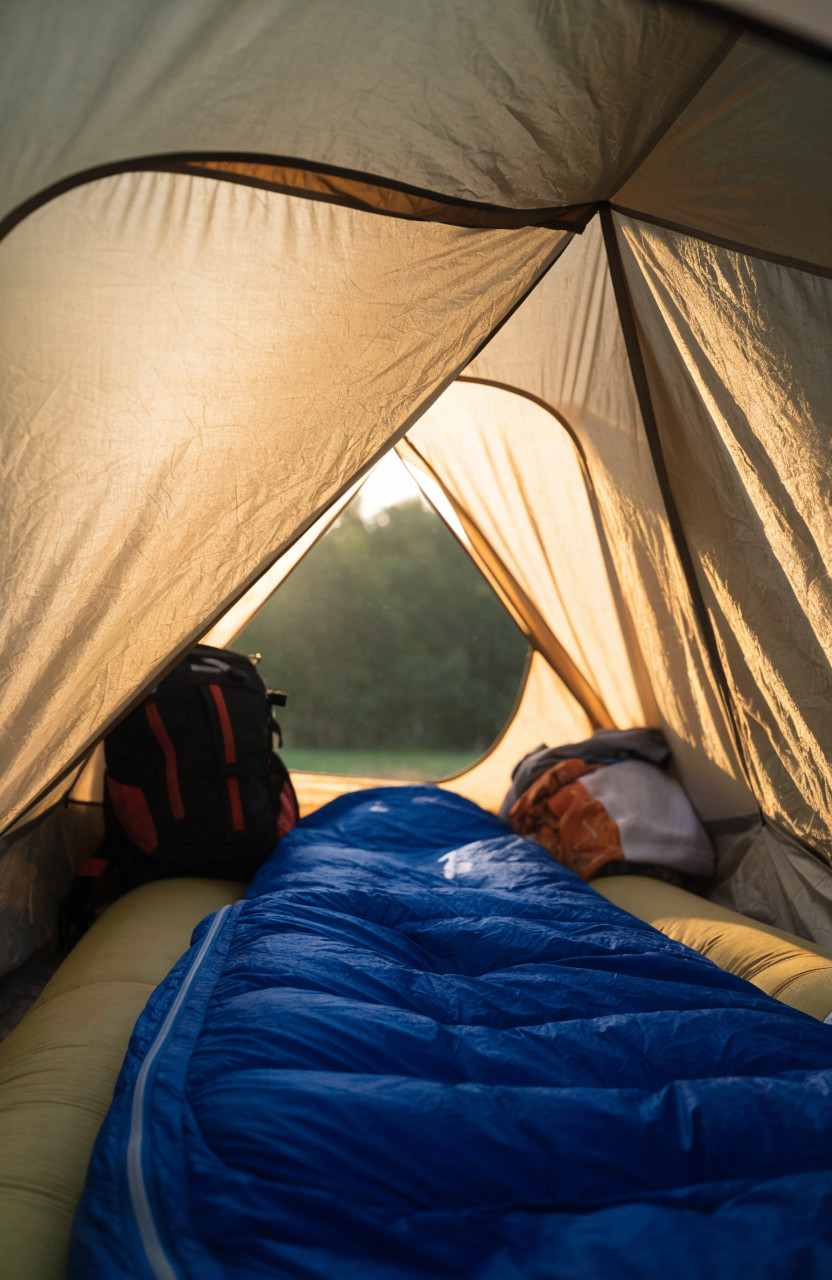
The sleep system is the tent’s real interior. A sleeping pad is not a luxury in a small tent. The ground pulls heat faster than the air, and a pad is what separates you from it. Match the pad’s insulation (often listed as an R-value) to the night, not the afternoon. A sleeping bag’s temperature rating is a laboratory-style estimate, not a promise. Many outfitters suggest choosing a bag rated colder than the expected overnight low if you sleep cold. A bag that is too big wastes space you do not have. A bag that is too narrow will not let you add a layer.
Pack for the vestibule first. Boots, the pack (food removed), a wet jacket, and a water bottle belong outside the inner tent if the vestibule is covered. Inside, keep only what you need at night: headlamp, glasses, a layer, and a small dry bag. Stuff sacks piled at your feet steal length. In a one-door tent, put the sleeper who gets up at night on the door side.
Change clothes in a sequence. In a tent you cannot stand in, it is easier to change the top half while seated, then the bottom half inside the bag or under a jacket. A short groundsheet just outside the door gives you a clean place to sit and pull off shoes so the floor stays dry.
Food stays out of the tent. In bear country that means a canister, a locker, or a hang as local rules require. Elsewhere it still means a car, a locker, or a sealed bin away from the sleeping area. Small tents hold scent, and a mouse in a 20-square-foot tent is a larger problem than a mouse in a cabin tent.
Why small tents get wet inside
Condensation is the complaint that makes people think a small tent leaks. Most of the time it is moisture from breathing and sweat meeting cold fabric. Published backpacking guidance often cites on the order of a cup or more of water vapor from breathing alone over a night, before sweat. In a large tent that vapor spreads out. In a small tent it does not.
You reduce it. You do not eliminate it.
Vent unless the weather is actively driving rain or snow inside. Leave a vent open and, when it is safe, crack a door so moist air can leave. Sealing a tent to “hold heat” usually produces a wetter interior by morning. Double-wall tents put most of that water on the fly. Single-wall tents put it on the wall you may touch.
Avoid camping in depressions and next to lakes or creeks when you have a choice. Those sites collect cold, humid air. Pitch so the fly does not touch the inner. Wipe the fly in the morning before you pack, and let the tent dry at home. Packing a wet small tent is normal on a trip. Storing it wet at home is how coatings fail and mildew starts.
A wet spot only on the floor, or a drip that lines up with a seam under heavy rain, can be a real leak or a footprint problem. Water beading on the ceiling after a dry night is almost always condensation.
Weather, bugs, and the limits of a compact shelter
A small three-season tent handles ordinary rain and wind if it is pitched taut, fully fly-covered, and guyed out. It is not a place to wait out a severe storm. If the forecast is for high wind, lightning, or flooding rain, the better decision is a sturdier site, a different night, or a hard-sided shelter. Low weight and small stakes are a poor match for exposed ridgelines.
Mesh is what makes a small tent usable in bug season. A solid-wall tent that looks cozy in product photos can be miserable in mosquitoes if you cannot vent without letting insects in. Close the mesh before dusk. A headlamp worn on your forehead attracts insects to your face while you pitch, so set up before dark when you can.
Heat is the other limit. Small tents warm quickly in sun. Pitch in shade if the site allows, and open the fly’s vents once rain risk drops. A dark rainfly in full afternoon sun can make the interior unpleasant even when the air outside is fine.
Leave No Trace still applies on a small scale. Use an existing pad when there is one. On durable ground, avoid crushing plants to create a new flat spot. Pack out trash. A small tent does not make a small impact if the cooking area and the social area spread across fragile ground.
A simple packing logic for small-tent trips
Shelter and sleep come first: tent, fly, poles, stakes, a few extra stakes, guylines, footprint, pad, bag, and a way to see in the dark. Then water, food storage, a layer you can sleep in, and rain wear. Camp chairs and a large stove are optional on car trips and usually wrong on backpacking trips.
If the tent, pad, and bag are right for the night’s temperature and the site drains, the small floor is an inconvenience. If any of those three is wrong, the small floor makes the problem feel worse because you cannot move away from it.
Frequently asked questions
Is a two-person tent big enough for two adults? Often for sleeping, rarely for living. Expect pads to touch and gear to live in the vestibule. If you are car camping, a three-person tent is the more comfortable two-person choice.
Do I need a footprint? You need ground protection if the site is abrasive or the tent floor is light. Cut it to the floor’s shape so it does not collect rain. Some tents include one. Many backpacking tents sell it separately.
Can I camp in a small tent in winter? Only with a tent and sleep system rated for that cold, and only if you already know how that shelter behaves in wind and snow. A three-season backpacking tent is not a winter shelter because the label says it holds one person.
Why is my new tent wet after a clear night? Condensation. Vent more, avoid low damp sites, and keep the fly off the inner wall. A clear night with a big temperature drop is a classic condensation night.
Is a cheaper small tent fine for a first trip? A basic double-wall tent with a full rainfly is enough for fair-weather car camping if you practice the pitch and the site drains. Spend first on the pad and on seams and stakes that hold. Ultralight single-wall tents are a poor first shelter if you do not yet know how to manage moisture.