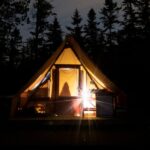
Size is rarely the reason a tent feels cramped; the real problem is that everything ends up on the floor. Boots collect at the door, headlamps disappear under a sleeping bag, and wet jackets soak the pad you meant to sleep on.
The most useful tent organization ideas do three jobs at once: they keep the floor and doorway clear, they give every item a home you can find in the dark, and they separate clean sleeping space from mud, moisture, and scent. That last point is not just neatness. Food, trash, toothpaste, and cooking residue belong outside the sleeping area in almost every camping setting, and they are required to stay out of the tent in bear country.
These 21 ideas work as a system. Use the first few even if you buy nothing extra.
Why Most Tent Setups Fall Apart After One Night
Floor space is the scarce resource. A typical two-person backpacking tent has little more than a sleeping pad’s worth of room. A family cabin tent looks huge until air mattresses, duffels, and kids’ shoes fill it.
Clutter also creates real problems:
- You step on glasses, phones, or tent fabric when you get up at night.
- Wet gear transfers moisture into sleeping bags and pads.
- Loose snacks and toiletries attract animals.
- Heavy hanging organizers pull on poles, seams, and mesh.
Start with zones. Then add only the tools that support those zones.
Set Four Zones Before You Unpack
Give the shelter a simple map before bags come inside:
- Sleeping zone: pads, bags or quilts, pillows, and the clothes you will sleep in.
- Night zone: headlamp, glasses, medication, phone in a pouch, and one warm layer within arm’s reach.
- Wet and dirty zone: boots, rainwear, and muddy items in the vestibule or on a waterproof mat by the door.
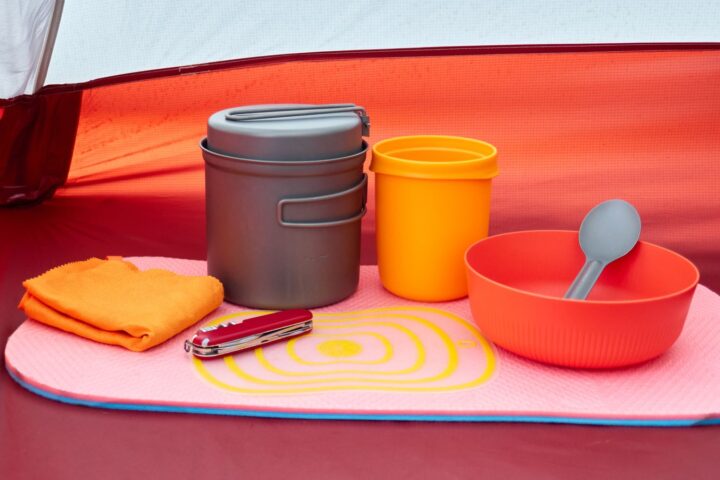
- Outside storage zone: food, trash, scented toiletries, cookware with residue, and fuel, stored according to local rules.
Keep the center aisle and every exit clear. If someone has to climb over a pile to get out, the layout is wrong.
Vertical Storage Ideas
1. Use built-in wall pockets only for true night items
Most modern tents include mesh pockets. Treat them as a nightstand, not a junk drawer.
Good uses: headlamp, glasses case, lip balm, a small notebook, earplugs.
Poor uses: water bottles, multi-tools, snacks you will eat in the tent, or anything that can leak. Overloaded pockets sag, rub the fly, and dump contents when you brush the wall.
2. Hang a gear loft for light, dry items only
A gear loft is a mesh shelf that clips to ceiling loops. It is one of the best small-space upgrades because it uses air you cannot sleep in.
Store hats, gloves, a book, a dry stuff sack of next-day clothes, or a compact first-aid pouch. Keep the load light and even. Many loft designs are intended for a few pounds at most; concentrated weight stresses attachment points and can sag into your face while you sleep.
Do not put sharp tools, heavy bottles, or soaking-wet clothing in a loft.
3. Add a hanging organizer only if the tent can hold it
Over-the-door shoe organizers and mesh caddies are popular in large car-camping tents. They work when you attach them to poles with padded straps or to factory loops with light carabiners.
They fail when clipped to fabric, mesh, or seam tape. Point loads tear coating and stretch stitching. Keep bulky items in the bottom pockets and stay in a modest weight range; hanging organizers often support only a dispersed 5 to 15 pounds, and ultralight backpacking tents may tolerate just 1 to 2 pounds on ceiling loops.
If the organizer slides down a pole, the straps are too smooth or the load is too high. That is a warning, not a reason to cinch harder.
4. Clip carabiners and S-hooks to factory loops
A few small clips turn existing loops into hanging points for a lantern, a mug, a dry pair of socks, or a stuff sack of toiletries you will carry to the bathhouse.
Use factory loops and pole intersections. Avoid hanging anything from a single piece of mesh. In rain, hang items so they cannot drip onto sleeping bags.
5. String a short interior line for damp layers
A length of paracord between two approved loops creates a mini clothesline for a damp shirt, a washcloth, or tomorrow’s socks.
This is for residual moisture, not soaked rain gear. A dripping jacket inside a closed tent raises humidity and feeds condensation on the fly. Dry heavy wet items under a vestibule or outside when weather allows.
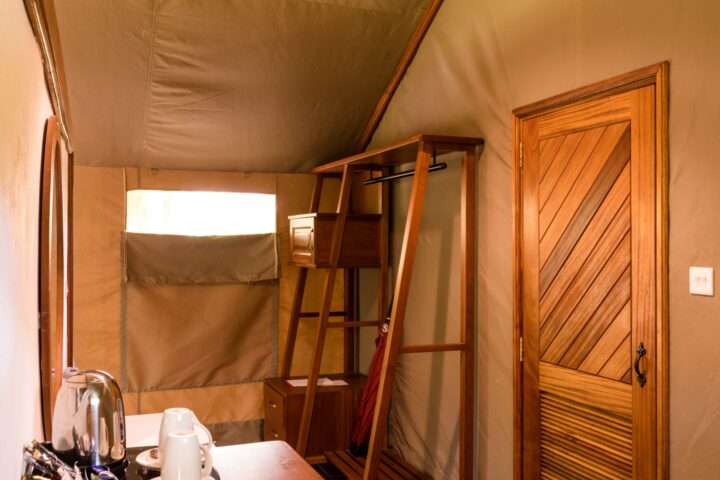
6. Use tent-pole space in cabin and family tents
Cabin-style tents with near-vertical walls can take a tension rod, a lightweight hanging shelf, or a compact clothing rack. That option does not exist in a low dome.
If you add a rod, keep it off the fabric and do not force the walls outward. The poles already carry wind load.
7. Turn an empty backpack into a piece of furniture
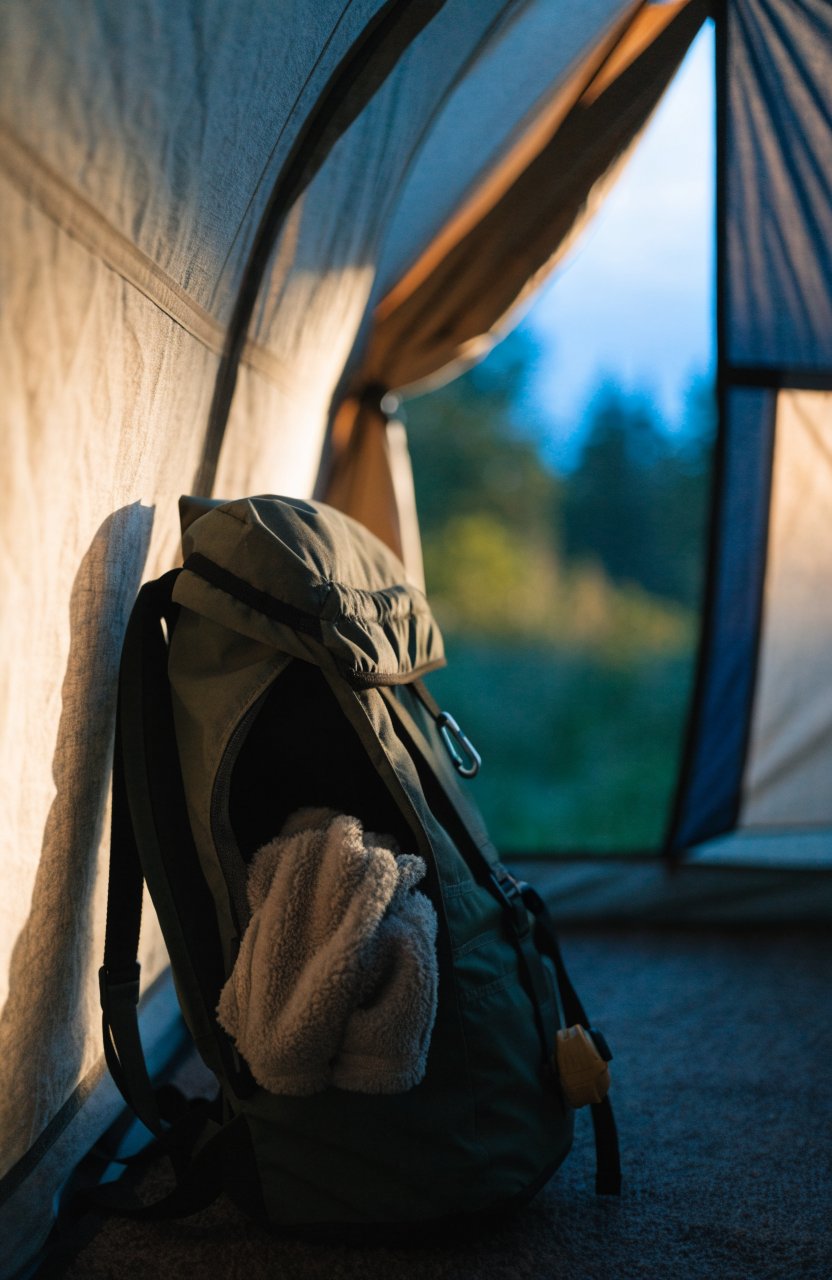
After camp is set, a backpack can stand in the vestibule or at the foot of the pad and hold layers you may need overnight. Point the opening toward you so you are not digging blind.
Do not lean a loaded pack against a single tent pole or rainfly wall. The pressure can deform the shelter and transfer condensation onto the pack.
Doorway, Vestibule, and Dirt Control
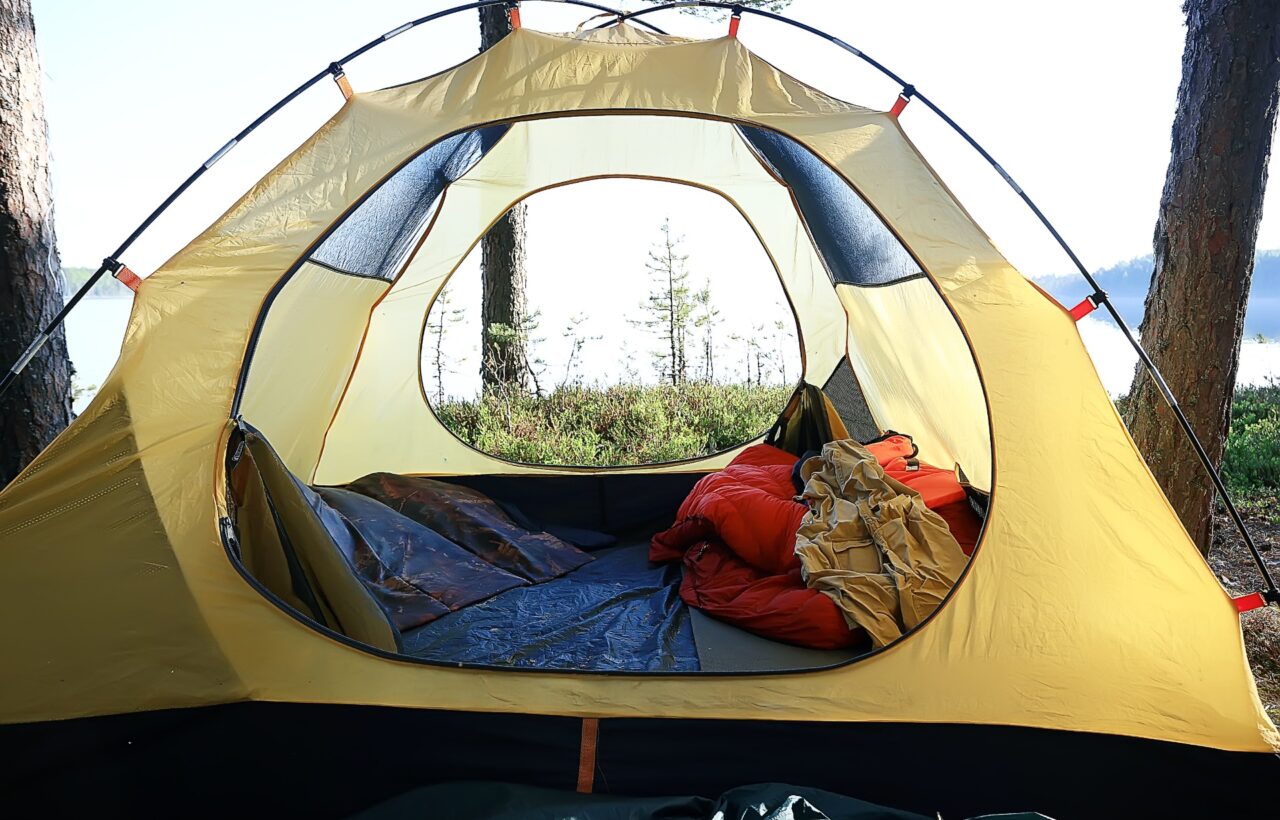
8. Treat the vestibule as a mudroom
The vestibule is the most valuable storage you already paid for. Boots, gaiters, a covered pack, and a wet shell belong there.
Keep the door swing clear. Pair boots and point openings down or cover them so rain does not fill them. A small ground cloth or cheap plastic sheet under footwear stops mud from grinding into the tent floor.
9. Put a shallow tray or bin at the entrance
In a family or car-camping tent, a low bin just inside or just outside the door becomes the shoe corral. People drop footwear in one place instead of tracking grit onto pads.
Choose something easy to lift and dump. A tall tote at the door blocks the exit and becomes a trip hazard in the dark.
10. Use the footprint as a dirty-gear landing pad
A footprint protects the floor, but it also marks a clean/dirty boundary. Leave muddy shoes and wet stuff sacks on the exposed footprint outside the inner tent rather than tossing them onto the sleeping area.
If you do not have a matching footprint, a small doormat or extra groundsheet square does the same job.
11. Keep a mini broom and do a two-minute sweep
Sand, pine needles, and food crumbs work into zippers and pad fabric. A compact broom and dustpan are more useful in a tent than another organizer pocket.
Sweep before pads go down and again before bed. Shake bedding outside when it is dry enough. Dirt left overnight becomes morning grit in every bag.
Bags, Cubes, and Category Systems
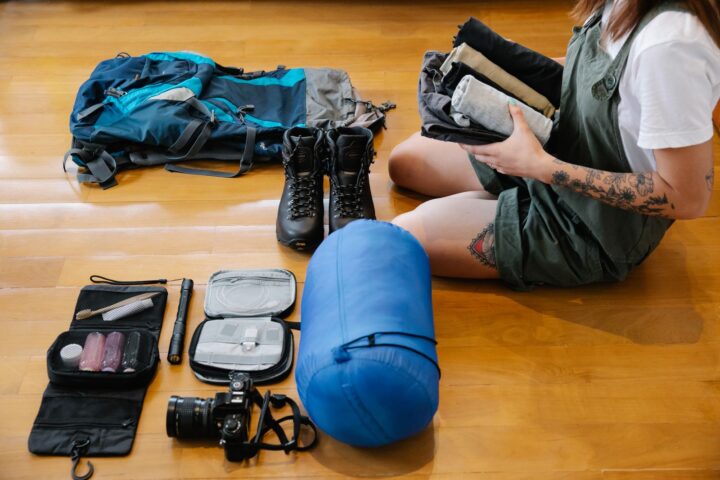
12. Color-code dry bags by category
Color beats labels when you are tired. One common system: one color for sleep clothes, one for next-day clothes, one for electronics, one for first aid, and a clearly separate bag for anything damp.
Dry bags also protect against splash from the door and drips from condensation. They do not replace wildlife-safe food storage. A yellow “food” dry bag still belongs in a locker, canister, vehicle, or approved hang, not in the tent.
13. Use packing cubes by person or by day
In a shared tent, one cube per person stops the “whose socks are these” pile. For longer trips, pack one cube per day and use the empty cube as a dirty-clothes bag.
Roll clothes inside the cubes. Rolling packs tighter than folding and makes it easier to pull one outfit without unpacking the rest.
14. Compress bulky sleep gear after you wake up
Compression sacks shrink sleeping bags, extra blankets, and puffy jackets so they can live at the foot of the tent or in the vestibule instead of claiming half the floor.
Do not live out of a fully compressed bag all day if you can avoid it. Loosen insulation when you have space so loft can recover before night.
15. Give dirty clothes their own hanging hamper
A mesh laundry bag hung in the vestibule or from a sturdy loop keeps worn clothes from mixing with clean layers and lets them air.
Avoid sealing damp laundry in a plastic bag inside the sleeping zone. That bag will smell by morning and can wet nearby gear.
16. Build one bedside kit instead of scattering small items
Put the things you always hunt for into a single small stuff sack: headlamp, spare batteries, glasses, medication, a lighter if you need one outside, and a tiny trash pouch for wrappers that should not stay in the tent.
The kit lives in the same pocket every night. When you break camp, the kit goes in the same pack pocket. That habit prevents more lost gear than any specialty organizer.
Car-Camping Upgrades That Do Not Belong on a Backpack
17. Use a crate, tote, or collapsible shelf as a nightstand
Hard-sided bins shine when you arrive by car. A closed tote becomes a table for a lantern and book. An open crate holds shoes. After you unpack, the same bin that carried kitchen gear can hold clothes.
Clear bins help you see contents, but they are heavy and bulky. Leave them out of backpacking loads.
A collapsible camp shelf can hold toiletries and clothes in a tall family tent. Place it against a wall, not in the walking lane, and keep liquids on the lowest shelf.
18. Create under-cot storage
Cots waste less floor than they appear to if you slide shoes, cubes, and extra layers underneath. Keep only dry items there. Anything damp will wet the underside of the sleeping surface.
Leave a gap so you can still reach the door without dragging bags across the floor.
19. Assign labeled homes in family tents
Group camping fails when “the flashlight” lives in four places. Give shared gear a labeled bin or hanging pocket: lighting, first aid, kid extras, and bathroom kit.
Give each child one bag that stays on their pad or under their cot. Shared piles look efficient until someone needs a rain jacket at 11 p.m.
Safety, Scent, and Night Routine
20. Keep food, trash, and scented products out of the tent
This is the organization rule people skip because a granola bar in a pocket seems harmless. It is not a storage shortcut.
In bear country, food, wrappers, toothpaste, deodorant, sunscreen, lip balm, dirty cookware, and flavored drinks stay out of the tent and usually out of the vestibule. Use the method the land manager requires: locker, locked hard-sided vehicle, certified canister, or a proper hang. A common layout separates sleep, cooking, and food storage rather than clustering all three around the tent.
Even outside bear habitat, crumbs and scented trash invite raccoons, rodents, and insects. Eat outside. Pack wrappers out of the shelter as soon as you finish.
Never store fuel or a stove in the sleeping area. Spills, vapors, and burn risk are not worth the convenience.
21. Do a three-minute nightly reset
Organization dies without a closing routine. Before you zip in for the night:
- Return small items to the night-zone pocket or bedside kit.
- Move boots and wet layers to the vestibule.
- Clear the doorway.
- Confirm food and trash are stored correctly.
- Place tomorrow’s warm layer where you can grab it without sitting up and searching.
That short reset is the difference between a tent that stays usable for five nights and a tent that is a laundry pile by night two.
What to Store Where
| Item | Best home | Why |
|---|---|---|
| Headlamp, glasses, medication | Wall pocket or bedside kit | You can reach them without leaving the pad |
| Clean sleep clothes | Dry sack near the pad | Stays dry and separate from day clothes |
| Next-day outfit | Cube, loft, or foot of tent | Easy morning change without unpacking everything |
| Boots and gaiters | Vestibule on a small mat | Mud stays off the sleeping floor |
| Rain jacket that is still wet | Contained bag in vestibule | Limits drips and humidity inside |
| Backpack | Vestibule or foot of tent | Preserves aisle space |
| Food, trash, toothpaste, sunscreen | Approved outside storage | Reduces animal risk and odor in fabric |
| Stove and fuel | Outside the tent | Avoids fire, spill, and vapor hazards |
Backpacking Tent vs Family Tent: Use Different Tools
A two-person trail tent is organized with pockets, one loft, a couple of dry bags, and a strict vestibule rule. Extra organizers add weight and strain thin poles.
A 6- to 8-person cabin tent can handle bins, a hanging shoe organizer, a collapsible shelf, and a door mat. The failure mode there is bringing so much “organization gear” that the living space disappears.
Match the system to the shelter:
- Backpacking: zones, pockets, dry bags, vestibule, nightly reset.
- Car camping: those same habits plus bins, a shoe tray, optional hanging storage, and under-cot space.
- Festival or multi-day basecamp: one bag per person, a dirty-clothes hamper, and a shared labeled bin for lights and first aid.
Keeping a Small Tent From Sliding Back Into Mess
Small tents slide back into clutter through a few repeat habits, each listed with the fix that stops it.
| Problem | Likely cause | Fix |
|---|---|---|
| Ceiling loops tugging on seams | Heavy bottles like a full Nalgene hung from light-duty loops | Hang only light items from the ceiling loops. |
| Mice and animals drawn to the tent | Storing snacks inside, since even sealed food scents the fabric | Keep food out of the tent instead of using it as a pantry. |
| Slow exit through the doorway | Gear piled where it blocks the tent doorway | Keep the doorway clear so you can get out quickly. |
| Whole clothing bag wet overnight | Wet and dry items mixed together in one duffel | Pack wet items separately from dry clothing. |
| Corners filling with extra stuff | Buying organizers instead of cutting spare pillows, shoes and gadgets | Bring less: drop the second pillow, extra shoes and just-in-case gadgets. |
| Gear wet from the inside out | Items pressed against the fly or inner wall collect condensation | Keep all gear off the tent fabric. |
Frequently Asked Questions
Can I keep a snack in the tent if it is in a hard container?
Not in bear country, and it is a poor habit anywhere wildlife is present. Hard plastic does not remove scent. Follow local storage rules for all food and scented items.
Where should boots go if it is raining hard?
Keep them in the vestibule on a small mat or inside a dedicated wet bag. Bring a dry camp shoe or sock layer for inside the tent so you are not choosing between muddy boots and bare feet on a wet floor.
Is a hanging shoe organizer safe in every tent?
No. It is a car-camping tool for sturdy cabin or large dome tents when attached to poles or strong loops. Skip it in ultralight and most backpacking tents.
How do I organize a tent shared with kids?
Give each child one bag or cube. Put shared lighting and first aid in a labeled spot adults control. Use a door bin for shoes. Keep snacks out of sleeping bags. A dim overhead light or string of battery lights reduces midnight rummaging.
What if my tent has no gear loft or pockets?
Use a small stuff sack clipped to a factory loop as a hanging pocket, and keep the rest of the night kit at the head of your pad in one bag. You do not need a specialty loft to keep the floor clear.
Should I organize the tent as soon as it is pitched?
Yes, at least the sleeping and night zones. Once people are tired and hungry, bags stay where they land. Pitch, lay pads, set the night kit, then deal with the kitchen.
A tidy tent is not a styled campsite photo. It is a shelter where you can find a headlamp, keep your bag dry, and leave quickly if the weather turns. Use the four zones, keep weight off the fabric, store scent outside, and reset the space before you sleep. Those habits make the other 21 ideas work.