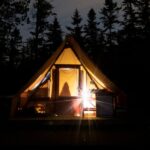
Three jobs matter more than matching lanterns in a tent camping setup: stay dry, sleep well, and stop walking in circles every time you cook or change shoes. The ideas below work for car camping first, with notes for backpacking where the same principle still applies but the gear gets smaller.
Most soggy, sleepless first nights come from the same sequence error: fire and dinner first, tent last, on whatever patch of ground is left. Reverse that. Shelter and sleep land on the best ground. Everything else is built around them.
Start With the Site, Not the Tent Bag
Walk the whole pad before a pole comes out. You want durable ground (packed dirt, gravel, pine duff, or an established pad), a slight rise so rain sheets away, no dead branches overhead, and enough room for guy lines. In backcountry, camp on durable surfaces and stay about 200 feet—roughly 70 adult paces—from lakes and streams so wildlife can reach water and runoff stays out of the source.
Face the tent door away from the prevailing wind. Keep the sleeping area upwind of the fire and kitchen so smoke and food smell do not sit in the fly all night. A common working distance for a campfire is at least 15 feet from tents, vehicles, and dry brush; local fire rules can be stricter, and an existing fire ring beats building a new one.
If the pad slopes, align the tent’s long axis with the slope and put heads on the high end. Side-to-side tilt rolls people off pads. A little downhill at the feet is usually tolerable; a sideways lean is not.
17 Tent Camping Set Up Ideas
1. Treat camp as four zones, not one pile
Draw an invisible floor plan: sleep, cook, gear, and fire. The tent goes on the flattest, driest, quietest patch. The kitchen sits downwind of the tent and close enough to the picnic table or stove that you are not carrying hot pots across guy lines. Gear lives at the edge—tailgate, tote stack, or one folding table—so the living space stays walkable. Fire stays in its own circle with a water bucket next to it.
This single idea prevents most “why is everything wet and in the way” mornings.
2. Pitch the tent first, while you still have daylight and patience
Arrive with enough light to walk the site. Clear sticks and pinecones, then lie down on the dirt for ten seconds. Ground that looks flat often is not. Stake corners after the body is oriented the way you want to sleep, not the way the bag happened to unroll.
Practice the exact tent at home once. Color-coded poles and clips make more sense after one dry run than they do in a parking-lot wind at dusk.
3. Use a footprint that is smaller than the tent floor
A groundsheet protects the floor and keeps packing dirt off the inner tent. It must sit fully under the floor. If any edge sticks out, rain running off the fly lands on the tarp and channels under the tent. Fold a generic tarp inward on every side. A manufactured footprint is usually cut slightly small for this reason.
Skip trenching. Relocate if water starts flowing through the pad.
4. Aim the door for wind, sun, and the path you will actually walk
Door into the wind turns the opening into a funnel. Door straight at the fire puts sparks and glare in your face. Door into low morning sun wakes the whole tent early.
A useful default for many campgrounds: door toward the picnic table or vehicle path, opening sheltered from the main breeze, not aimed due east unless you want a 5:30 a.m. alarm. Leave a clear shoe-off strip so people are not stepping over sleeping pads.
5. Put the rainfly on even when the sky is clear
Dew, sap, and a 2 a.m. shower do not wait for the forecast to update. A taut fly with a visible air gap between fly and inner tent is the weather system. A sagging fly that kisses the mesh transfers water inside and turns condensation into drips.
Stake every intended guy-out. Extra line and a few spare stakes weigh little in a car and matter when soil is soft or rocky.
6. In wind, anchor first, then build the shape
Do not assemble a kite and hope. Weight the tent body with packs as soon as it is unrolled. Stake the windward corners before the poles go high. Work from the upwind side so fabric cannot billow and yank poles out of grommets.
Drive stakes at an outward angle, not straight down. Short wire stakes fail in loose soil; carry a few longer or hook-style stakes for dirt and sand. If gusts are moving whole trees, pick a more sheltered pad or delay the pitch. Site beats heroics.
7. Turn the vestibule into a mudroom
Shoes, wet jackets, and a small bin for headlamps belong in the vestibule, not on the sleeping floor. Keep the inner door zipped enough that blown grit stays out. In rain, this is also where a towel and a dry stuff sack live so nobody crawls into bed in wet shells.
One vestibule as entry, the other (if you have two) as gear locker, stops the midnight gear avalanche.
8. Build the sleep stack before you cook
Comfort at 2 a.m. is a pad that actually insulates, a bag rated colder than the expected low, and a pillow that does not deflate into a shirt. A closed-cell foam pad under an inflatable pad adds puncture insurance and extra warmth. Put the bag in the tent as soon as the fly is on so it can loft instead of staying compressed in a sack until bedtime.
On a mild slope, a foam pad also reduces the slow downhill slide that an air mattress encourages.
9. Give every sleeper a reach zone
Use the built-in pockets for glasses, a headlamp, and a water bottle. A small stuff sack per person beats a shared clothing explosion. Keep a dry layer in the foot of the bag. Phones and batteries sleep in a pocket, not under a pad where condensation collects.
If the tent is crowded, bags go head-to-head or along the walls so the center aisle stays open. Rated “6-person” tents usually sleep four people plus gear without misery. Size up one if bags and boots need to live inside.
10. Add a living roof that is not the sleeping tent
Most of the day is spent outside the tent. A pop-up canopy or a taut tarp over the picnic table creates shade, rain cover, and a place kids can play without sitting on sleeping bags. Set it far enough from the tent that dripping eaves and guy lines do not collide.
For backpacking, a small tarp between two tents or a porch-mode door can do the same job at lower weight.
11. Build a kitchen triangle: prep, cook, wash
Park the cooler and pantry tote in one spot, the stove on level mineral soil or the table, and the wash bin downwind and away from the water source. Gray water gets scattered on durable ground, not dumped in a creek. Never cook in the inner tent; a vestibule is only a last-resort rain porch, and even then you need ventilation and a stable stove.
A cheap table saves backs. Cooking off the ground also keeps the stove out of pine duff.
12. Store food and smellables away from the sleeping zone
Coolers, snacks, toothpaste, and trash do not belong in the tent, even at a busy campground. In bear country, follow the local rule: approved locker, canister, or a proper hang well away from camp—often 100 feet or more from tents. A clean kitchen at dusk is part of the setup, not an optional chore.
If raccoons are the local problem, straps and a closed hard cooler still beat “we’ll just keep it in the vestibule.”
13. Light the paths, not the bedrooms
One lantern on the table, headlamps for tasks, and a dim light near the tent door cover real needs. String lights are fine on a canopy. They are less fine draped inside a mesh tent if anyone is trying to sleep.
Mark guy lines with reflective cord or a bit of bright tape. Night trips to the restroom should not include a clothesline to the forehead.
14. Keep a rain sequence ready before the first drop
If showers are likely, pitch a tarp first and assemble the tent under it, or use a fly-first / all-in-one pitch if your shelter allows it. Stuff dry clothes and bags into the inner tent the moment it is standing. Wet layers stay in the vestibule.
Do not wait until fabric is soaked to tension the fly. Pockets of standing water on a slack fly find seams.
15. Fight condensation with airflow, not more plastic
People, wet shoes, and damp ground load the air with moisture. A sealed tent on a cold night turns that moisture into indoor rain. Crack the vents, keep a gap between fly and inner, and do not pile gear against mesh walls. Wipe obvious drips; increasing ventilation beats adding another tarp that traps humid air.
Cooking, wet dogs, and dripping rain jackets inside the inner tent make this worse in a hurry.
16. Split a group across two smaller tents plus a shared cover
One giant cabin tent looks efficient and then becomes a hallway of zippers and snoring. Two modest tents plus a canopy often sleep people better, pack faster for some groups, and give teenagers or early risers a door of their own. A short rug or Tyvek strip between tents cuts the mud tracked inside.
Use one kitchen. Do not clone the entire cook kit for each tent.
17. Tear down in reverse, and leave the pad looking unused
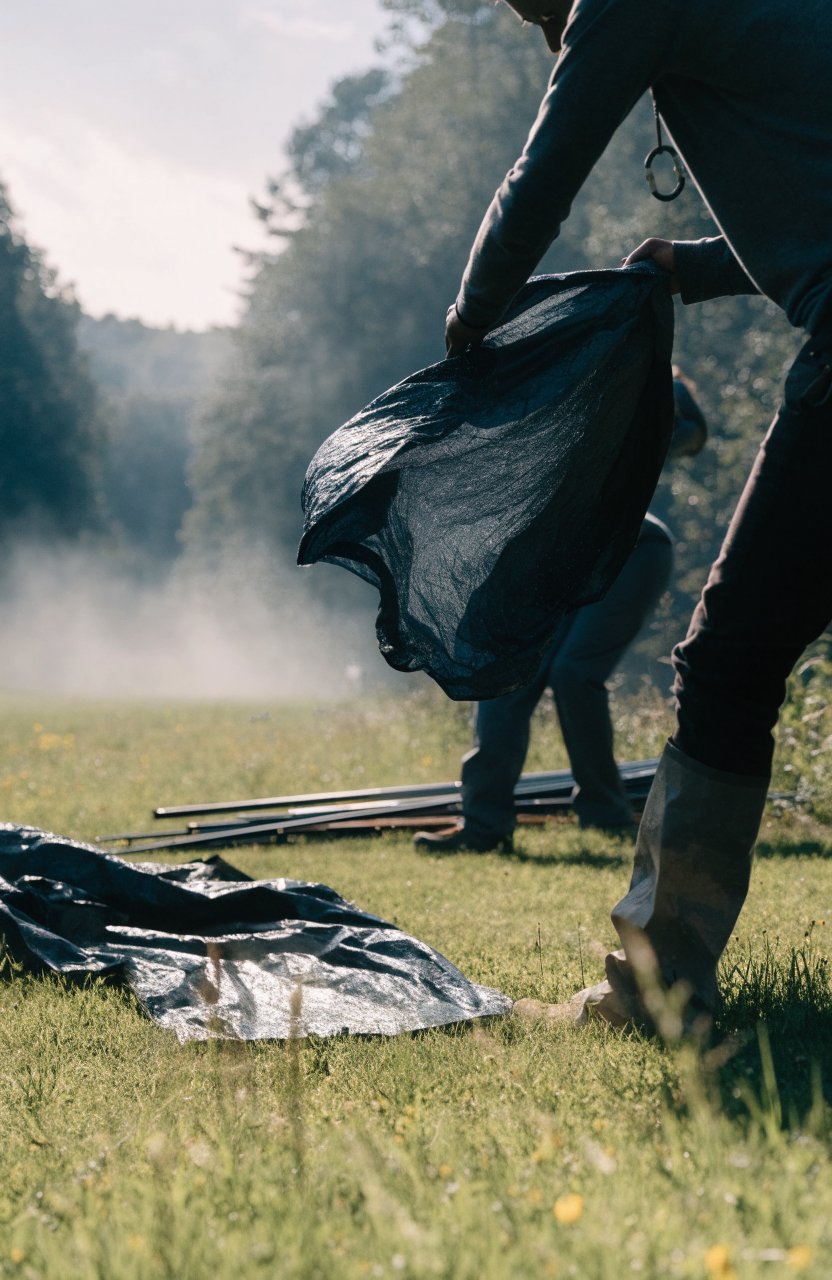
Morning order: food packed, stove cold, tent emptied and dried as much as weather allows, fly off after the inner is clear, poles last so the body does not sit in dirt. Shake the footprint dirty-side out. Check for stakes and trash on a slow walk around the site.
In developed campgrounds, stay inside the pad so the site does not creep into vegetation. In the backcountry, scatter needles over scuffs and pack out every scrap. A clean close is part of the setup you will want next time.
Build the fire downwind of the tent door, never upwind. Stake the fly early as well, before it has spent an hour slapping against the inner tent.
Which Ideas Matter Most for Your Trip
| Situation | Prioritize | You can skip or shrink |
|---|---|---|
| One-night car camp, fair weather | Ideas 1–5, 8, 11 | Full canopy village, elaborate lighting |
| Multi-day family campground | Ideas 1, 7, 9, 10, 13, 16 | Ultralight compromises |
| Rain in the forecast | Ideas 3, 5, 14, 15 | Interior décor |
| Wind or exposed pad | Ideas 2, 4, 6, extra stakes | Tall unguyed canopies |
| Backpacking | Ideas 2–6, 8, 12, 15, 17 | Cots, big tables, string lights |
| Bear or heavy-critter country | Idea 12 first, then 1 and 11 | Food in the tent “just overnight” |
Capacity ratings deserve a second look on any trip: a 4-person tent filled with four adults, two 25-inch pads, and a duffel each leaves little room. Clearing food wrappers from vest pockets before bed matters everywhere, too.
Frequently Asked Questions
Do I need a tarp under the tent? A correctly sized footprint is useful for floor wear and packing cleanliness. An oversized tarp is worse than none because it funnels water underneath.
Should the rainfly go on if it is not raining? Yes in most seasons. Dew alone can soak an inner tent. The fly also adds a bit of warmth and privacy.
How close can the fire be to the tent? Use the official ring when one exists, keep flame and sparks well away from fabric—15 feet is a common minimum, not a challenge to beat—and never leave a fire to “burn down” unattended. Drown, stir, drown again.
What if the only spot is sloped? Heads uphill, long axis with the slope, pads that do not act like sleds, and guy lines so the tent cannot creep downhill.
Is a cabin tent better than a dome for families? Cabin walls are nicer to stand in. Domes are often faster and more wind-tolerant. Choose based on how long you stay put and how hard the weather hits, not the photo of the interior.
A campsite feels like home when the next action is obvious: shoes here, stove there, bag already lofted, fly already tight. That is the whole point of these tent camping set up ideas—less hunting for gear, more of the trip you actually came for.