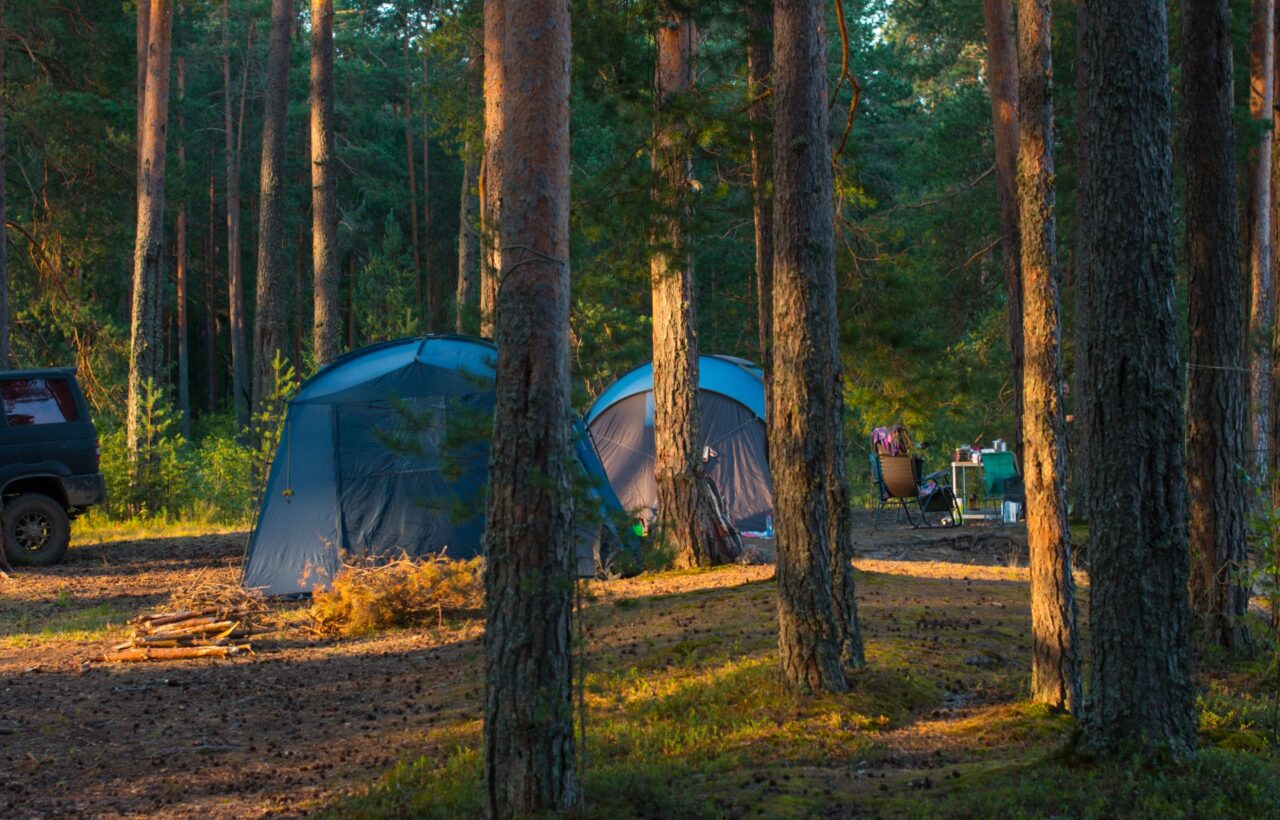
Tent problems are rarely mysterious. Water pools under the floor because the groundsheet sticks out. Condensation drips because vents stay closed. The tent flaps all night because the cheap factory stakes never held. A useful tent camping hack is not a novelty trick. It is a small change that keeps you dry, warm, organized, or faster to set up when the weather turns.
These 19 tent camping hacks are grouped by the job they do: pitching, weather, sleep, and packing. Use the ones that match your trip. Car camping and backpacking share the same physics. They do not share the same gear budget.
How to Pitch the Tent So It Stays Put
1. Keep the footprint smaller than the tent floor
A groundsheet or official footprint protects the floor from rocks and abrasion. It also becomes a rain collector if any edge sticks out past the tent. Water hits the fly, runs onto the exposed tarp, and wicks under the floor.
Trim a generic tarp so it sits a few inches inside the tent perimeter, or fold the extra fabric under before you stake. The floor should cover the sheet completely. This is one of the most repeated tent camping mistakes, and it is also one of the easiest to fix.
2. Check the slope with a water bottle, then sleep with your head uphill
Ground that looks flat often is not. Lay a mostly full water bottle on its side. If the bubble drifts, the site slants. Pitch so your head is on the high side. Sleeping downhill toward your head is a reliable way to wake up congested, sliding off the pad, or both.
Clear sticks and cones first. Lie down on the dirt for ten seconds before you unpack the poles. If a root hits your hip now, it will hit it at 2 a.m.
3. Avoid bowls, drain lines, and “pretty” low spots
A grassy dip looks sheltered. In rain it becomes a puddle. Look for a slight rise with drainage away from the door. Stay off dry creek beds and canyon shelves that can flash-flood. In forests, scan overhead for dead branches (“widowmakers”) before you commit to the site.
If the only available pad is imperfect, a shallow trench is not the answer on public land. Move the tent. Digging drainage around a tent damages the site and often fails anyway.
4. Stake every guyline, even when the evening is calm
Factory stakes that come with budget tents are often too short and too smooth. Wind arrives after dark. An unstaked rainfly turns into a sail and can snap a pole or lift the whole shelter.
Use all the guy points. Angle stakes at about 45 degrees, away from the tent. Upgrade to longer steel or Y-beam stakes for car camping and sandy or loose soil. In rock or packed dirt, carry a few nail-style stakes. A small mallet with a hook on the back is worth more than improvising with a boot.
5. Color-code poles and clip points before the first trip

Many tents use poles of similar length that only fit one way. Wrap a band of colored tape at matching ends, or mark the hub and the corresponding sleeve. Do this at home in daylight. At a trailhead in the rain, matching colors is faster than reading faded webbing labels.
If the tent has color-coded clips already, photograph the assembled tent once. That photo is more useful than the original instruction sheet after two seasons in a stuff sack.
6. Mark lines and stakes so you can walk at night
Guylines disappear after sunset. Tie short pieces of reflective cord, survey tape, or a cheap glow stick near each line. Wrap a bit of light-colored tape on stake heads if they sit in a walkway.
This is not decoration. Late bathroom trips and kids circling the fire are how people trip, yank a corner, and collapse a wall.
How to Keep the Tent Dry in Rain and Dew
7. Tie drip lines on any cord that runs toward the tent
Water follows rope. A taut guyline or tarp ridge can deliver a steady drip onto the fly or into the vestibule. Tie a short piece of cord, a shoelace, or a scrap of cloth around the line a foot or two before it reaches the tent. The water hits that knot and falls off.
Use the same trick on a clothesline strung to a tree near the door.
8. Treat condensation as moisture you produced, not a leaking tent
A dry night can still leave the inner walls wet. People and pets exhale water vapor. When that air hits a cold fly, it condenses. Touching the wall with a sleeping bag transfers that water onto gear.
Open roof vents. Crack a door or window on the downwind side if bugs and rain allow it. Keep bags and jackets off the fabric. Pitch where there is at least a little airflow instead of in a closed hollow next to a pond or wet meadow. Low, damp sites make condensation worse even with a good tent.
A small battery fan can help in still, humid weather. It will not replace ventilation.
9. Set up rainfly-first when you have to pitch in a storm
Practice both sequences at home: inner first (common on freestanding domes) and fly-first if your tent allows it. In rain, the goal is to get a roof up before the sleeping area soaks.
If the inner has to go up first, keep the packed tent in a vestibule or under a small tarp until the fly is ready. Wipe the fly in the morning with a packable cloth so you are not stuffing pounds of water into the sack. A reusable Swedish-style dishcloth works well and packs flat.
10. Build a mud barrier at the door
Most dirt in a tent arrives on shoes. Keep a cheap stuff sack or plastic bin in the vestibule for footwear. A small mat or extra piece of foam just inside the door gives you a place to kneel while you change.
Inside, a fitted sheet or thin tarp over the floor collects grit. In the morning you can lift the corners and shake it outside instead of sweeping sand into seams. Do not let that inner sheet hang outside the floor edge in rain, or you recreate the pooling problem from hack 1.
11. Know when to pack the tent wet — and what to do next
If you have to leave in rain, pack it wet. Do not wait hours for a storm to pass if you have a schedule. At the next dry stop, pitch it or hang it. At home, set it up or drape it until every seam is dry. A tent stuffed wet grows mildew in a closet faster than it fails on the trail.
Shake the free-standing tent while poles are still in, then invert it so the floor can air. Sand comes off easier before you roll.
How to Sleep Warmer and More Comfortably
12. Put tomorrow’s clothes in the sleeping bag
Cold mornings are worse when the next shirt is damp and stiff. Stuff the next day’s base layer at the foot of the bag. Body heat dries light moisture and takes the chill off the fabric. Do not store wet rain gear in the bag. That just moves water into your insulation.
13. Use a sealed hard bottle as a hot-water bottle
Boil water, fill a bottle you trust (a solid Nalgene-style bottle, not a flimsy disposable), tighten the cap, and wrap it in a sock. Place it at your feet or between pad and bag. Check the lid. A leak at 1 a.m. soaks the bag.
This is a comfort tool, not a substitute for a sleeping bag rated for the night’s low.
14. Insulate the ground before you upgrade the bag
Heat loss into the dirt is conduction. A warm bag on a thin pad still feels cold. Summer pads often sit around R-2. Cooler three-season nights generally need something closer to R-4. Near freezing, look higher still. A cheap foam pad under an inflatable pad adds R-value and protects the inflatable from punctures.
If you only buy one comfort upgrade for tent camping, make it the pad, not string lights.
15. Soften the floor only if you can afford the bulk
Interlocking foam tiles or a thin rug help car campers who hate the feel of taut nylon underfoot. They also trap sand. For backpacking, skip them. For family car camping, they are reasonable if the tent is large enough that tiles do not block the door.
Air mattresses are comfortable until they leak or go slack in the cold. If you use one, bring a patch kit and a pump that does not depend on a single set of batteries.
Small Gear Fixes That Prevent Bigger Failures
16. Free a sticky zipper with wax or graphite, not force
Tent zippers fail when dirt sits in the teeth and people yank them. Brush grit out first. Then rub a little candle wax, zipper lubricant, or pencil graphite along the teeth and work the slider gently. Forcing a stuck door zipper can separate the coil and end the trip.
Keep zipper pulls long enough to grab with gloves. A bit of cord through the pull helps at night.
17. Turn a headlamp and a translucent bottle into a lantern
A headlamp pointed into a water jug or large bottle scatters light across the ceiling. It is easier on eyes than a bare beam and leaves your hands free. Keep the lamp outside the bottle so heat and condensation do not sit on the electronics.
This does not replace a real lantern for a group kitchen, but it is enough to find a sock without waking everyone.
18. Carry a backup anchor for rock, sand, and broken grommets
When a stake will not hold, bury a stuff sack of sand or rocks (“deadman”) and tie to that. On rock, wrap a line around a solid boulder. If a grommet or corner loop fails, gather fabric around a smooth fist-sized stone and cinch cord behind the stone so the rock becomes the anchor point. Do not yank on a torn seam.
Pack a few extra stakes, a length of paracord, and repair tape. Those three items cover more tent failures than a second complete shelter.
19. Practice the full pitch at home, then pack the tent the same way every time
Set the tent up in the yard once per season. Time yourself. Replace missing stakes now, not at the trailhead. When you pack, fold or roll to the size of the sack you actually own. A “burrito” roll — flatten, fold to sack width, then roll tight — beats stuffing a wet, sandy blob into a too-small bag.
If the official sack has shrunk (they do), use a slightly larger mesh or dry bag. Fighting the original sack scratches coatings.
Troubleshooting the Tent Before Hacks Backfire
Four tent habits can undo every hack on this list, and each one comes with a straightforward correction.
| Symptom | Cause | Fix |
|---|---|---|
| Condensation and carbon monoxide risk | Cooking in the tent adds steam, fuel fumes and open flame | Cook outside; use the vestibule only with a stable, ventilated stove and accepted fire risk. |
| Animals drawn to the sleeping area | Food and toiletries kept in the sleeping area | Store smellables as the land manager requires, usually a locker, canister or hung bag away from the tent. |
| Wet tent from dew or showers | Rainfly left in the bag because the sky looks clear | Always put the fly on, since on most three-season tents it is part of the structure. |
| Four adults crammed in a four-person tent | Capacity numbers assume tight sleeping without gear inside | Buy one size up if bags and backpacks need to live inside. |
What to Pack Specifically for the Tent
Bring the tent, rainfly, poles, and all stakes as a complete kit in one bag. Add:
- Footprint or trimmed tarp
- Extra stakes and 20–50 feet of cord
- Mini mallet or stake puller
- Repair tape and a spare guyline
- Headlamp plus spare batteries
- Small towel or pack cloth for morning wipe-down
- Stuff sack for shoes
That list is short on purpose. Extra furniture helps some car campers and slows everyone else.
Frequently Asked Questions
Do I need a footprint if the tent floor is already waterproof?
It is still useful. The footprint takes abrasion so the floor does not. It does not make the tent warmer in a meaningful way. Size it correctly or skip it rather than using an oversized tarp that catches rain.
Why is the inside wet when it never rained?
That is usually condensation from breath and damp clothes, plus a cold fly and poor airflow. Open vents, keep gear off walls, and avoid camping in the wettest hollow on the map.
Should I leave the tent door open at night?
Only if bugs, weather, and privacy allow it. A cracked downwind vent is the usual compromise. Mesh doors can stay closed while fly vents stay open.
Is it better to stuff or fold a tent?
Either works if the fabric is reasonably dry and you do not grind grit into the coating. Consistency matters more than the method. Same fold, same sack, poles in their own sleeve so they cannot punch the floor.
Can these tent camping hacks replace a better tent?
No. A bent pole, missing seam tape, or single-wall shelter in a humid climate will still misbehave. Hacks reduce friction. They do not turn a damaged or poorly chosen tent into a four-season hut.
A tent works when the site drains, the fly is taut, the floor stays off pooled water, and the sleep system matches the night. Use the 19 tent camping hacks above as a checklist for those jobs, not as a pile of gadgets. The trip gets easier when the shelter stops being the main problem.