
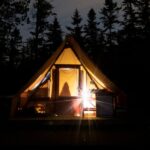
Air tent camping replaces the usual fibreglass or aluminium poles with sealed inflatable beams. You peg the corners, pump the beams to the pressure the maker specifies, and the frame rises without anyone threading sleeves or matching pole sections. For car camping and festival weekends, that is the whole appeal: a large shelter one person can stand up. It is not a backpacking system, and it is not maintenance-free.
The beams are not pool floats. On a proper camping tent they are tough bladders, usually TPU or PVC, sitting inside fabric sleeves that take the abrasion. Once inflated they act as the skeleton. Many family models use several separate beams, each with its own valve, so a soft tube does not automatically drop the whole tent.
What air tent camping really means
People looking up air tent camping are usually deciding whether to leave pole tents behind, or they already own an inflatable and want to know how to pitch it, how hard it will work in wind, and what happens if a beam goes soft. The useful comparison is not “new technology versus old.” It is speed and solo pitching against weight, packed size, price, and a different failure mode: a leak instead of a snapped pole.
Air tents show up under several names — air beam tents, inflatable tents, air pitch tents. The camping versions that matter here are framed shelters for drive-in sites, not bounce houses and not the tiny backpacking experiments a few specialist brands still sell.
How the frame actually works
Pressure is what makes the beam rigid. Manufacturers commonly specify something in the region of 6 to 8 PSI. That is bicycle-tyre territory, not car-tyre pressure, and it is model-specific. Over-inflating stresses seams and valves. Under-inflating leaves a soft arch that sags, pools rain, and moves more in gusts.
A good pump matters more than most buyers expect. Hand pumps work. On a large family tent they are slow and tiring, which is why many owners switch to a 12V electric pump once they trust the valves. The included pump is part of the kit. Leaving it at home is the same as leaving the poles behind.
Deflation is the reverse: open the valves, press the air out, and fold. Pack-down is often quicker than a pole tent because there is no pole sorting, but the packed bag is usually heavier and bulkier. Air beams do not collapse as small as segmented poles.
Who air tent camping suits
It fits when the tent travels in a car, the group is more than one or two people, and the main pain with the current tent is pitching.
It is a poor fit when:
- The trip is on foot. Packed weight and volume rule most air tents out of backpacking.
- The budget is tight. Equivalent air models often cost more than pole versions of the same size.
- The site is exposed and the forecast is a proper gale. Beams flex rather than snap, which is a real advantage, but a badly guyed air tent still moves, and some designs rely on internal bracing straps that cut into headroom.
- Boot space is already full. A six-berth air tent can be a large, heavy bag plus a pump.
Festival and family car camping is the centre of the category. Standing height, a porch, and a layout you can pitch after a long drive matter more there than ounces.
How to pitch one without fighting it
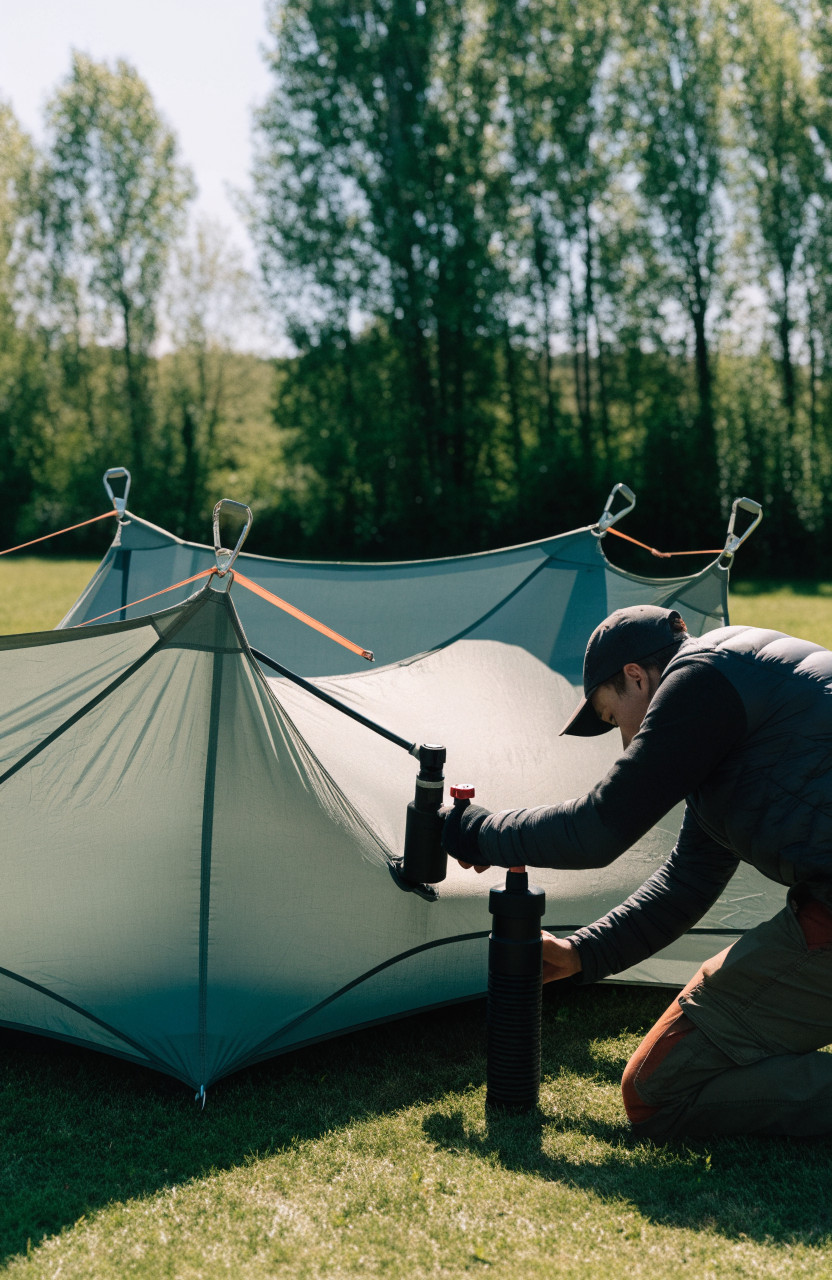
The sequence is short. The mistakes are in the order.
- Clear the pitch. Stones, sticks, and thorny scrub are the usual puncture sources. A footprint helps, but it must sit fully under the sewn-in groundsheet so rain does not run underneath and pool.
- Lay the tent out with the door facing the way you want it, then peg the four corners before you inflate. An unpegged tent can creep or lift as the beams fill, especially in a breeze.
- Open a door so the inner is not fighting a vacuum. Attach the pump to the first valve. Many pitchers start with a central beam and work outward so the tent rises evenly.
- Inflate to the stated pressure, close the valve properly, and move to the next beam. Do not guess “firm enough.” A pressure gauge, or a pump that stops at a set PSI, removes the argument.
- Peg every remaining point, then tension the guy lines. On soft ground, longer pegs at roughly 45 degrees hold better than short pegs driven straight down. Storm straps and cross-bracing, if the tent has them, are not optional extras in wind.
- Check the fly is taut and that water will shed, not sit in a belly between beams.
Take-down is easier if the tent is dry. If it is not, get it home and dry it before long storage. Damp polyester in a stuff sack is how mildew starts, air tent or not.
Air tent or pole tent
| Question | Air tent | Pole tent |
|---|---|---|
| Pitching | Peg, pump, guy. Often manageable alone on a large model. | Thread or clip poles. Large tents are easier with two people. |
| Failure in wind | Beams flex and recover. They can still deform or collapse a panel in a hard side gust if under-inflated or poorly guyed. | Poles can snap or bend permanently. A spare section is a simple fix. |
| Packed load | Heavier and bulkier. Pump required. | Lighter and usually smaller. Poles can be lost or bent in the car. |
| Repair on site | Patch kit, like a bike tube. Awkward in rain at night. Some tents sell spare bladders. | Replace or splint a section. Often cheaper and faster. |
| Price | Typically higher for the same berth count. | Wins if cost is the constraint. |
| Best use | Car camping, families, festivals, anyone who hates pole faff. | Backpacking, tight budgets, people who already pitch quickly. |
Performance in ordinary weekend weather is close once both tents are properly pitched. The gap is in labour and in what breaks.
Wind, rain, and the overnight pressure drop
Wind performance depends more on pegging than on the marketing claim. Use every guy point. Pitch the narrow end or the most aerodynamic face into the prevailing wind when the site allows it. A beam that bends and springs back is doing what it was designed to do. A roof that inverts and stays inverted usually means low pressure, missed guys, or a gust hitting the side panel square on.
Rain is a fabric question, not an air-beam question. A hydrostatic head around 3,000 mm on the fly is a common baseline for sustained rain in temperate camping; higher ratings and taped seams are the safer buy if you camp in wet climates. Seams and the groundsheet matter as much as the headline number. A belly of slack fabric will hold water regardless of the rating.
Temperature moves the pressure. Beams pumped in warm afternoon sun lose firmness as the night cools. A quick top-up in the evening is normal, not a leak. The reverse also happens: a tent inflated cold and then baked in direct sun can rise above the recommended pressure. If the day is going to swing hard, check the beams rather than leaving them.
Condensation is a separate complaint. Cold beams in a warm, humid tent can drip even when it has not rained. Ventilation, not more pressure, is the fix. Keep doors or vents cracked when weather allows, and do not dry wet kit against the tubes.
Punctures, slow leaks, and what to carry
A sleeve protects the bladder from most casual contact. The realistic risks are thorns, a peg driven through a tube, a valve that does not seat, and a seam that weeps. Cheap tents fail at valves and seams more often than premium ones; that is where brand and construction quality show up.
Carry the patch kit that came with the tent, and know how to use it before you need it. A repair in dry weather takes minutes. The same repair in a storm at 2 a.m. is miserable, which is why prevention beats heroics: clear the ground, do not pitch into scrub, and do not drag the tent across gravel while it is inflated.
If one beam softens and the others hold, you can often camp the night and patch in the morning, provided the remaining tubes and guys keep the fly off you. If the design uses linked beams on one valve, a single leak is a bigger problem. Check that detail before you buy.
What is worth checking before you pay
- Beam layout and valve count. Independent beams are more forgiving.
- Stated pressure and whether the pump can reach it without a marathon.
- Fly rating, taped seams, and a sewn-in groundsheet.
- Real height and floor size, not just the berth number. A “six-person” tent is often realistic for four once bags and sleeping pads are inside.
- Weight and packed dimensions against your boot, not against a brochure photo.
- Spare bladder availability and a repair kit in the box.
- Guylines and peg quality. Thin pegs are the first thing many owners replace.
Dark bedrooms, a porch you can cook under in a shower, and a standing area change how a wet weekend feels. Those layout details matter more than a one-minute difference in inflation time.
Why air tent nights go wrong
Pumping before the corners are pegged, so the tent walks across the pitch. Stopping at “it looks firm” instead of the stated PSI. Skipping guys because the evening is calm. Storing the tent wet. Pitching beside gorse or a low branch that saws on a sleeve all night. Forgetting the pump, or bringing only a hand pump for a tent that needs several large beams. Treating a pressure drop at dusk as a disaster instead of topping up.
None of those are mysteries of the technology. They are pitching and care habits.
Questions that come up after the first trip
Do air tents slowly go flat every night? A small drop with falling temperature is expected. A beam that is soft again by morning, in stable weather, points to a valve or a leak worth finding before the next trip.
Can one person pitch a family air tent? On most current designs, yes. Wind is the variable. Peg first, and keep a hold on the fly while the first beams fill if the site is gusty.
Are they safe in storms? They handle ordinary camp wind well when fully inflated and fully guyed, because the beams flex instead of snapping. They are not a reason to ignore a severe-weather warning. Leave the exposed pitch if the forecast is beyond what you would trust with any tent.
Is a cheap inflatable worth it? For fair-weather, occasional use, sometimes. Valve and seam quality is where budget tents age badly. If the tent is the shelter for wet family trips, the repair path and the fabric rating matter more than the lowest price.
Can you backpack with one? A few lightweight air-beam backpacking tents exist. The mainstream air tents sold for families are car-camping gear. If the walk-in is more than a short carry from the vehicle, a pole tent is still the practical choice.