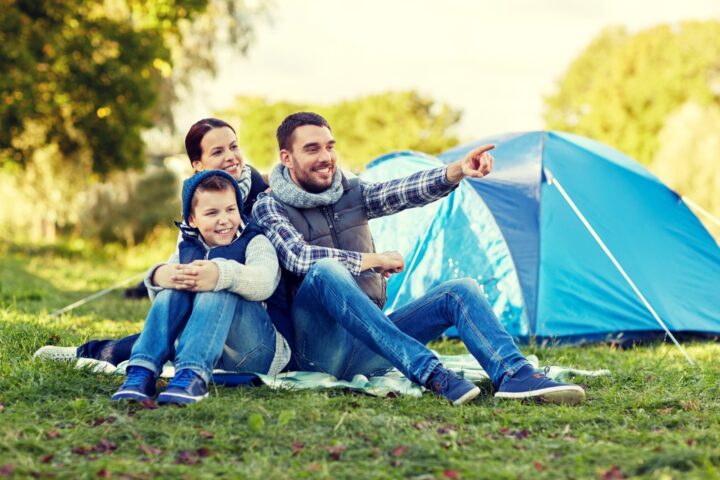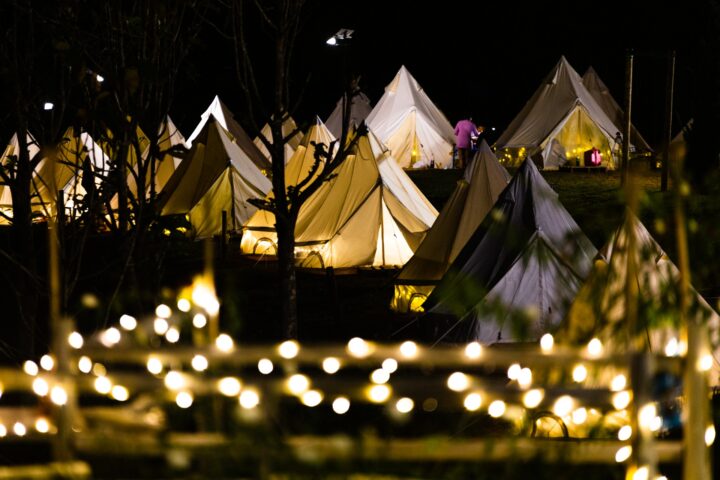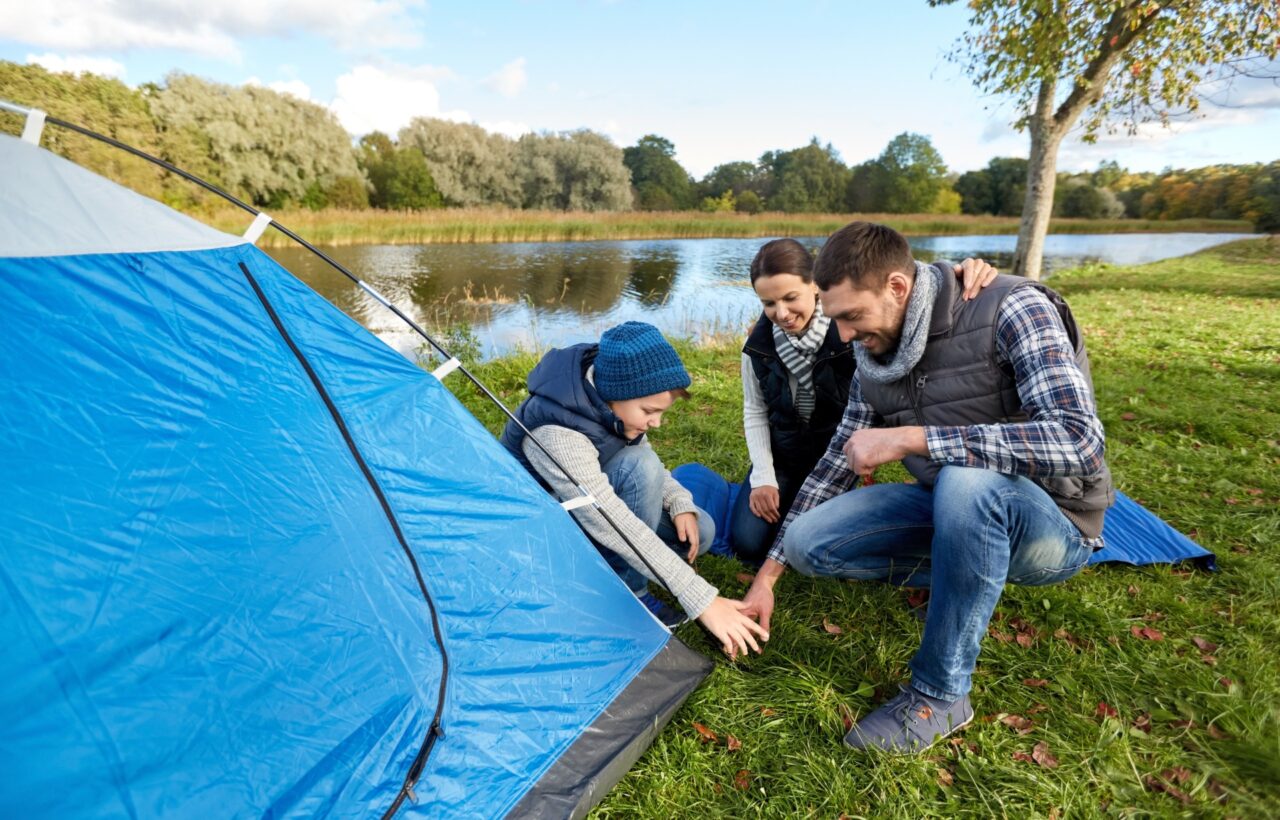

Manufacturer person-counts are optimistic, which is the first problem any family tent camping setup has to solve. REI’s floor-area guidance puts a family of four who cannot pack light at about 75 to 88 square feet, and 110 to 160 with a dog or guests. A vestibule holds boots and packs but adds no walking space.
These 15 ideas plan sleeping spots, food, smoke, rain and 2 a.m. bathroom routes before anyone unrolls a pole. On a developed campground, use the assigned pad. When dispersed camping, Leave No Trace and the National Park Service recommend staying 200 feet from water.
How to pick a setup before you unpack
Match the layout to the constraint, not to a photo.
| Constraint | Setup that usually wins | Why |
|---|---|---|
| One car, one pad, young kids | Single cabin tent, sized up | One pitch, everyone in sight, less gear to manage at dusk |
| Older kids or a dog | Two tents, or one tent with a real divider | Noise and night exits stop waking the whole group |
| Rain in the forecast | Vestibule plus a canopy over the kitchen | Wet clothes stay out of the sleeping floor |
| Narrow or sloped site | Linear layout, heads uphill | Stops the “slide into the wall” problem |
| Wind above a light breeze | Narrow end into the wind, all stakes and guylines | A tall cabin wall acts like a sail |
Pitch the tent at home once. Color-coded poles and instant frames still fail the first time if a hub is stiff or a stake is missing.
Sleeping layouts inside the tent
1. Size up to a cabin tent and treat it as a rainy-day room
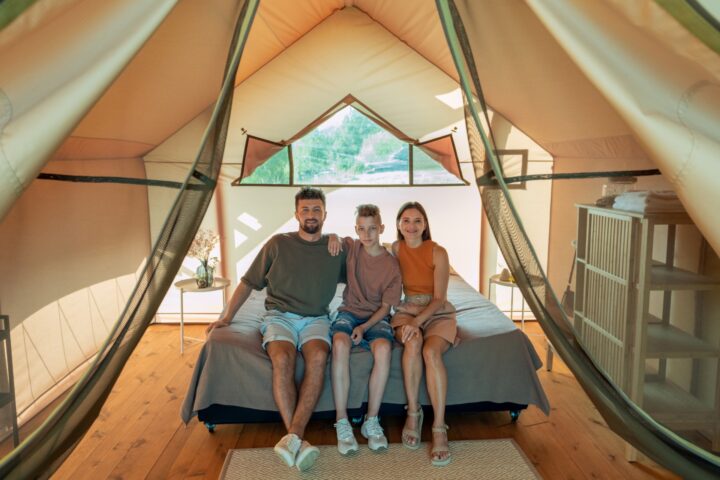
A cabin tent has near-vertical walls, so adults can stand and change without crouching into the kids’ sleeping bags. Dome tents shed wind better and weigh less, but the sloping walls steal floor space once you add cots or a queen air mattress. For car camping, the cabin is usually the better family room, provided the site is not a wind tunnel.
Buy at least one size above the headcount. A “6-person” tent is often comfortable for two adults and two small children, not four adults plus packs. Two doors matter more than a logo: a midnight bathroom trip should not require climbing over a sleeping child.
2. Split the family across two tents
One large tent is simpler. Two tents are calmer once kids are old enough to sleep apart. Put parents in the smaller tent and children in the larger one, or the reverse if a toddler still needs an arm’s reach. Face the doors toward each other so a flashlight check does not mean a walk across camp.
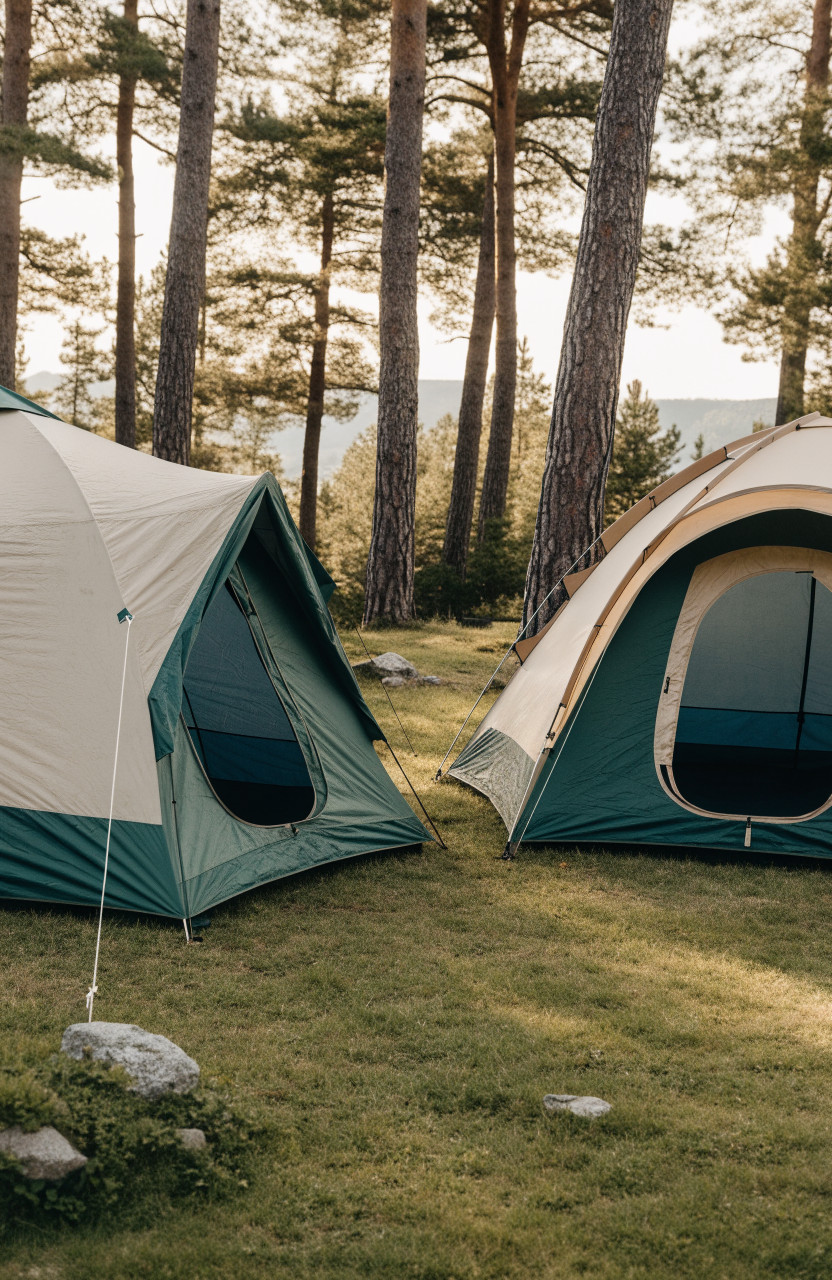
The tradeoff is time and space. Two pitches take longer, and many campground pads will not hold two full cabin footprints plus a table. If the pad is tight, a divider inside one tent is the better compromise.
3. Use a room divider only if it actually closes
A fabric panel that clips across the middle creates a parent side and a kid side, which helps with flashlight reading and early risers. It does not block sound. Coughs, zippers, and a crying toddler still travel.
Dividers work best when each side has its own door. Otherwise the person in the back room still crosses the front room at night. Skip the divider on short weekends with very young children; the extra wall just eats floor space they will not use.
4. Mix air mattresses and floor pads instead of matching beds
Queen air mattresses feel familiar and eat the tent. Two queens in a 10-by-14-foot cabin leave almost no aisle. A more workable family floor is one queen or double for adults against the back wall, and thick sleeping pads for kids along the sides, with a clear lane to each door.
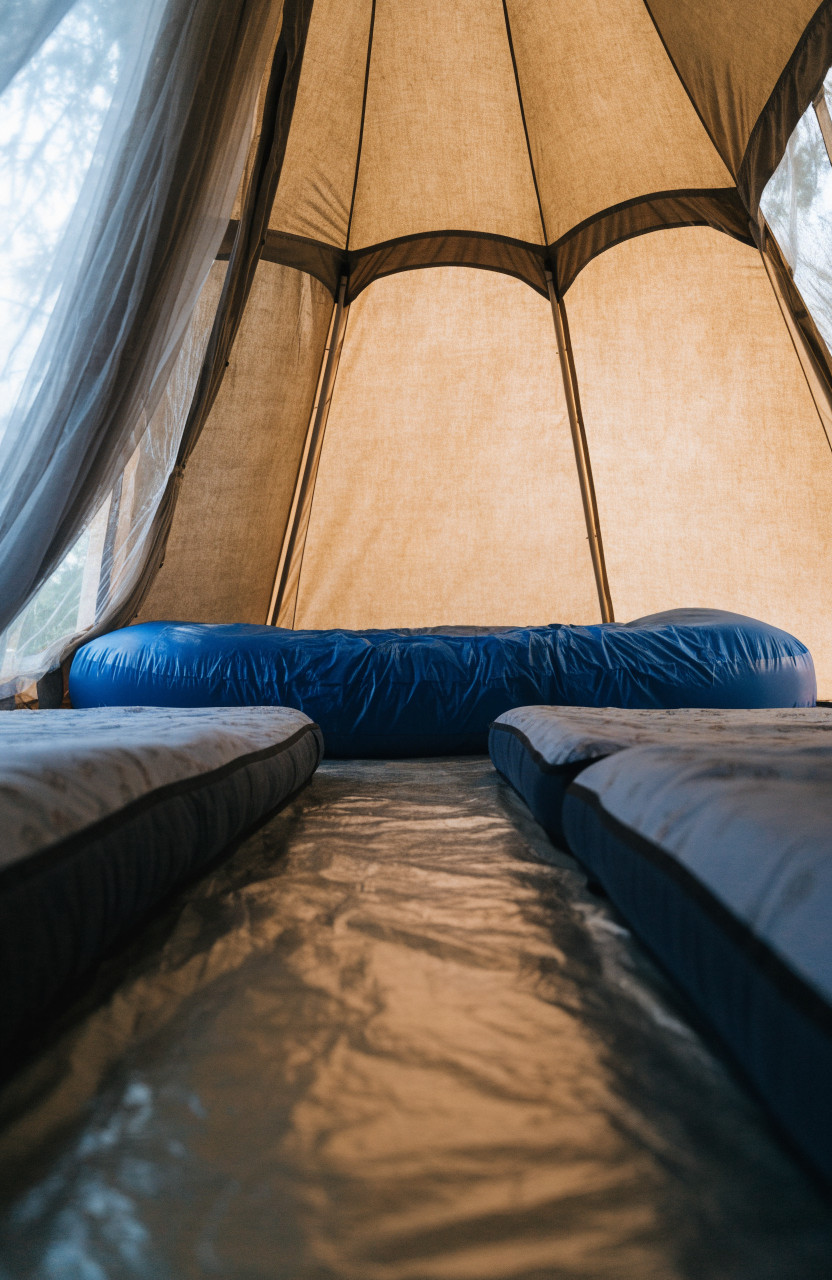
If the site slopes, put heads uphill. Sleeping with feet higher than the head is more disruptive than a slightly firm pad. Clear rocks and cones before the footprint goes down. A pebble that feels trivial while you are standing becomes a bruise through a pad by morning.
5. Turn the vestibule into a mudroom
The vestibule is the covered porch under the rainfly. Boots, wet jackets, and the camp chair that will not fit in the car belong there, not at the foot of a sleeping bag. Wet fabric inside the tent is a common reason the walls feel like they leaked when the real problem is condensation.
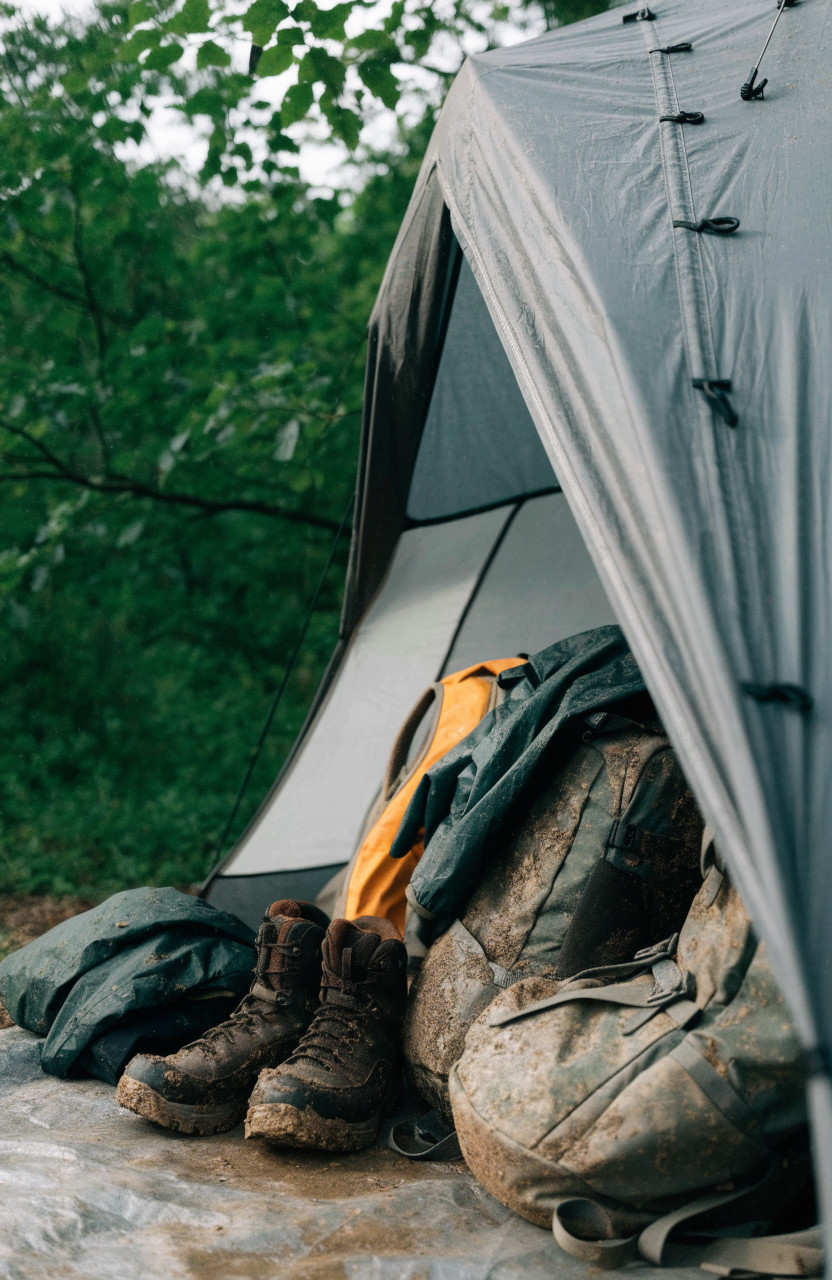
Stake the vestibule out so it does not sag onto the inner door. If the tent has two vestibules, assign one to shoes and one to packs. Do not cook in a vestibule. Stoves and tent fabric are a fire risk, and fuel spills ruin the floor.
Layouts for the ground around the tent
6. Build a camp triangle: sleep, cook, fire
Place the tent first on the flattest, slightly raised ground you can find. Put the kitchen downwind of every tent door so cooking smells and stove smoke do not blow into sleep space. Put the fire ring at the third point, not between the tent and the kitchen.
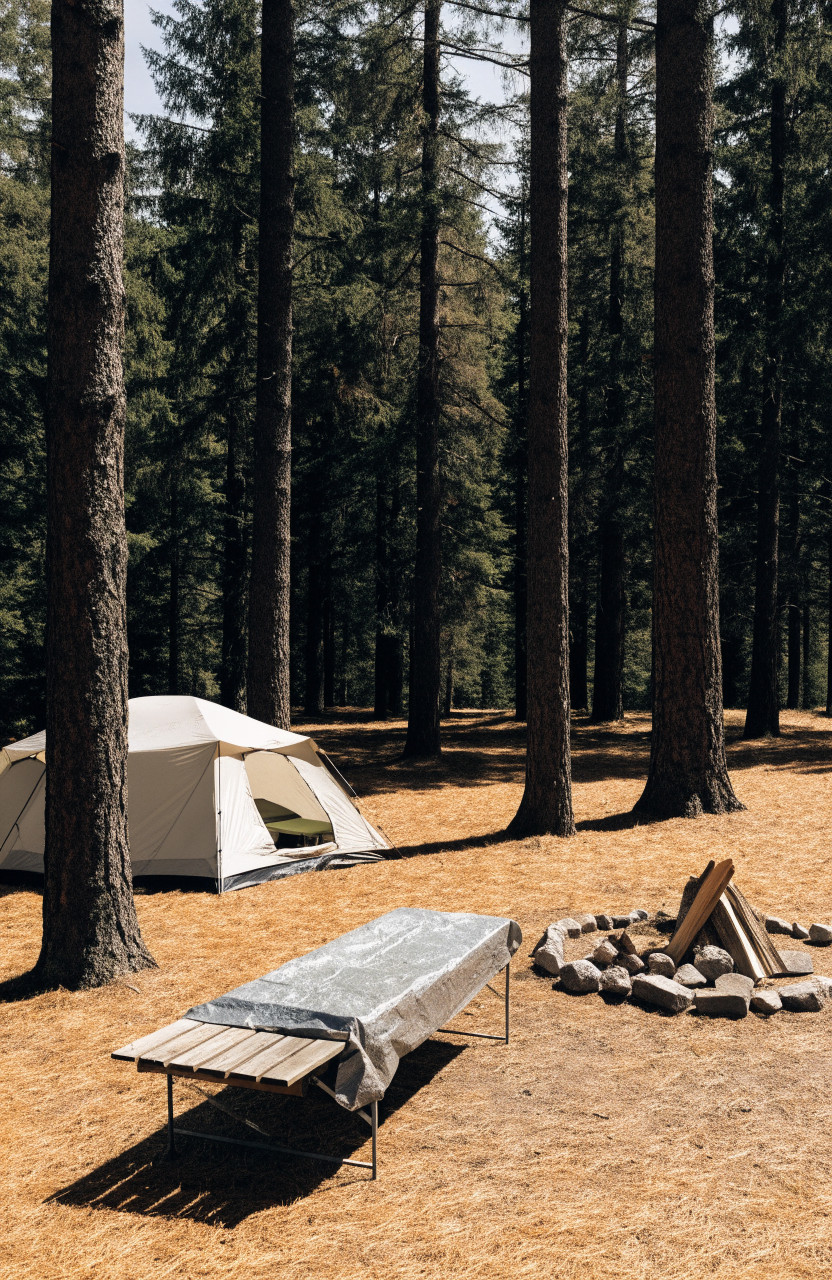
Many campgrounds require tents a set distance from the fire ring; 15 feet is a common posted minimum, and some sites want more. Follow the sign on your site. Embers travel farther than people expect on a dry, windy evening. In bear country, follow local food-storage rules. A cooler in the tent is not a storage plan.
7. Switch to a line when the pad is long and thin
Some sites are a parking spur and a strip of dirt. Forcing a triangle crowds the fire against the tent. Line the zones instead: car and kitchen at the parking end, table in the middle, tent at the back. Food stays near the vehicle, which makes locking it up easier, and the sleeping end stays quieter.
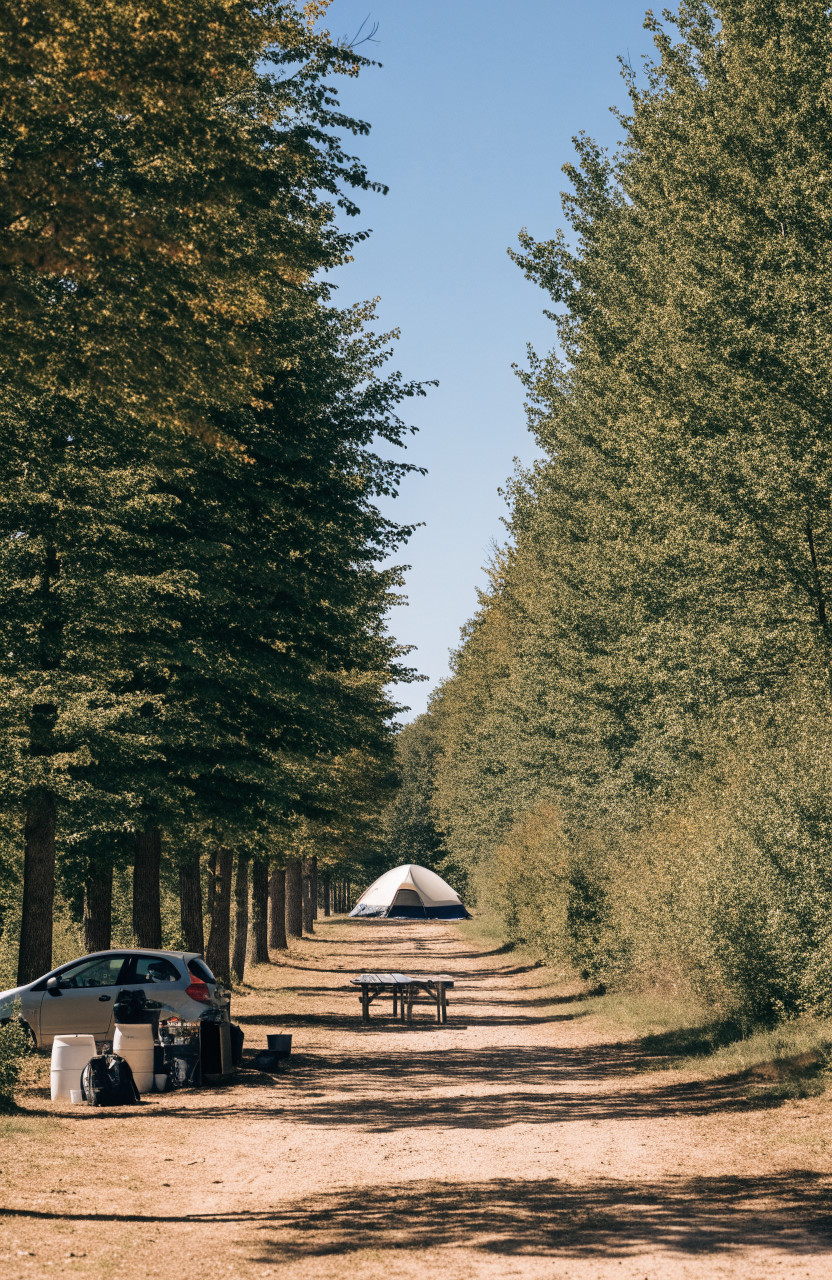
Keep a clear walkway along one side. Kids will cut the corner in the dark. A guyline at shin height across that path causes the trip.
8. Connect two tents with a canopy
A 10-by-10-foot pop-up canopy between two doors creates a shared porch for shoes, a snack bin, and a place to stand while someone finds a headlamp. It also gives nappers a buffer from camp noise.
Weight every canopy leg. An unstaked canopy is the first thing that leaves the site in a gust. Do not rely on it as rain protection for the tent itself. Canopy seams leak, and wind drives rain sideways. The tent still needs its own fly, stakes, and guylines.
9. Add a screen shelter as the daytime living room
Most of the day is not spent in the sleeping tent. A screen house, or a canopy with mesh walls, gives the family a bug-buffered place to eat and play cards without tracking sand into sleeping bags. It earns its bulk on buggy lake sites and in light rain.
Check the maker’s rules before anyone puts a stove or propane fire pit under it. Clearance requirements are there because mesh and fabric burn. If the forecast is a real storm, eat in the car or under the tent’s own awning rather than trusting a screen house.
10. Park the kitchen downwind and off the tent door
A folding table, a two-burner stove, and a wash bin need about as much thought as the tent. Set the stove so the wind is at the cook’s back or side, not blowing the flame back at them. Put the trash and dishwater station farther downwind, and carry dishwater well away from any lake or stream. Leave No Trace advice is to wash at least 200 feet from water and scatter strained dishwater.
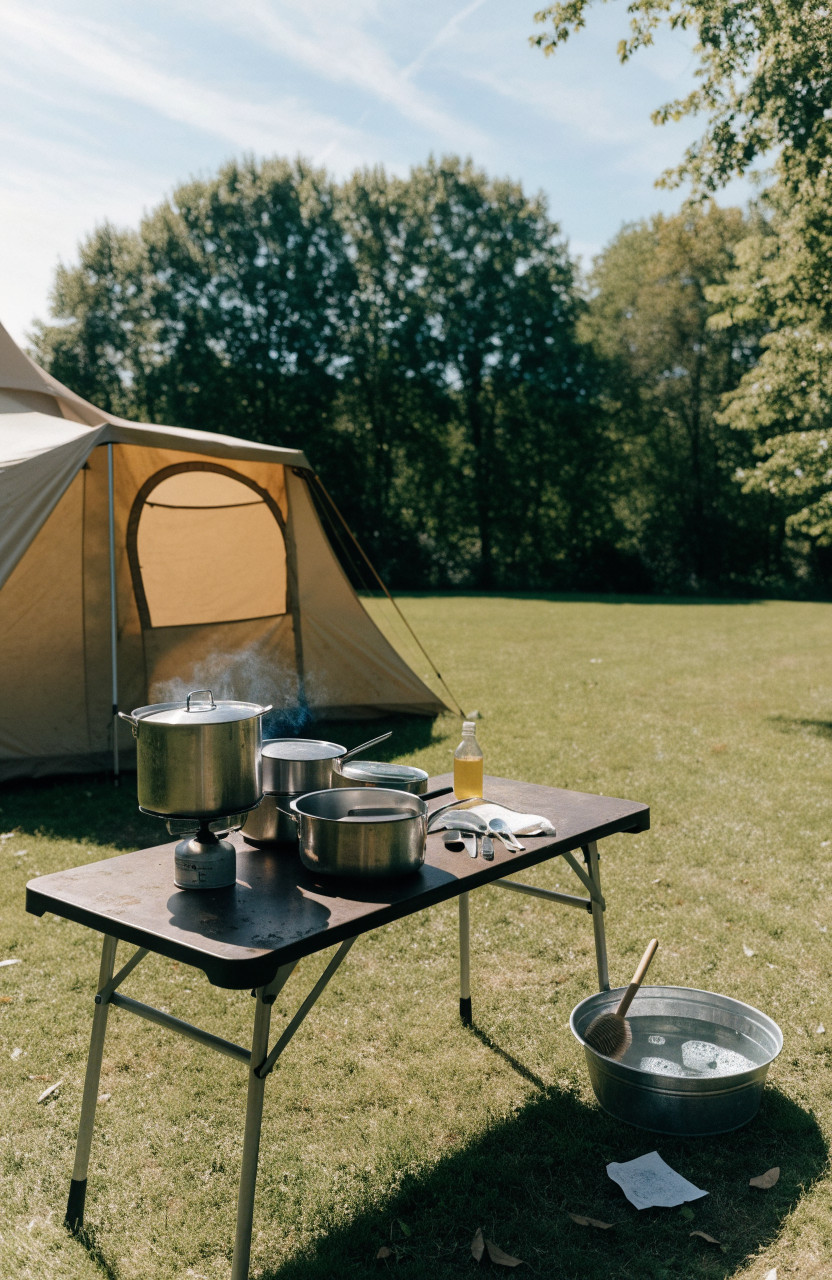
A plastic bin with a lid beats a pile of grocery bags. One bin for breakfast, one for dinner, and a separate latching box for anything scented keeps the “where is the oatmeal” search from happening inside the tent.
Weather setups that prevent a wet or collapsed night
11. Pitch for rain even if the afternoon looks fine
Lay a footprint or groundsheet that is slightly smaller than the tent floor, so rain cannot pool between the sheet and the tent and wick inside. Stake the four corners before the frame is fully raised if the breeze is already up. A loose cabin tent catches air and can flip while the poles are half-locked.
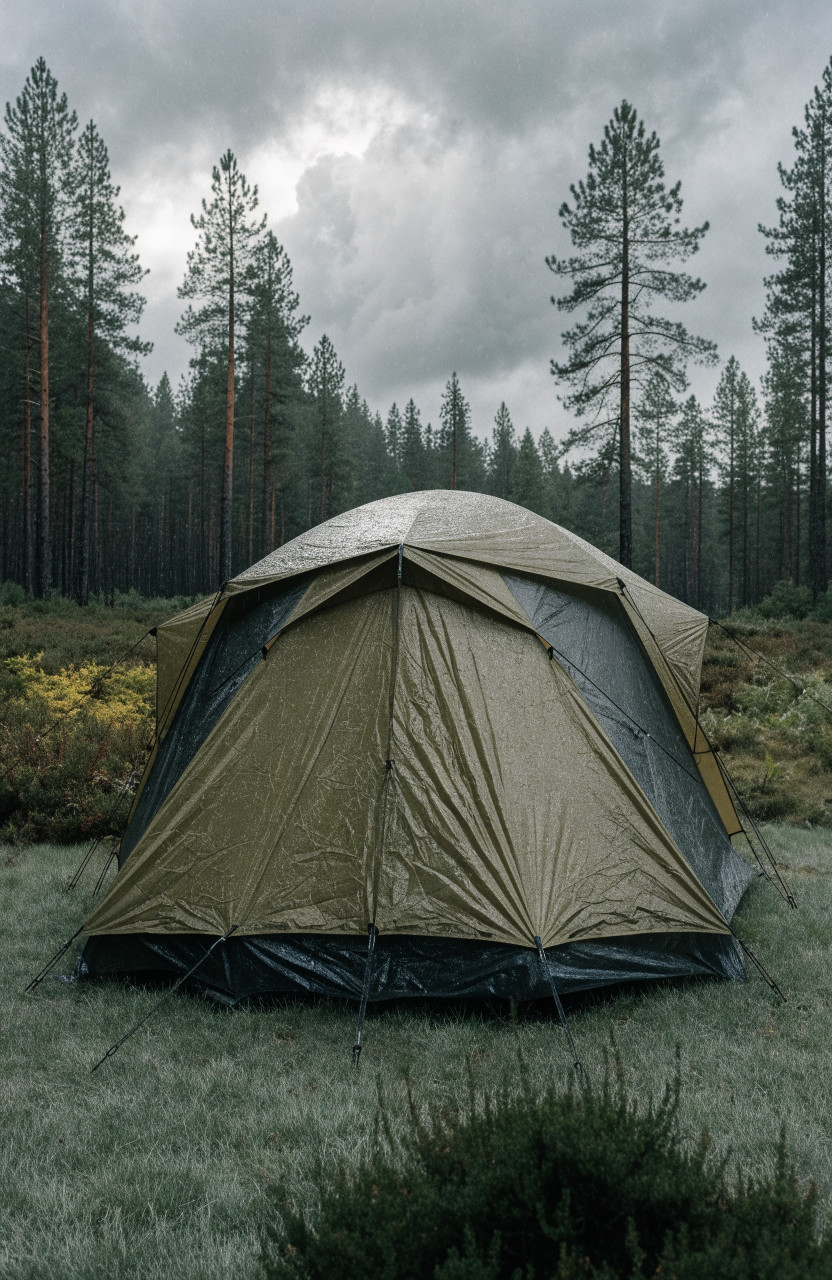
Attach the rainfly so it does not touch the inner tent. Contact points are where condensation drips onto bags. Tension the fly and guy it out. A slack fly pools water and then dumps it at the door. Open the high vents. Most “leaks” on a sound tent are humid breath and wet clothes, not failed seams.
12. Aim the narrow end at the wind and guy every loop
Point the smallest end of the tent into the prevailing wind, and keep doors out of the wind if you can. The broad cabin wall is the sail. Dome tents handle this better. Very tall instant cabins do not.
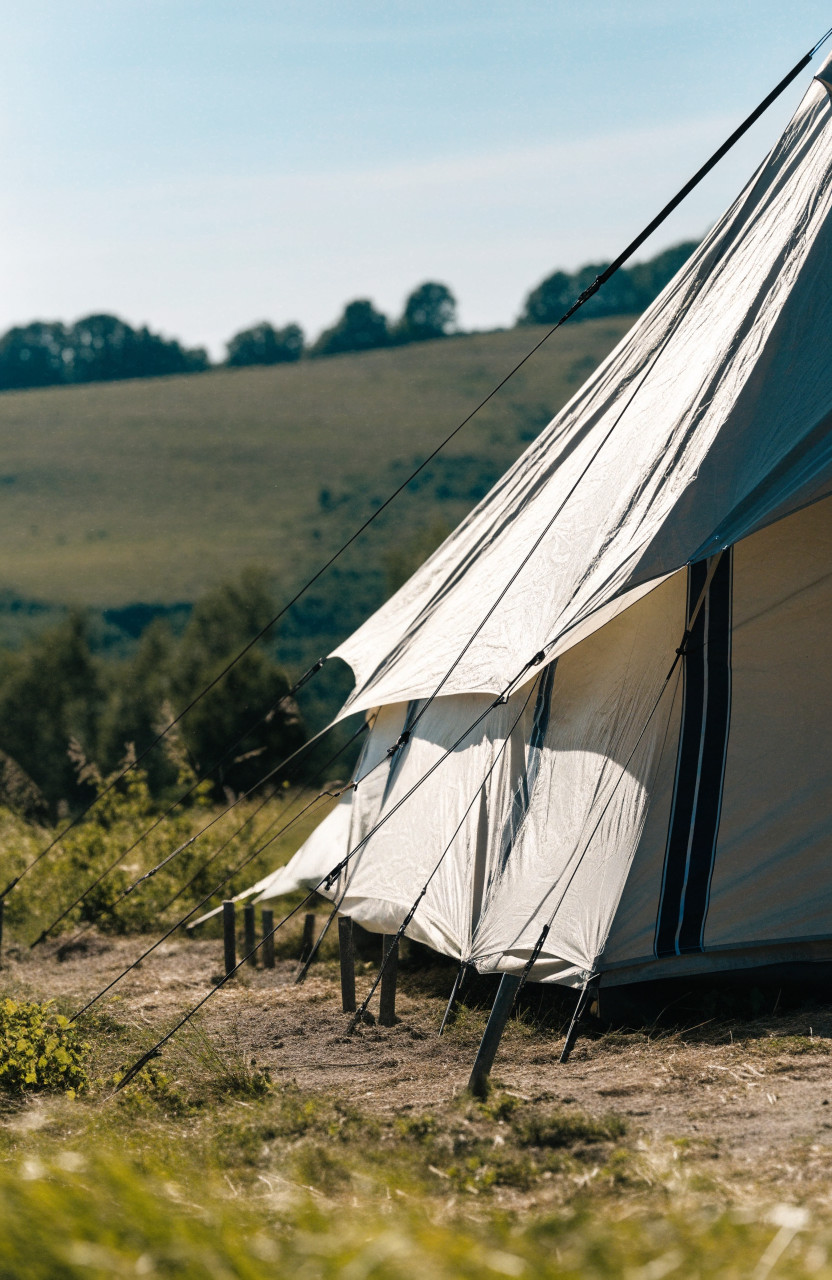
Stakes go in at roughly a 45-degree angle, pointing away from the tent, into firm soil. Sand and loose duff need longer or wider stakes than the thin pins in the bag. Guylines should run out to stakes, not left coiled on the fly. If gusts are forecast high enough that your tent’s poles are already flexing hard at camp, a lower site behind shrubs or a building is safer than an open ridge. Avoid dead limbs overhead in any weather.
13. Choose the door direction on purpose
Door facing east warms the tent early and wakes light sleepers. Door facing away from the wind keeps rain from blowing into the vestibule every time someone unzips. If those two goals conflict, favor the wind on a wet night and the shade on a hot, still one.
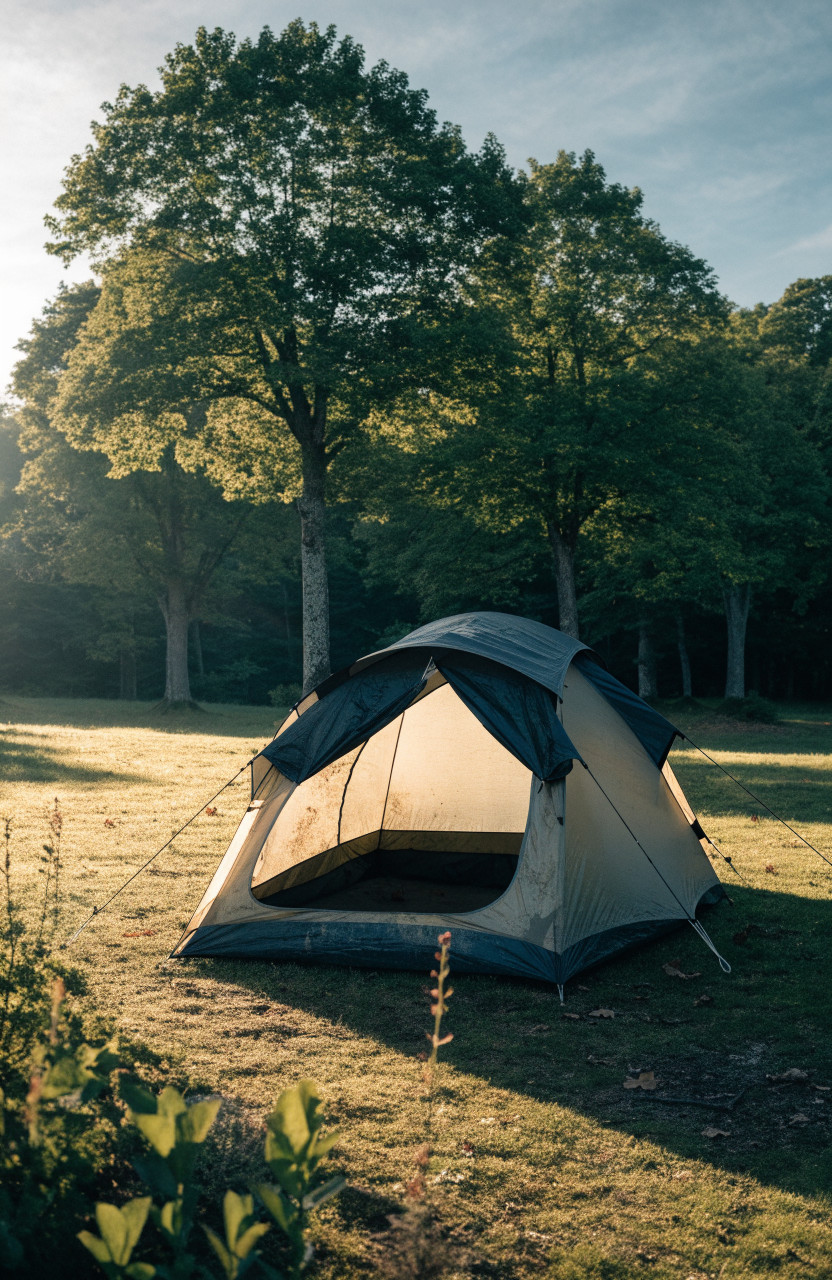
On a hot weekend, roll the fly back only where the design allows it, and keep the mesh doors closed. A wide-open cabin is cooler for an hour and then full of mosquitoes.
Kid routes, light, and gear that stay out of the beds
14. Shorten the night path before anyone is tired
With young children, a pretty site far from the restroom costs more than it gives. Book or claim a pad close to the bathrooms, then walk the route once while it is still light. A lantern at the tent door and a second small light at the table mark the path without lighting the whole camp.
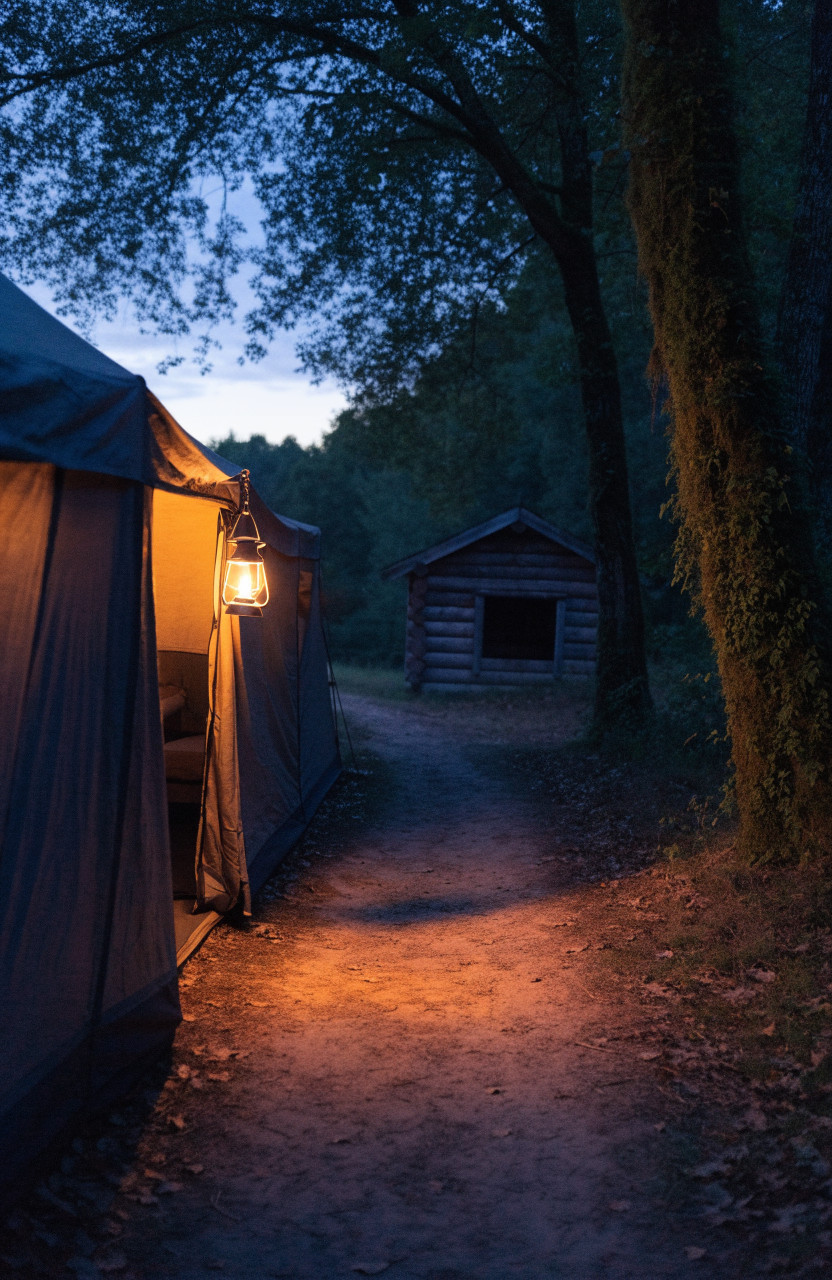
Inside, hang a mesh pocket or small organizer at each child’s station for a headlamp, a water bottle, and a comfort item. Floor clutter is what gets kicked into the aisle at midnight. A battery lantern with a red mode is easier on sleeping eyes than a bright white flashlight swung around the ceiling.
15. Use the car as the closet and bins as the dresser
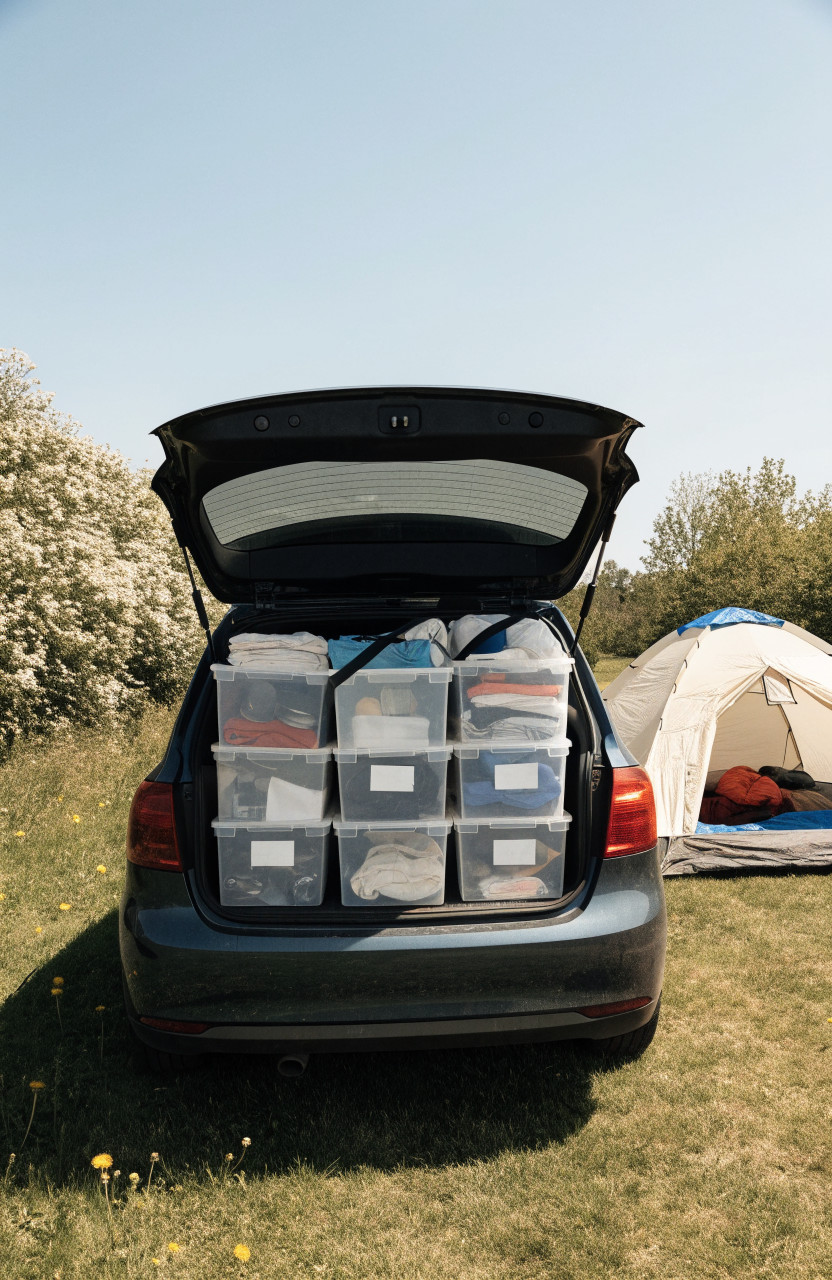
The tent should hold sleep systems, tomorrow’s clothes, and a small medical kit. Everything else lives in labeled bins in the vehicle: kitchen, dry food, toys, rain layers. That split keeps the floor walkable and makes a fast pack-out possible if the weather turns.
Bring one extra tarp. It becomes a play rug in dry weather, a gear cover in wet weather, or a windbreak clipped to the canopy. It should not become a trench around the tent. Digging drains damages the site and is unnecessary if you chose ground that already sheds water.
When a family layout falls apart
Even a well-planned family layout can fail on the first night, and these quick checks keep it intact.
| Problem | Likely cause | Fix |
|---|---|---|
| Struggling with assembly at dusk | The first pitch of the tent happens on arrival at camp | Do a practice pitch at home, not at dusk on a Friday. |
| Family crammed and climbing over beds | Trusting the person-count printed on the tent box | Size up if adults cannot stand or a child must cross a bed to reach a door. |
| Soaked mesh roof by morning | Fly left in the bag because the sky looked clear | Put the fly on every night, since dew and a 1 a.m. weather change leave no dry option. |
| Smoke in the tent all night | Tent pitched downwind of the fire, where smoke follows the breeze | Set the tent upwind of the fire; no vestibule organization can fix smoke. |
| Tent shifting across the pad in gusts | Only the corners staked, trusting the freestanding design to hold | Stake the tent fully before the chairs come out. |
Frequently asked questions
Is a 6-person tent enough for a family of four? Often for two adults and two small children on a fair-weather weekend, if you keep packs in the car. It is tight once you add air mattresses, a dog, or a rainy day spent inside. Stepping up to an 8- or 10-person cabin is the usual fix.
Cabin tent or dome tent for families? Cabin for standing room and cots at a campground. Dome if the site is exposed and wind is the main risk. Many families own a cabin for base camping and never need the dome.
Should kids sleep in the parents’ tent? Yes while they are young enough to need help at night. Separate tents or a divided cabin make more sense once night waking is rare and the pad has room for a second pitch.
What belongs in the tent overnight? Sleeping bags or quilts, pads, a layer of clothes, headlamps, and any medication that must stay with the person. Food, trash, toiletries with a scent, and stove fuel stay in the car or in whatever storage the campground requires.
How far should the tent be from water and the fire? In dispersed camping, at least 200 feet from lakes and streams unless a local rule or designated site says otherwise. Fire distance is set by the campground; check the post at the ring, and do not place the tent in the smoke path.