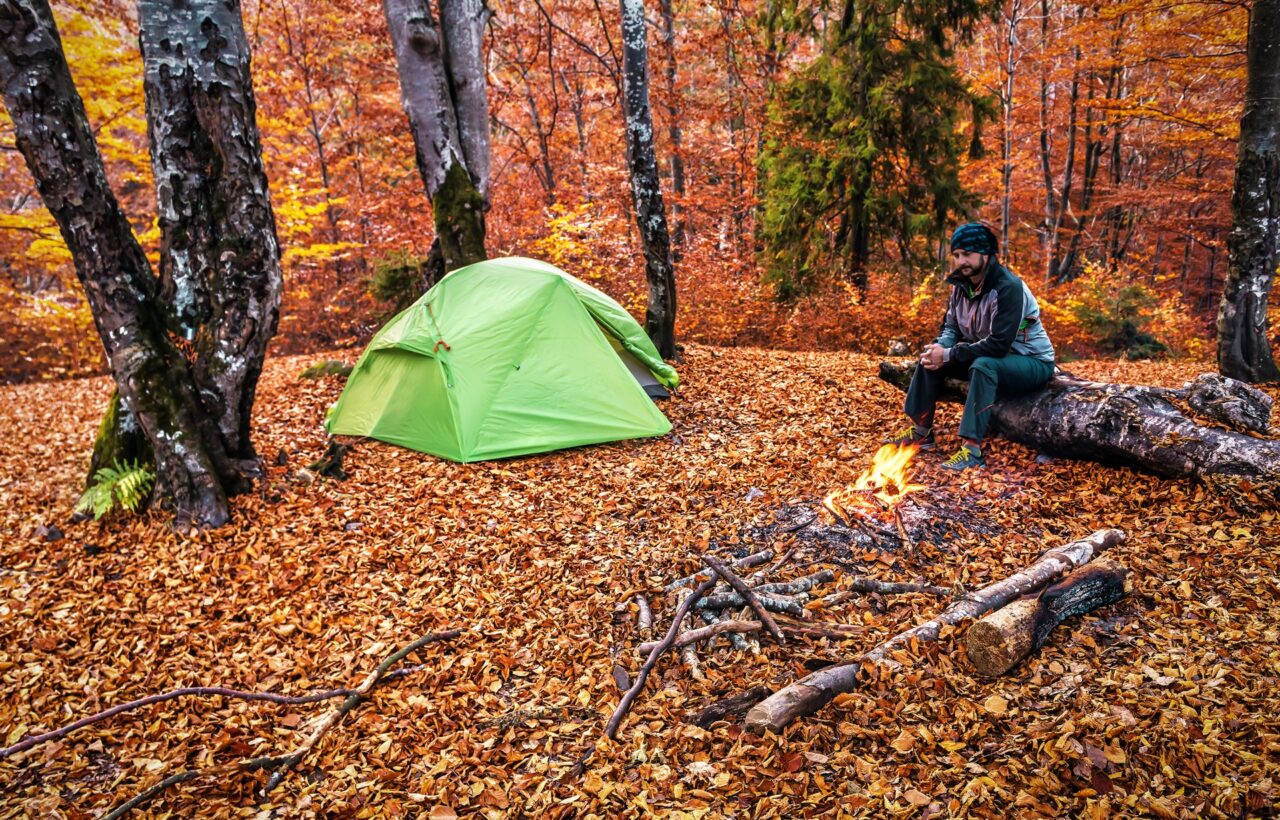
Tent camping is overnight camping in a portable fabric shelter. That sounds simple. The nights that go well usually are. The nights that go badly usually fail for the same few reasons: a cramped or poorly pitched tent, a sleep system that cannot handle the ground temperature, a site chosen in the dark, or weather that was treated as optional.
Most new tent campers are not looking for a survival course. They want a reliable first trip—or a better second one—without buying a garage full of gear. This guide covers the decisions that actually change the outcome: what kind of trip you are taking, which tent size and season rating to buy, how to sleep warm, how to choose and reserve a site, how to pitch so rain and wind stay outside, and which beginner mistakes to skip.
What Tent Camping Is (and What It Is Not)
Tent camping is a spectrum, not one activity.
Drive-up tent camping (often called car camping) means you park next to or near a numbered site, carry gear a short distance, and sleep in a tent. Bathrooms, water spigots, picnic tables, and fire rings are common. This is the best first version of tent camping for almost everyone.
Backpacking still uses a tent, but you carry every item on your back and camp farther from a vehicle. Weight, water treatment, navigation, and food storage become the job. It is a different skill set.
Dispersed camping means camping outside a developed campground, often on national forest or BLM land, with few or no amenities. Rules vary by district. It is not a first-trip choice.
Sleeping in a vehicle or rooftop tent can happen at the same campground. It is adjacent to tent camping, not a replacement for learning how a ground tent works.
If the goal is “sleep outside and see if we like this,” start at a developed campground within a short drive of home, in mild weather, with a reserved site.
Start With the Trip, Not the Tent
Buy gear after you know the trip constraints. A 12-pound family cabin tent is excellent next to a parking spur and miserable a mile down a trail. A two-pound backpacking tent is excellent on that trail and cramped if two adults and a dog try to live in it for a weekend.
Answer these before shopping:
- How far will the tent travel from the car?
- How many people and pets will sleep inside?
- What is the coldest night you reasonably expect?
- Will you camp mostly in established campgrounds or eventually go off-site?
- How often will you use it in the next two years?
A borrowed or rented setup for trip one is often smarter than an expensive first purchase. Practice pitching at home either way. Arriving at dusk with an unopened box is one of the most common ways people decide they hate camping.
How to Choose a Tent That Fits Real People
Ignore the number on the box
Tent “person” ratings assume sleepers packed shoulder to shoulder with almost no gear. A labeled 2-person tent is a tight fit for two adults. Size up. Two people usually want a 3-person tent. A family of four usually wants a 6-person tent if anyone wants space to change clothes or store a bag inside.
Think in floor area and mattress size, not marketing capacity. If two sleeping pads or one queen air mattress will not fit with walking space at the door, the tent is too small for a comfortable car-camping weekend.
Match the tent to the season you will actually camp
Most campers need a 3-season tent: mesh panels for ventilation, a full rainfly, and enough structure for spring–fall storms in temperate weather. That is the default.
A 3–4 season or 4-season tent adds stronger poles and less mesh. It handles wind and snow better and traps more heat—and more humidity—in summer.
A cheap “festival” or shade tent with little fly coverage is not a rain tent. If the forecast can turn, you need a rainfly that covers the body and can be guyed out taut.
Freestanding vs. non-freestanding
Freestanding tents stand up from their pole structure. You can move them a few feet after pitching to dodge a root. They still need stakes in wind.
Non-freestanding tents need stakes or anchors to take shape. They can be lighter, but they are harder on rocky ground and for first-timers.
For a first car-camping tent, freestanding is the simpler choice.
Other features that matter more than color
- A full rainfly and enough guy-out points to tension it
- Vestibules (covered porches) for boots and wet packs
- Two doors on tents for two or more people, so nobody crawls over a sleeping partner
- A footprint or groundsheet cut slightly smaller than the floor, so rain does not collect on the sheet and run under the tent
- Aluminum poles over the cheapest fiberglass if you expect repeated use and wind
Cabin-style tents give standing room and vertical walls. Dome tents usually handle wind better and pack smaller. Instant or pop-up tents save time if the mechanism is reliable; they are still only as waterproof as their fly and seams.
The Sleep System Is What Makes or Breaks the Night
A mediocre tent with a good sleep system is more comfortable than a palace tent on cold, hard ground. Heat loss into the earth is the part beginners miss. Air temperature can feel mild while the ground still pulls warmth out of your body.
Sleeping pad first
A pad is insulation, not just cushion. R-value measures how well the pad resists heat flow. Higher is warmer.
Practical ranges:
- Warm summer nights: R-value around 1–2 can work
- Typical spring/fall car camping: R-value around 3–5 is a safer target
- Cold nights or cold sleepers: R-value 5+ or stacked pads
Car campers can choose thick self-inflating pads, air mattresses designed for camping, or cots. A household air mattress on bare ground often sleeps cold because it has little insulation. Put a foam pad or blanket underneath if that is what you have.
Sleeping bag second
Bag temperature ratings are not a promise. The comfort rating (when listed) is more useful than the extreme/survival number. If overnight lows may hit 45°F, a bag whose comfort range only starts at 50°F will feel thin.
Synthetic bags stay warmer than down when damp and cost less. Down packs smaller and is lighter, which matters more for backpacking than for a trunk.
A warm hat and dry sleep socks do more work than people expect. Change out of sweaty day clothes before bed. Damp cotton against skin is a cold night waiting to happen.
Keep the sleep kit boring and complete
- Pad or mattress plus a way to inflate it (pump or built-in)
- Bag or quilt rated colder than the forecast low
- Pillow (a stuff sack of clothes works; a real pillow is better for car camping)
- One set of sleep clothes that never leave the tent
- Earplugs and an eye mask if the campground is busy
Most “we hated camping” stories are “we did not sleep.” Fix sleep before adding gadgets.
What to Pack for Drive-Up Tent Camping
Pack by job, not by a 200-item dump list. If you can sleep dry, drink water, eat, see in the dark, and handle a small injury, the trip works.
Shelter and sleep
- Tent, poles, stakes, guylines, rainfly
- Footprint or tarp under the tent
- Extra stakes and a small mallet
- Sleeping bags and pads
- Repair tape and a pole splint or extra guyline
Kitchen (keep the first trip simple)
- Cooler and ice
- Water bottles plus a jug for camp
- Stove, fuel, lighter and backup
- Pot or pan, utensils, mug, cutting board
- Dish bin, biodegradable soap, sponge, trash bags
- Food that needs more assembly than cooking: sandwiches, pre-made pasta, foil packets, oatmeal, fruit, snacks
Cooking from scratch over a new stove at 8 p.m. is how dinner becomes a project. Heat-and-eat food is a valid first-trip strategy.
Clothing and weather
- Layers: base layer, insulating midlayer, wind/rain shell
- Extra socks
- Closed-toe camp shoes
- Sun protection and a hat
- Rain jacket even when the forecast is clear
Cotton is fine as a dry camp shirt. It is a poor choice as the only layer if you might sweat, get rained on, or sit still after sunset.
Safety and camp life
- Headlamp plus spare batteries (one lamp per person)
- First-aid kit you have actually opened and restocked
- Sunscreen and insect repellent
- Map or offline campground map; do not treat cell service as guaranteed
- Toilet kit if the site is primitive: trowel, bags, hand sanitizer
- Camp chairs
- Optional tarp or canopy for rain and sun over the table
Leave matches, fuel bottles, and other flammables out of the sleeping tent. Food and scented toiletries do not belong in the tent in wildlife country.
How to Find and Reserve a Campsite
Popular public campgrounds in the United States often book through Recreation.gov. Many locations use a rolling six-month booking window, with new dates commonly released around 10 a.m. Eastern Time—though each facility page lists its own window and time. Some high-demand parks use different release patterns. State parks use their own systems.
Practical booking advice:
- Reserve the first trip. First-come, first-served sites reward early weekday arrivals and punish Friday-evening optimism.
- Read the site listing: tent pad size, slope, shade, distance from parking, generator hours, and whether the pad is dirt, gravel, or a raised platform.
- Check fire restrictions and bear rules for that forest or park, not “the region in general.”
- Have a backup campground within an hour.
For a first night, prioritize:
- A reserved, numbered site
- Working toilets or a vault toilet you can walk to in the dark
- Drinking water on site or a plan to haul it
- A flat tent pad
- Arrival with at least two hours of daylight
Dispersed camping can wait until you can pitch quickly, store food correctly, and navigate without a camp host.
How to Choose the Exact Spot for the Tent
The numbered site is not automatically the right patch of dirt. Walk it before unloading everything.
Look at the ground. You want a durable, relatively flat surface: established pad, packed dirt, gravel, or pine duff already worn in. Avoid deep hollows, spongy turf, and obvious drainage paths. Water finds low ground. The floor—not the roof—is where many tents get wet.
Look up. Dead branches (“widowmakers”) fall without a storm. Do not sleep under them.
Look at slope. Even a gentle tilt slides people off pads. Put heads on the higher end if you cannot find flat ground.
Look at wind and sun. Morning sun dries a wet fly. Afternoon shade helps in hot months. In wind, present the smaller end of the tent into the breeze when you can, and use every guyline.
Look at water. In the backcountry, Leave No Trace guidance is to camp about 200 feet (roughly 70 adult steps) from lakes and streams unless local rules say otherwise or an established site already exists. That protects banks, water quality, and wildlife access. In a developed campground, use the designated pad even if it is closer to a creek.
Look at neighbors and smell. Do not pitch on top of the fire ring, the parking spur, or someone else’s guyline space. Keep the tent away from the cooking area when animals are a concern.
Clear sticks and pinecones. Do not dig trenches or strip vegetation to “improve” a site.
How to Pitch a Tent So It Stays Up
Practice once at home. Then use this order in camp.
- Confirm the spot one last time: flat, draining, clear overhead, room for vestibules.
- Lay the footprint, slightly smaller than the tent floor.
- Spread the tent body. Point doors where you want to walk at 2 a.m., not into the prevailing wind if you can help it.
- Assemble poles fully before forcing them through sleeves or clips.
- Stand the tent. Clip or sleeve poles, then seat pole ends in their grommets.
- Stake the corners so the floor is taut but not stretched into a tear. Drive stakes at an angle, away from the tent.
- Add the rainfly and stake every guy-out. A loose fly flaps, rubs, and lets rain touch the inner tent.
- Check vestibules so they do not dump runoff onto the door zipper.
If the ground is too hard for stakes, use rocks, logs, or deadman anchors with webbing—without damaging live trees. If the ground is sand, you need longer or wider stakes than the short steel pins that come in many boxes.
Do not skip staking because the tent is “freestanding.” Wind does not care.
After the tent is up, make the beds before you open the cooler or start a fire. When light fades, a finished sleep system is worth more than a perfect fire.
Rain, Condensation, and the “My Tent Leaked” Problem
Two different things get people wet.
A leak is water entering through a hole, failed seam tape, an untensioned fly, or a puddle forced through the floor. Fix the pitch first: taut fly, staked vestibules, footprint tucked under the floor, tent out of the puddle zone. Then inspect seams and coatings at home.
Condensation is moisture from breath, damp clothes, and humid air hitting a cold inner wall or fly. It looks like a leak: droplets on the ceiling, damp bag in the morning. It is normal physics, especially on clear, still, cool nights.
Reduce condensation by:
- Venting the tent (mesh doors, fly vents) instead of sealing every zipper “for warmth”
- Keeping wet gear in the vestibule, not in the sleeping space
- Pitching with some airflow, not in a fog pocket if you have a choice
- Wiping the inner walls in the morning and drying the tent before long-term storage
A double-wall tent (inner body + separate fly) handles moisture better than a single-wall shelter in most beginner conditions.
If rain is coming, cook and hang out under a separate tarp when you can. Living entirely inside a closed tent in a storm is how condensation and cramped tempers stack up.
Food, Water, Wildlife, and Fire
Water
At a developed site, use potable spigots if posted as drinkable. If you are not sure, treat it. In the backcountry, carry a filter or chemical treatment and do not count on a “clean-looking” stream.
Haul a dedicated jug for dishes and handwashing so you are not making constant trips with a tiny bottle.
Food storage
Rules are local. In many campgrounds, the correct answer is “locked in the vehicle” or “in the provided locker.” In bear country, a cooler on the picnic table overnight is an invitation. Store food, trash, toothpaste, and scented lotion the same way.
Cook and eat away from the sleeping tent when wildlife pressure is real. Pack out scraps. Animals that learn campgrounds equal calories become dangerous and often end up removed.
Fire
Use an existing ring when fires are allowed. Check the day’s restrictions—fire bans change with wind and drought.
Buy firewood near the destination. Moving firewood long distances spreads invasive insects and disease; conservation groups advise keeping wood local, often within a short radius of where it was cut.
Never leave a fire unattended. Drown it, stir, drown again, and check that it is cool before sleep or departure. Do not burn plastic, cans, or food waste.
A stove is a more reliable dinner plan than a fire, especially for the first trips.
Why First Tent Camping Trips Go Badly
These show up repeatedly in beginner trip reports and campground staff lists:
- First setup at the campsite. Pitch at home. Confirm stakes, fly, and poles are in the bag.
- Arriving after dark. Setup quality drops. Site hazards are harder to see.
- Trusting the person-count on the tent. Size up.
- Skipping the pad, or using a pad with almost no R-value. Comfort and warmth both fail.
- Dressing for the afternoon high. Nights at elevation can drop sharply after sunset.
- Pitching in a dip, dry wash, or under dead wood.
- A loose rainfly.
- Food in the tent.
- Overpacking cooking ambition and underpacking light. A headlamp is not optional.
- Treating the forecast as a guarantee. Pack the shell.
The corrective pattern is dull and effective: reserve a nearby developed site, arrive early, pitch first, sleep warm, cook simple food, and keep the first trip to one night.
Campground Etiquette and Leave No Trace
Tent camping stays available when sites do not get wrecked.
- Stay on the pad and existing paths.
- Keep noise down after quiet hours. Sound travels in a bowl of trees.
- Do not cut live branches or build new fire rings.
- Wash dishes away from spigots and waterways; scatter strained wastewater on soil, not into a creek.
- Use toilets where they exist. Where they do not, follow local cathole rules—typically well away from water, camp, and trails—and pack out toilet paper where required. Leave No Trace uses the same ~200-foot / 70-step distance as a field rule of thumb.
- Pack out all trash, including bottle caps, food bits, and leftover foil.
Good campsites are found, not constructed. Leave the pad cleaner than you found it.
A Sensible First-Trip Plan
- Pick a campground within two hours of home for a single Friday or Saturday night in stable weather.
- Reserve a site with a documented tent pad.
- Borrow or buy a tent one size up, a 3-season fly, and a sleep system rated colder than the forecast.
- Pitch the tent in the yard. Sleep in it one night if the idea of “outside” is the scary part.
- Pack with the short list above. Leave specialty tools at home.
- Leave early enough to arrive with daylight.
- Pitch, make beds, then kitchen, then fire.
- Keep Friday dinner easy. Save the ambitious skillet breakfast for Saturday if everyone slept.
If that night works, you can add distance, bigger landscapes, and lighter gear. If it does not, the failure is usually diagnosable: sleep, weather protection, or timing—not a mysterious lack of “camping personality.”
Frequently Asked Questions
Is tent camping the same as car camping?
In everyday use, yes for most beginners: you drive to a site and sleep in a tent beside the car. “Car camping” sometimes also means sleeping inside the vehicle. Backpacking is the separate category, because you carry the camp.
How much does it cost to start?
A usable car-camping kit—tent, two bags, two pads, stove, basic kitchen, headlamps—can be assembled from mid-range big-box and co-op gear without going ultralight. Borrowing the tent and bags for trip one cuts the cost to a campsite fee, fuel, food, and ice. Specialty backpacking gear costs more per item because weight is the constraint.
Can you tent camp in the rain?
Yes, if the tent has a proper fly, the site drains, the fly is staked taut, and wet layers stay out of the sleeping bag. Rain is a logistics problem. A depression under the floor is a soaking problem.
Where should food go overnight?
Follow the posted rule. Common correct answers: vehicle, metal locker, or approved canister. The picnic table and the tent are the usual wrong answers in places with raccoons, bears, or rodents.
Do you need a footprint?
It is not required for the tent to stand. It is cheap insurance for the floor against abrasion and ground moisture. Keep it smaller than the floor so it does not catch rain and funnel it underneath.
How do you tent camp with kids or a dog?
Size the tent up again. Give kids a job during setup. Keep a dry change of clothes in a sealed bag. For dogs, check campground pet rules, bring a leash and a pad, and do not leave food bowls out overnight. A first trip closer to home makes an early exit possible.
When is it time to try backpacking?
After you can pitch in changing weather, sleep reasonably well, manage water and food storage, and stay decent company when plans slip. Then shorten the hike-in and keep the first backcountry night conservative.
Tent camping rewards boring competence: a tent that actually fits, a pad that insulates, a site that sheds water, and enough daylight to put those pieces together. Get those right and the rest of the gear list becomes optional.