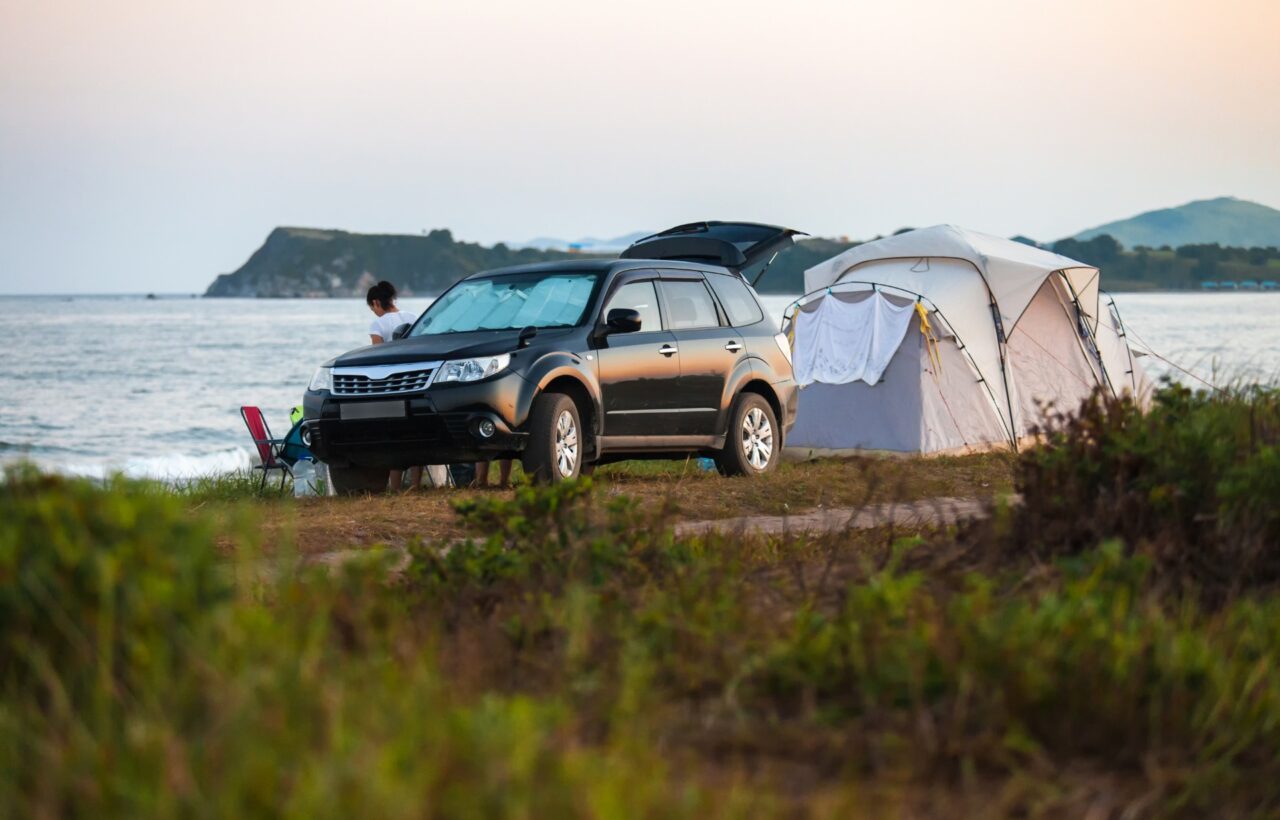
Measure first: fold the rear seats, slide the front seats forward and check the cargo floor, noting where it slopes, before buying a mattress or platform. Subaru Forester car camping gets much easier once you know the real length, the width between the wheel wells and the height to the roof.
Those numbers decide which mattress fits, whether a leveling platform is needed and how much room remains for gear. The boxy shape gives generous headroom, but the seats do not fold perfectly flat, condensation builds quickly, and storage shrinks once the bed goes in.
Why the Subaru Forester Works for Car Camping
Measure before buying anything. On a 2021 Forester with the rear seats folded, the cargo floor runs about 70 inches from the tailgate to the back of the front seats when those seats slide all the way forward. Width between the wheel wells sits around 42 to 43 inches. Above the wells it opens to roughly 52 inches. Height from floor to roof lands near 37 to 39 inches. That vertical space is the real advantage.
There is room to sit up and change clothes without hitting your head. The Outback offers a few more inches of length, but the Forester’s upright cabin suits rainy mornings when you want to eat breakfast inside. Ground clearance on the standard model is 8.7 inches. The Wilderness trim bumps that to 9.2 inches and adds tougher tires, which helps on rough roads without scraping. The standard trims remain a sensible choice for daily driving.
Solo sleepers under about 5'10" stretch out straight with room to spare. Couples fit if they accept close quarters or sleep head-to-toe. For most people the length works once the surface is level.
Slide both front seats fully forward and tilt them upright to reclaim full 70 inches, then store backpacks in footwells to free sleeping width.
Measuring the Real Sleeping Space
Raw numbers mislead. The folded rear seats create a slight upward slope toward the front. A ridge forms where the seatbacks meet the cargo floor. That ridge digs into hips if you just throw a pad down. The gap behind the front seats also eats usable length unless you extend the platform.
A yoga mat and sleeping bag on the bare floor rarely make for a good night, since the slope tends to show up in your lower back by 2 a.m. Measure, then mark the high points with tape. That simple check guides every fix that follows.
Cargo volume with seats down sits around 74 cubic feet on recent models without the panoramic moonroof. With the moonroof it drops closer to 69. The opening is wide and low, so loading a mattress or cooler stays easy. Keep those numbers in mind when you shop for gear. A mattress that claims “SUV fit” still needs to clear the wheel wells without bunching.
Building a Flat Sleeping Surface
The biggest early mistake most people make is ignoring the seat slope. Fixing it properly is worth the effort.
Option one is simple and cheap. Fold the seats. Place firm closed-cell foam pads or a folded blanket under the high side of the incline. A couple of inexpensive yoga mats stacked under the front half of the mattress level the surface enough for decent sleep. Not perfect, but functional.
Option two is a wooden platform. Two pieces of ½-inch plywood can rest over the front seat headrests and bridge the gap. Materials stay inexpensive, including hinges so the pieces fold for storage. Setup takes five minutes. The platform creates a solid base and leaves a little storage underneath for shoes or a small bag.
Commercial kits exist if you want drawers and a smoother look. Some aluminum systems claim 72 to 79 inches of flat length once the extension slides forward. They install with turnbuckles on the factory tie-downs and remove in minutes. The drawers can hold a cook kit while the bed stays flat. Price starts higher, often $700 and up, but the convenience is real if you camp often.
Whatever route you choose, test the level with a small bubble level or just by lying down before your first overnight. A half-inch of slope feels like a lot after six hours.
Sand plywood edges and wrap them with foam pipe insulation to protect Forester upholstery and stop squeaks on rough roads.
Choosing the Right Mattress for Subaru Forester Car Camping
Mattress choice decides whether you wake up rested or sore. Three main types are worth considering.
Air mattresses fill the space quickly. A full-size Intex 10-inch Dura-Beam is an affordable example: it inflates with a 12-volt pump in under five minutes and fits snugly between the wheel wells. The downside is cold transfer from the metal floor and the chance of slow leaks over time. In summer it works fine. Below 45 degrees, extra layers underneath help.
A vehicle-specific air mattress designed for the Forester is a step up. The dual-chamber design and head-support bridge close the seat gap better. Inflation still takes about three minutes. Firmness adjusts easily. For frequent trips this style earns its higher price, often in the $200 to $350 range depending on the model.
Foam wins for insulation and silence. A 2- to 3-inch tri-fold memory foam twin mattress sits solidly on a platform and never deflates, which makes it a strong choice for colder months. It costs more upfront and takes more space when stored, but the sleep quality is better. Pair it with a thin closed-cell pad underneath for extra R-value if nights drop near freezing.
Rotating between an air mattress for quick summer trips and a foam setup for cooler weather covers most conditions. Both fit the Forester once the surface is level.
A 10 inch air mattress inside 37 inch roof height leaves little sit up room, so test changing clothes before committing.
Keeping Air Moving and Condensation Under Control
Two people breathing inside a closed Forester can fog every window within an hour. Condensation is one of the most common complaints among owners, especially on humid summer nights.
Crack the windows at least half an inch. Mesh window screens clip over the openings and keep bugs out while air flows, and they are worth using on every trip. Rain guards let you leave the windows cracked even when weather turns wet.
A small USB-powered fan clipped to a headrest or the cargo area makes a noticeable difference. Quiet models run all night off a power bank. A 20,000 mAh battery can keep a fan and a phone going for about two nights.
Cross-ventilation works best. Crack one front window and the opposite rear window. Hot air rises and exits. Cooler air comes in lower. In cold weather, still leave a small gap. Moisture has to escape somehow. A windshield cover on the outside further cuts heat loss and reduces the temperature difference that drives condensation.
Point USB fan toward cracked rear window to push moist air out, preserving 20,000 mAh battery on low overnight.
Privacy Covers and Staying Warm
Reflectix window covers make a big comfort difference for little money. A roll from a hardware store costs under $25; cut pieces to match each window and edge them with duct tape. They slide into place in seconds, block light for stealth camping, and add a surprising amount of insulation.
In winter, double them on the side windows and use a full windshield cover. Inside temperature stays several degrees warmer. In summer the reflective side faces out and keeps the cabin from turning into an oven during afternoon setup.
Layer your bedding. A lightweight quilt over a sleeping bag allows adjustment mid-night. A zero-degree bag is worth having for shoulder seasons, even if it often serves as just an outer layer. Extra blankets stay dry and accessible under the platform or in a roof box.
Leave the moonroof shade open on clear nights for a view of the stars. Closing it in the morning blocks the first light that would otherwise wake you at 5 a.m.
Smart Gear Storage Tips
Once the mattress fills the cargo area, storage becomes a puzzle. Three habits solve most of it.
First, keep daily items in soft bags that tuck beside the mattress or under the front seats. Second, use a cargo hammock that hangs from the ceiling anchors. It holds headlamps, a book, phone, and a layer of clothes without eating floor space. Third, a small soft cooler slides along one side of the mattress for drinks and snacks.
For longer trips, add a roof box. The Forester’s rails handle the weight without drama. Put bulky but light items up top: extra sleeping bags, camp chairs, a tarp. Everything needed at night stays inside and within arm’s reach.
Practice the load order at home. Reserve items go in first, under where the mattress will sit. Daily-access items go last. Five minutes of organization at the driveway saves twenty minutes of digging once the sun goes down.
A Budget Setup to Get Started
A functional starter system can cost around $100: two yoga mats, a used twin foam pad from a thrift store, a roll of Reflectix, and mesh screens ordered online. An air mattress can come later for faster setup.
You do not need a $1,500 platform on day one. Start simple. Fold the seats. Level the high spots. Add insulation under the mattress. Cover the windows. Crack them for air. That basic kit already beats a lot of tent camping for speed and dryness.
Once you know you enjoy the lifestyle, upgrade the pieces that matter most to you, such as a better mattress or a hanging storage hammock. Everything else can stay budget-friendly.
Frequently Asked Questions
Can two adults sleep comfortably during Subaru Forester car camping? Yes if both are under six feet and accept close quarters or a head-to-toe arrangement. A properly leveled platform and a quality mattress make the difference between tolerable and actually restful.
Do the rear seats fold completely flat? No. They create a mild upward slope and a ridge. Leveling pads, a simple plywood bridge, or a commercial platform fixes it in minutes.
What is the best way to handle condensation? Crack the windows, use mesh screens, and run a small fan. Reflectix covers help control temperature swings that create extra moisture.
Is the Wilderness trim worth it for car camping? The extra ground clearance and tougher tires help on rough forest roads. Interior cargo dimensions stay the same as other trims, so the sleeping setup does not change.
Keep the setup light and modular. On some weekends the platform can stay home, with just the air mattress on leveled seats. Other trips call for the full system and three or four nights out. The Forester rewards that flexibility.
Park level when you can. Keep a small bubble level in the glove box. Check local rules for dispersed camping or overnight parking. Then fold the seats, inflate the mattress, crack the windows, and settle in. The stars look better when your back is not complaining.
Next time you load the car, try the simple leveling trick first. You might be surprised how much better the night feels.