I learned snow camping the cold way. I wore cotton once, I sweated through a short hike, and I shivered for hours at camp. These 11 snow camping outfits fix that mistake. I built each one around dry skin, trapped heat, and easy venting.
I love snow camping now. I love quiet mornings, crunchy trails, and hot drinks at a snowy picnic table. I picked outfits for hiking, sitting, cooking, sleeping, and storm days. You can mix them, swap layers, and adjust fast.
Why This List of 11 Snow Camping Outfits Works
I picked outfits for real snow days. I looked for dry bases, warm mids, windproof shells, and gear you can actually move in. I skipped outfits that look cute but soak through fast.
I matched each outfit to activity, temperature, and wind. A hiking outfit needs vents and light insulation. A camp outfit needs extra insulation and dry socks. A sleep outfit needs fresh fabric and zero damp layers.
Honestly? I think that's the wrong way to look at it: warmth isn't the real question, dryness is. Dry layers keep you warm. Wet layers steal heat fast.
1. Sunny Snowshoe Morning: Light Layers That Breathe
I wear this outfit on bright, calm snowshoe mornings. I start with a light merino base top and merino leggings. I add a thin fleece zip top for light insulation. I finish with a breathable softshell jacket and softshell pants.
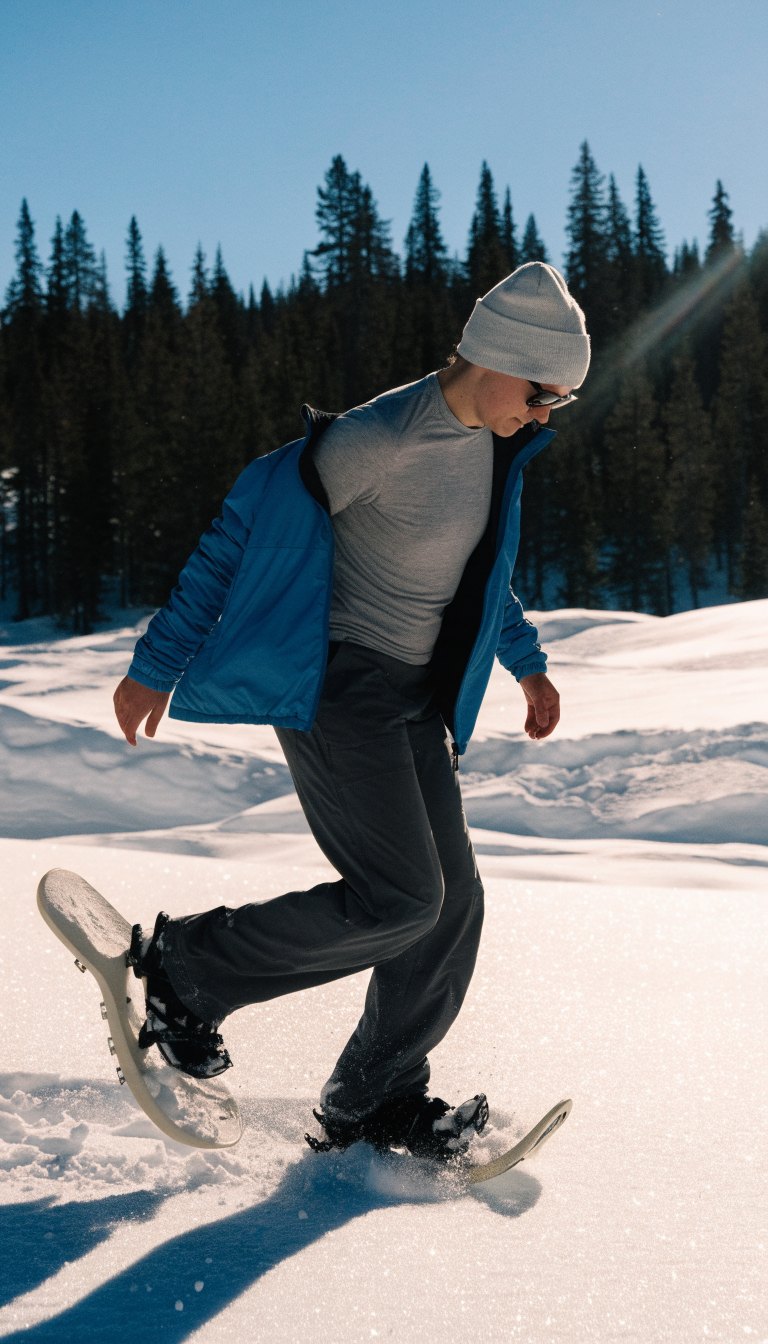
I keep my pace steady and I unzip my fleece at the first warm flush. I wear a light beanie, liner gloves, and sunglasses for glare. My softshell jacket earns its spot because it blocks light wind while it lets sweat escape. I skip a heavy puffy here, because I overheat fast on climbs.
I once wore a big puffy on a sunny climb. I sweated through my base layer in twenty minutes. I spent the rest of the morning damp and cranky. Light wins on sunny days.
Sunny snow days reward light layers and fast vents!
2. Steady Snow Hike: Warm Without the Sweat Bath
I wear this outfit for a steady two to three hour snow hike. I start with a midweight merino base layer. I add a grid fleece for warmth without bulk. I carry a light puffy in my pack for breaks. I wear a windproof softshell jacket and snow pants with side vents.
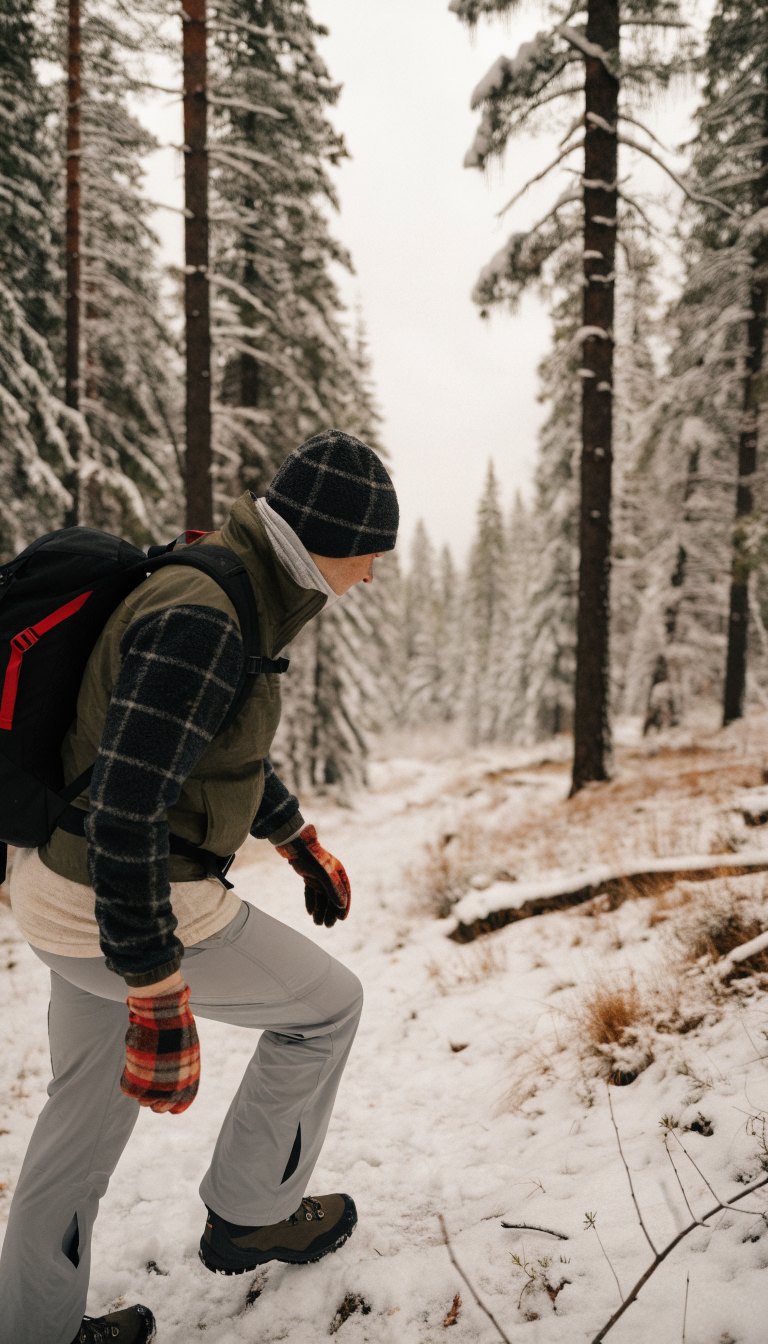
I open my side vents on climbs and I close them on flat stretches. I wear a neck gaiter, a warm hat, and liner gloves under light shell gloves. My grid fleece earns its spot because it traps warm air and dumps heat fast when I unzip it. I watch my sweat level like a hawk. I slow down before I soak through.
I learned this rhythm after one very soggy hike. I pushed hard up a hill. I ignored my damp back. I froze at the summit while I ate lunch. Now I vent early and I layer up only when I stop.
Vent early, layer late, and stay dry on the move.
3. Deep Powder Day: Full Snow Protection
I wear this outfit when I expect knee deep snow and lots of postholing. I start with a midweight synthetic base layer. I add a warm fleece and a puffy vest for core heat. I wear waterproof snow pants, tall gaiters, and waterproof boots. I finish with a waterproof shell jacket with a big hood.
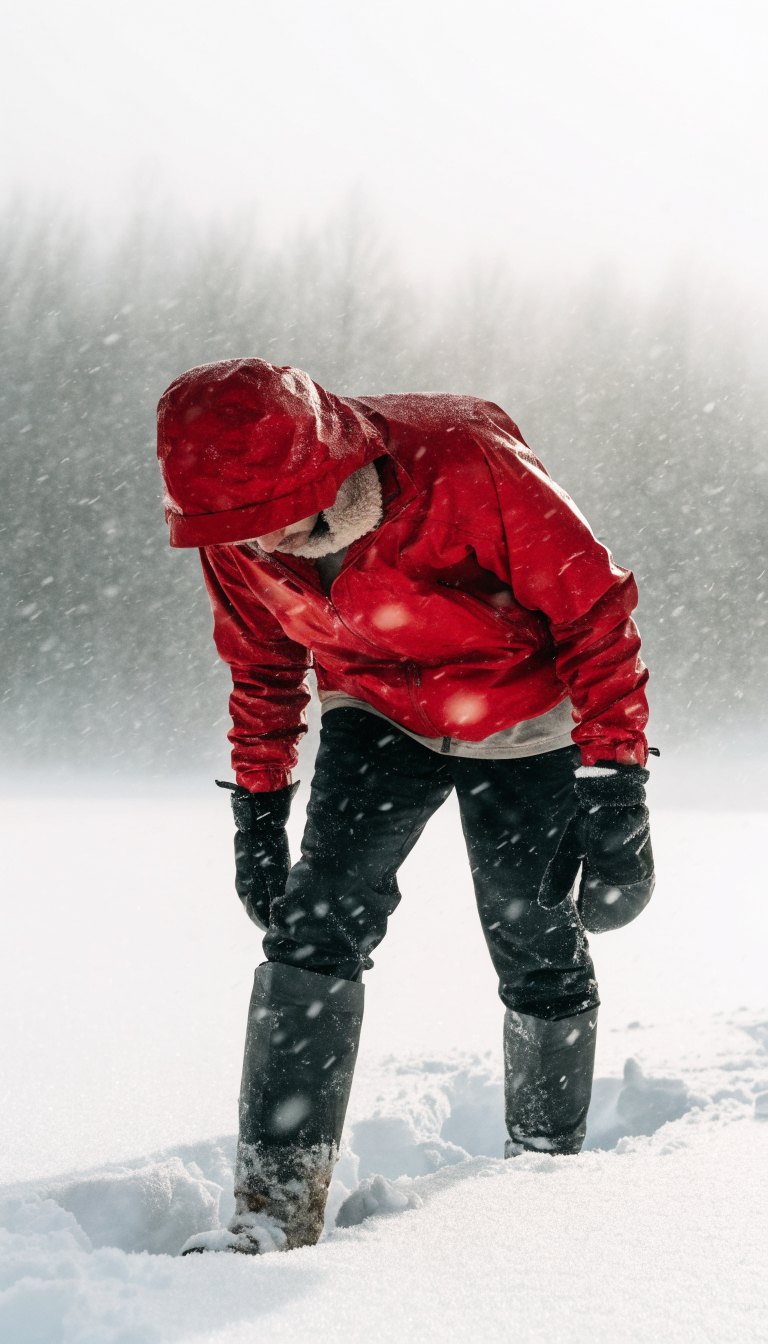
I cinch my gaiters tight and I seal my cuffs before I step off trail. I wear waterproof mittens with liner gloves inside. My tall gaiters earn their spot because they stop snow from packing into my boots and melting down my socks. I carry a spare pair of liner gloves in a chest pocket. I swap gloves the second my first pair feels damp.
I love deep powder days. I love the hush. I love the clean tracks. I do not love wet feet. This outfit keeps snow outside where it belongs.
Keep snow out, and deep powder stays fun!
4. Windy Ridge Walk: Windproof From Head to Toe
I wear this outfit on exposed ridges and open snowfields. I start with a snug merino base layer. I add a fleece mid layer and a windproof softshell jacket. I wear windproof pants over my base leggings. I pull on a balaclava, goggles, and a hood that fits over my hat.
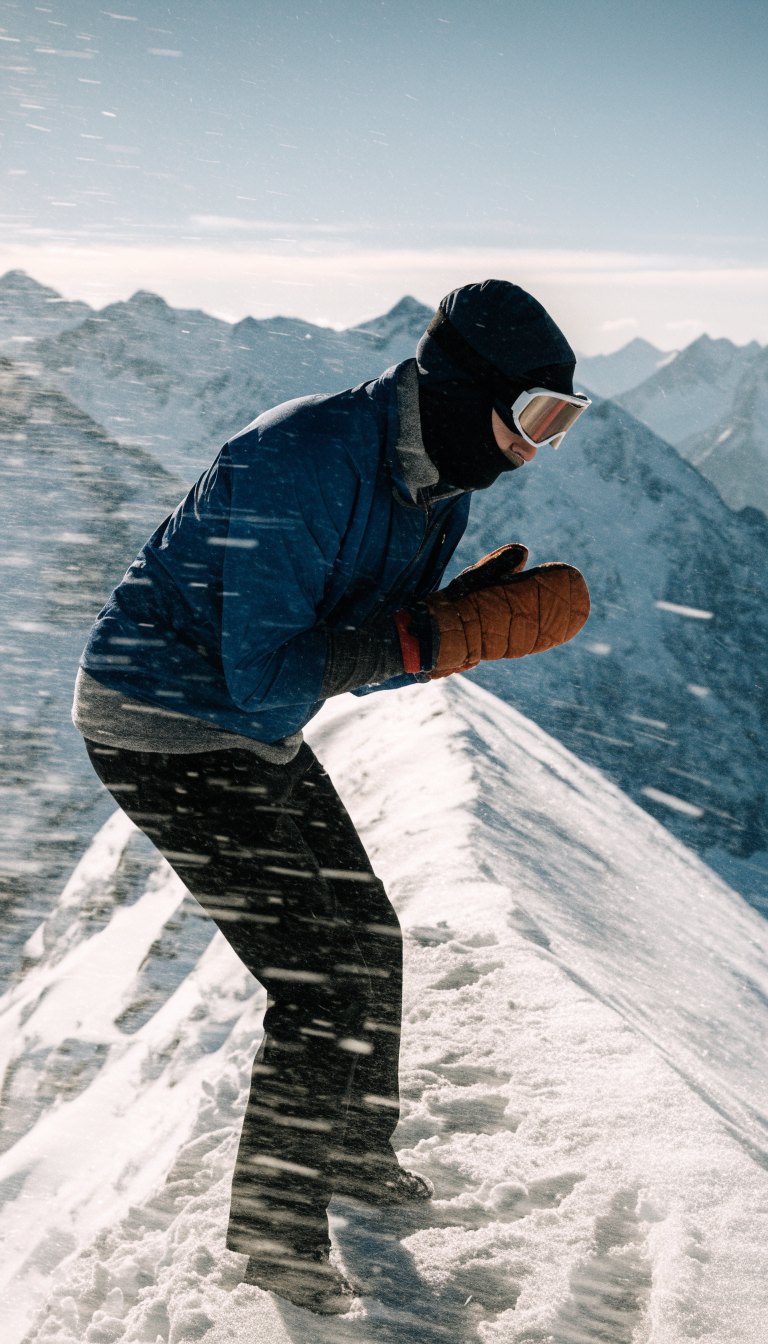
I tighten my hood before I hit the wind. I tuck my gaiter into my collar. I wear mittens, not gloves, because mittens share warmth between fingers. My balaclava earns its spot because it protects my face, ears, and neck in one simple piece. I check my face often for numb spots. I turn back when wind bites through my layers.
Wind humbles me fast. I felt strong on a calm trail once. I stepped onto a ridge and wind stole my heat in minutes. I zipped up, I pulled my hood tight, and I walked on with a new respect for wind.
Wind wins unless you seal every gap.
5. Wet Snow and Sleet: Stay Dry When Snow Turns Heavy
I wear this outfit when wet snow, sleet, or rain on snow threatens my day. I start with a synthetic base layer, because synthetic fabric dries faster than wool in a downpour. I add a light fleece mid layer. I wear a waterproof shell jacket and waterproof shell pants over everything. I choose waterproof boots and waterproof mittens with sealed seams.
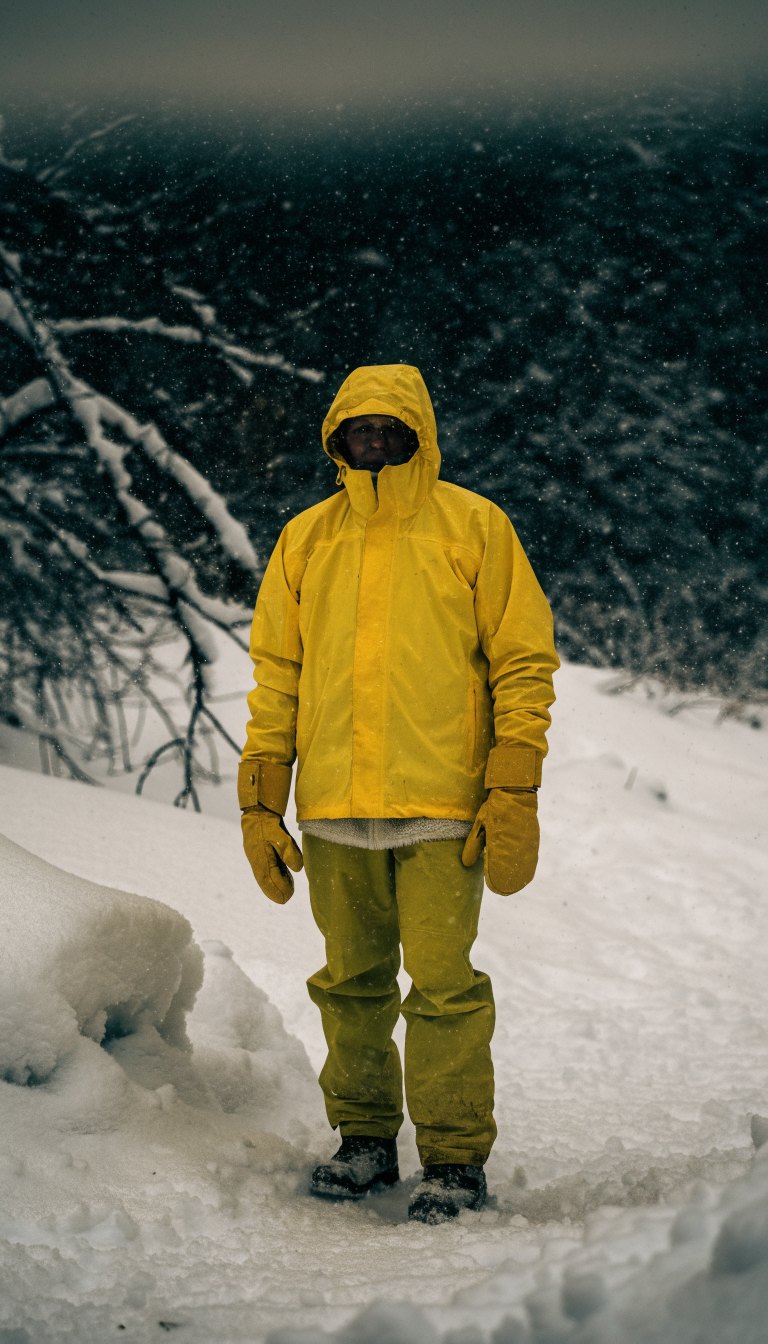
FYI, I treat this outfit like rain gear with insulation underneath. I close every zipper. I tighten every cuff. I keep my puffy inside my shell, not outside it, so melting snow cannot soak the insulation. My waterproof shell earns its spot because it blocks wet snow and wind at the same time.
I once trusted a water resistant jacket in sleet. I regretted it within an hour. My shoulders soaked through. My fleece clumped damp against my skin. I now pack a real shell on any forecast with wet snow.
Wet snow tests your shell, not your courage.
6. Campfire Evening: Maximum Coziness at Camp
I wear this outfit for slow evenings around the fire. I change into a fresh merino base layer first. I add thick fleece pants and a heavy fleece top. I pull on a big puffy jacket with a warm hood. I wear insulated camp booties or roomy boots with thick wool socks.
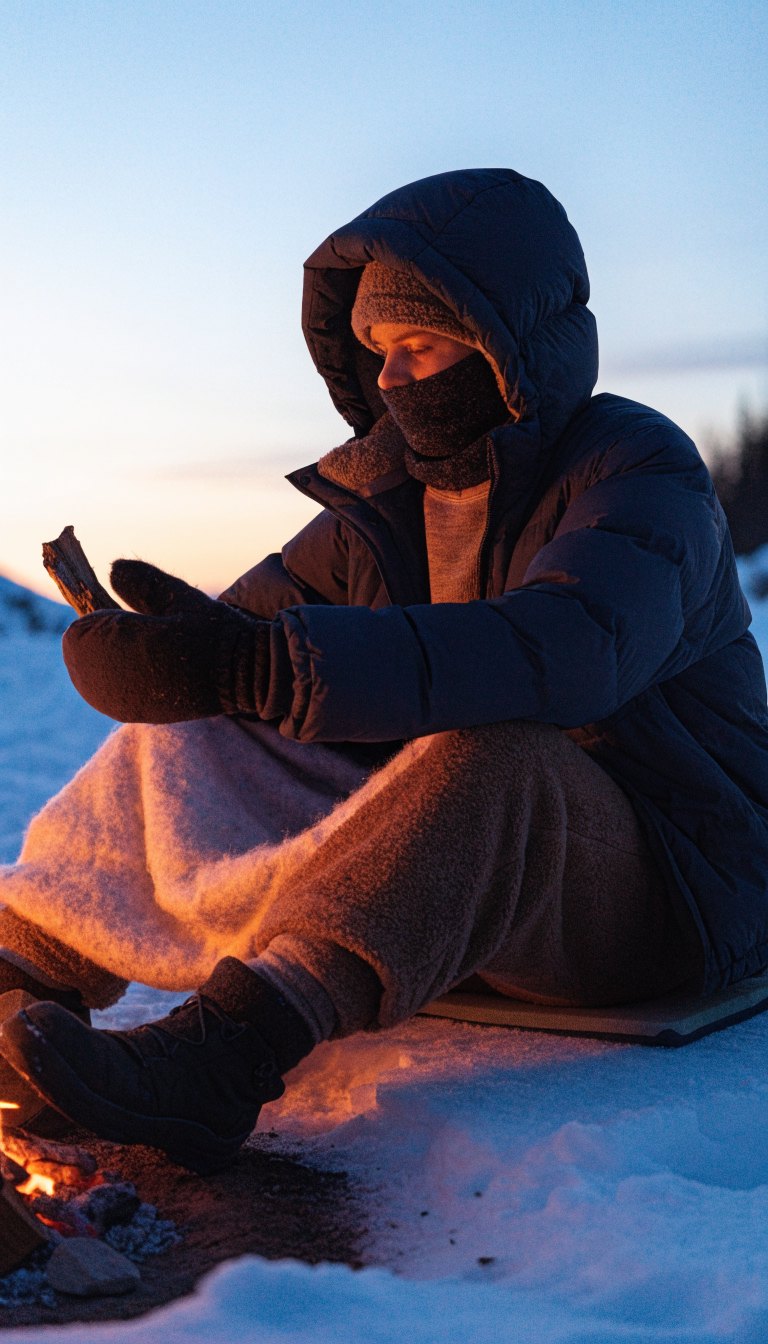
I sit on a foam pad, not bare snow. I wrap a blanket around my legs. I wear a warm hat, a neck gaiter, and big camp mittens. My big puffy earns its spot because it traps heat fast when I stop moving. IMO, camp comfort matters more than camp style. I eat, I laugh, and I stay warm for hours.
I used to sit in my damp hiking clothes at camp. I felt cold within minutes. I changed my habit. I now treat a fresh camp outfit like a reward after a good hike.
Dry camp clothes turn a cold night into a cozy night!
7. Cooking and Camp Chores: Hands Free and Warm
I wear this outfit for cooking, melting snow, and packing gear at camp. I start with a fresh base layer and fleece pants. I add a puffy jacket and a light shell over it for snow and sparks. I wear sturdy boots with good grip. I keep a headlamp on my hat.
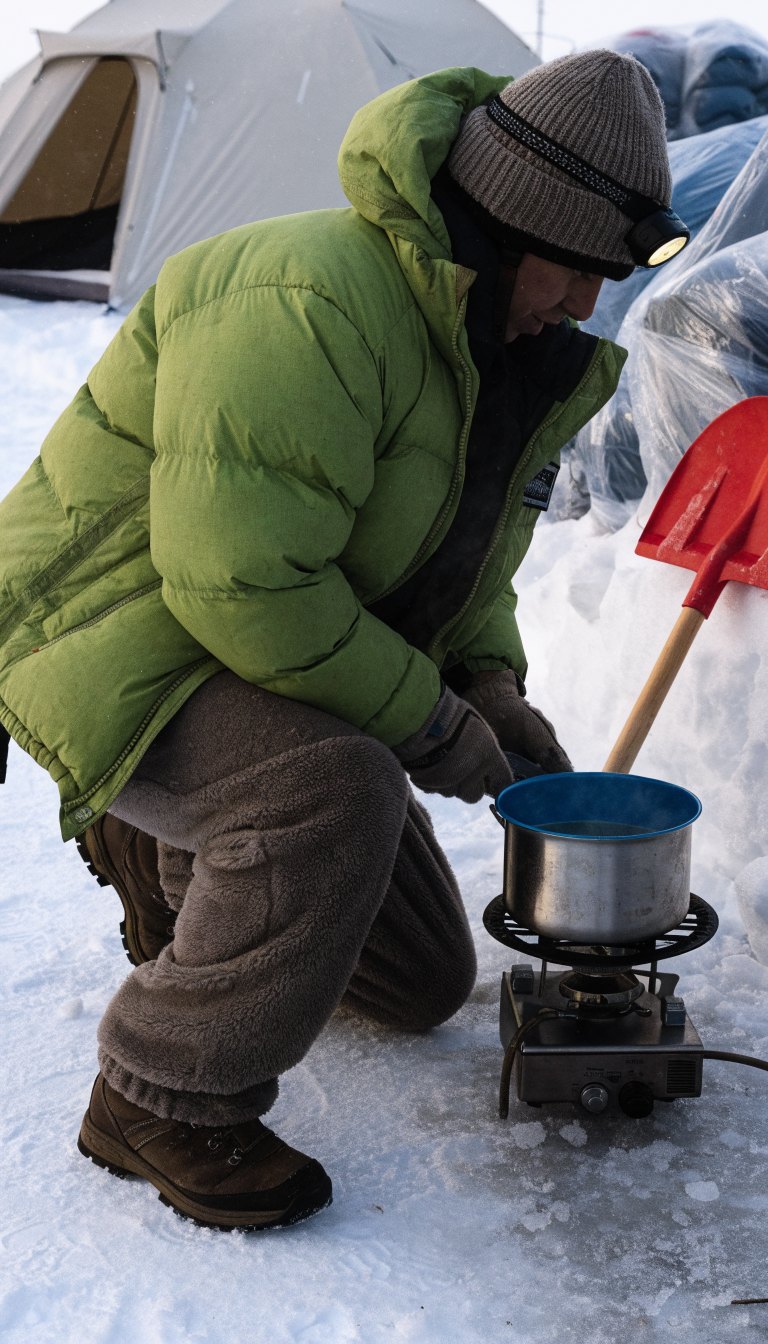
I need my hands free, so I wear liner gloves for most chores. I switch to mittens between tasks. I keep my shell jacket unzipped just enough for venting while I work near the stove. My liner gloves earn their spot because they let me handle zippers, pots, and fuel without bare fingers.
I once cooked in big mittens. I fumbled a pot lid. I dropped a spoon in the snow. I laughed, but I learned. I now keep liners on for detail work and mittens ready for warming up.
Work warm, move smart, and keep your fingers working.
8. Dry Sleep Outfit: Fresh Layers for a Warm Night
I wear this outfit only for sleeping, and I never hike in it. I start with a clean, dry merino base top and leggings. I add dry wool socks and a light fleece top if my tent feels cold. I wear a clean hat and a neck gaiter for extra warmth. I keep this outfit in a dry bag all day.
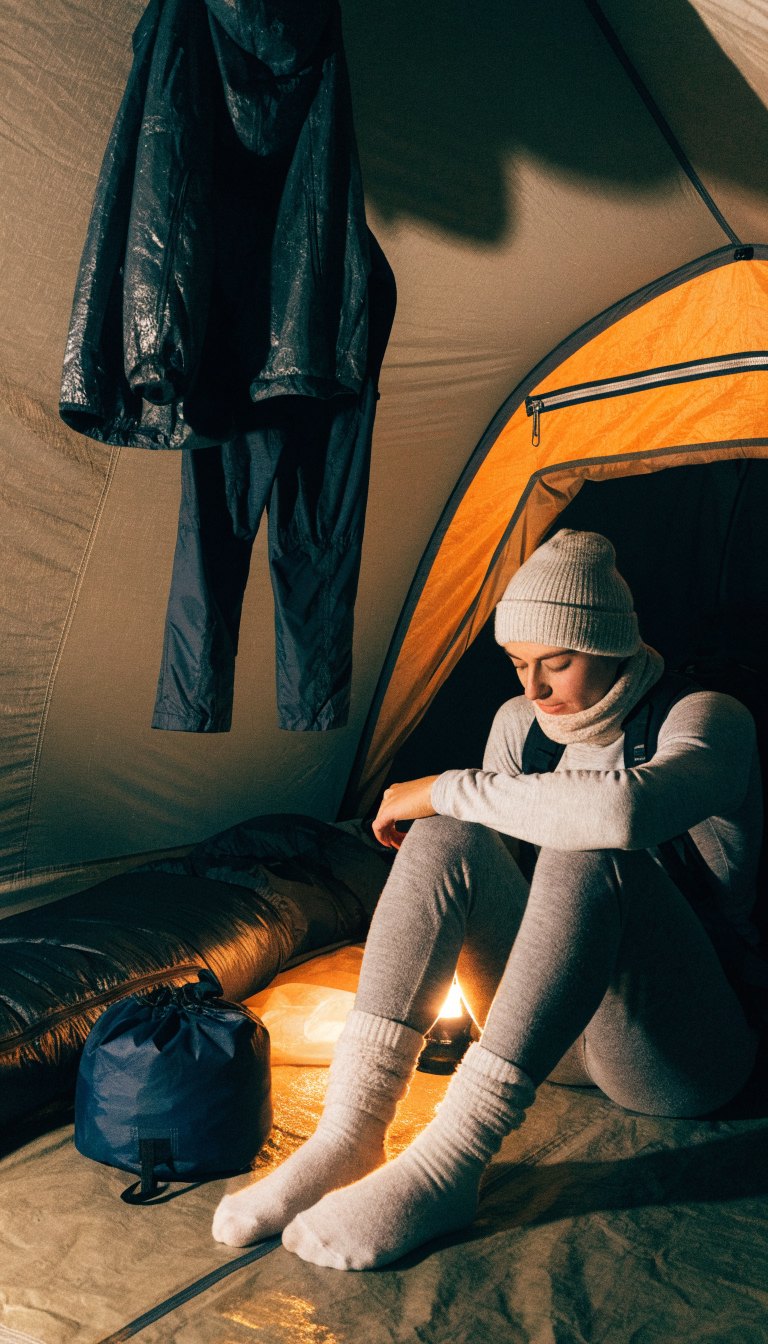
I change into it right after I finish camp chores. I hang my damp hiking layers to dry, away from my sleeping bag. I eat a warm snack before bed. My dry sleep outfit earns its spot because it protects my sleep from the dampness I collected all day. Dry skin helps me sleep deeper. Damp skin wakes me cold at 2 a.m.
I slept in damp clothes once. I tossed all night. I woke tired and chilled. I now guard my sleep outfit like treasure. I pack it first and I unpack it last.
Never sleep in the clothes you hiked in.
9. Quick Tent Exit: Midnight Bathroom Run Kit
I wear this outfit for fast, cold trips outside the tent at night. I keep it within arm's reach. I pull on insulated pants over my sleep leggings. I add my puffy jacket and my camp boots. I grab a headlamp, a hat, and mittens.
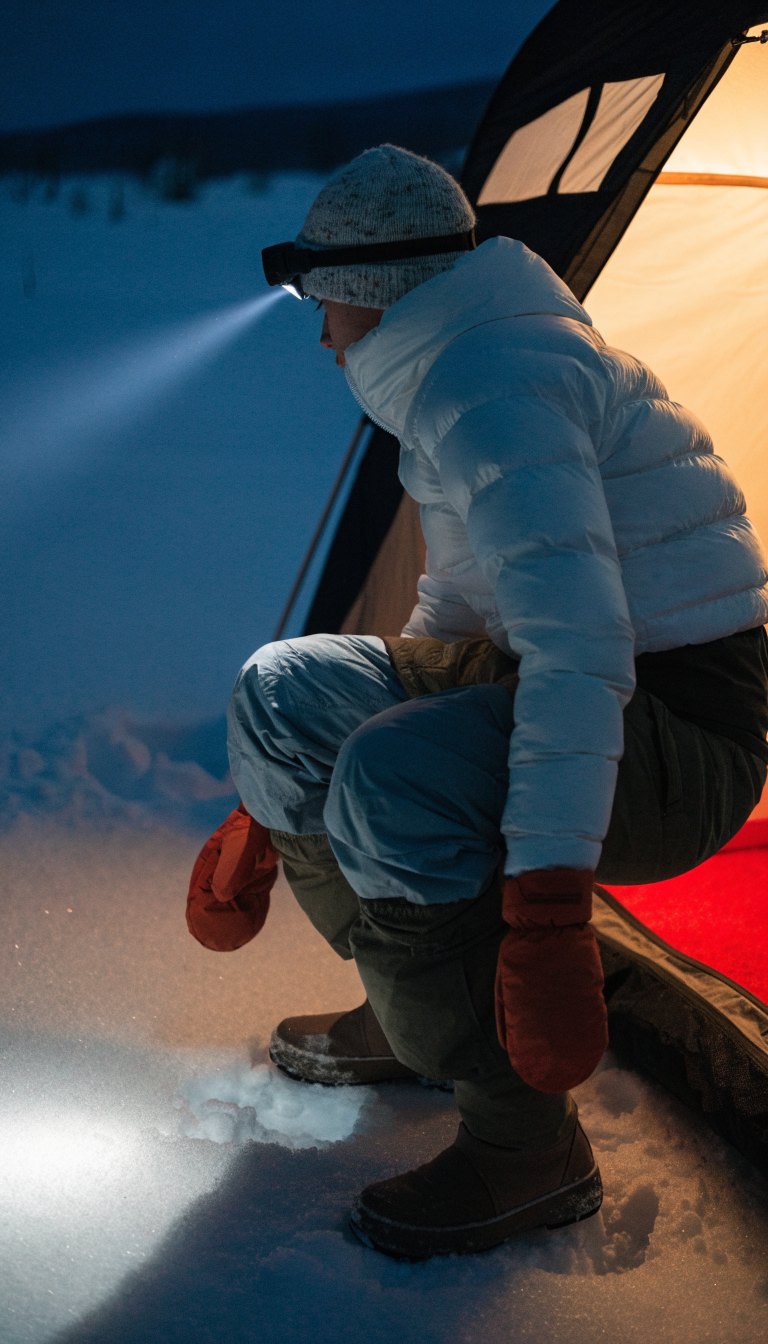
I move fast and I stay efficient. I unzip the tent, I step out, and I handle business. I avoid standing around in the cold. I shake snow off my boots before I climb back inside. My camp boots earn their spot because they slip on fast and keep my sleep socks dry.
I used to fumble for boots in the dark. I stepped in snow in socks once. I never repeated that mistake. I now stage this kit every night before I zip my sleeping bag.
Stage it tonight, and thank yourself at midnight!
10. Still Sitting Outdoors: Ice Fishing and Wildlife Watching
I wear this outfit for long, still hours outside. I start with a heavy merino base layer. I add a thick fleece and a heavy insulated parka. I wear insulated bib pants over my base leggings. I sit on a thick foam pad for insulation from snow and ice.
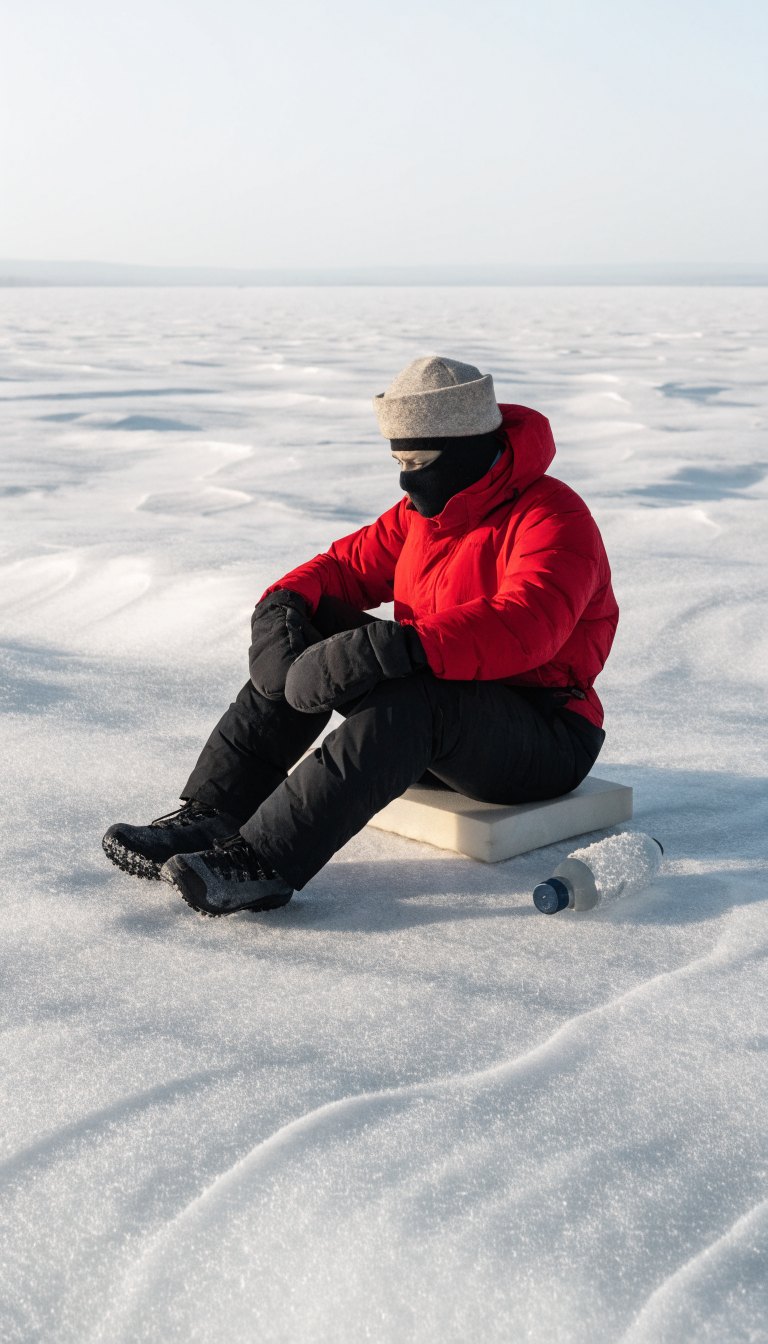
I wear expedition mittens with hand warmers inside. I wear a balaclava, a warm hat, and a face mask for wind. I keep hot drinks in an insulated bottle. My insulated bibs earn their spot because they cover my core and legs with no cold gaps at the waist. I wiggle my toes often. I stand and move every thirty minutes.
Sitting still chills me faster than hiking ever does. I felt fine walking to a frozen lake once. I sat down, and cold crept in within twenty minutes. I added a parka, I added a pad, and I stayed out for hours.
Still air and still bodies need the warmest outfit.
11. Spare Dry Outfit: Your Emergency Reset in a Dry Bag
I pack this outfit as my backup, and I hope I never need it. I pack a dry base top, dry leggings, dry socks, and a dry hat in a waterproof dry bag. I add a light fleece and a pair of liner gloves. I store the bag near the top of my pack for fast access.
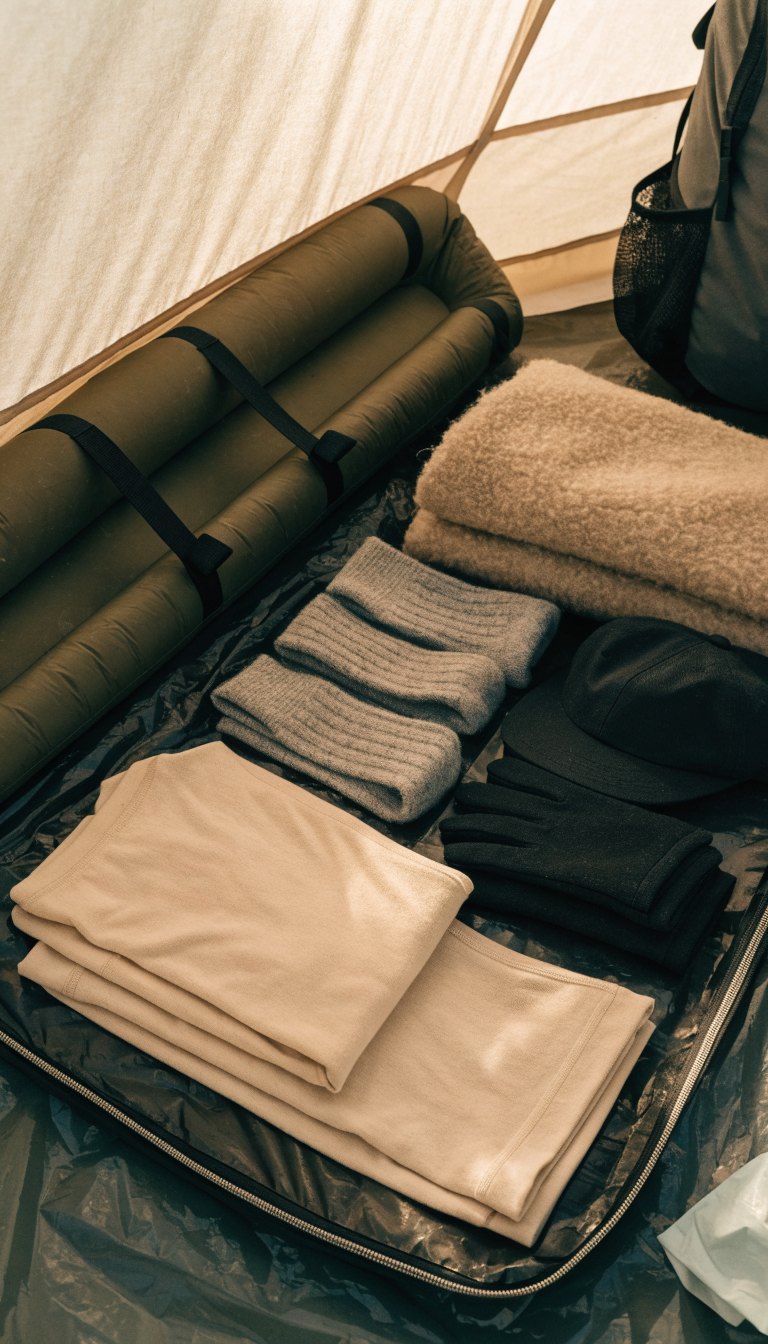
I use this outfit after a fall in a creek, a soaked shell failure, or a sweaty hike gone wrong. I change fast. I wring out damp layers and I stash them away from my dry kit. I warm up with food and movement. My dry bag earns its spot because it keeps this reset outfit dry even when everything else gets wet.
I fell through thin ice on a creek edge once. I soaked one leg to the knee. I changed into my spare layers at camp. I felt human again within an hour. That spare outfit saved my trip.
Pack a reset, and bad luck stays small.
How to Choose Your Snow Camping Outfit
I start with the forecast, not my favorite jacket. I check temperature, wind, precipitation, and activity level. I choose lighter layers for moving days and heavier layers for sitting days. I pack a shell for wet snow, even when skies look clear.
See, beginners often pack one heavy outfit for every situation. I pack a system instead. I carry a dry base, a mid layer, a puffy, and a shell. I mix those pieces into different outfits across the trip. I test every outfit at home first. I walk around the block, I sit outside for twenty minutes, and I practice venting zippers with gloves on.
I avoid cotton for every outfit on this list. I choose merino or synthetic bases. I size boots roomy enough for thick socks and good circulation. I pack spare socks and spare gloves, because hands and feet chill first. I choose safety over style when wind or wet snow enters the forecast.
Pick the outfit for the activity you plan, not the outfit you wish for.
Frequently Asked Questions
What is the best snow camping outfit for beginners? I recommend the steady snow hike outfit for beginners. It balances warmth, venting, and simple layers without fancy gear.
How many layers do I need for snow camping? I wear three main layers for most snow days: a wicking base, a warm mid layer, and a windproof or waterproof shell. I add a puffy for stops and camp.
Should I wear cotton for snow camping? I skip cotton completely. Cotton holds sweat and snow melt, and damp cotton chills me fast. I choose merino wool or synthetic fabric instead.
How do I choose among these 11 snow camping outfits? I match the outfit to activity and weather. I pick light layers for hiking, heavy insulation for sitting, and waterproof layers for wet snow.
What should I pack as a backup? I pack the spare dry outfit in a dry bag. I include a dry base, dry socks, a dry hat, and liner gloves for a fast reset.
I love snow camping because it rewards preparation. I pack dry layers, I vent early, and I change fast when conditions shift. I hope this list helps you step into snow with confidence. I hope you find your own favorite outfit, your own cozy camp routine, and your own quiet morning in fresh snow.